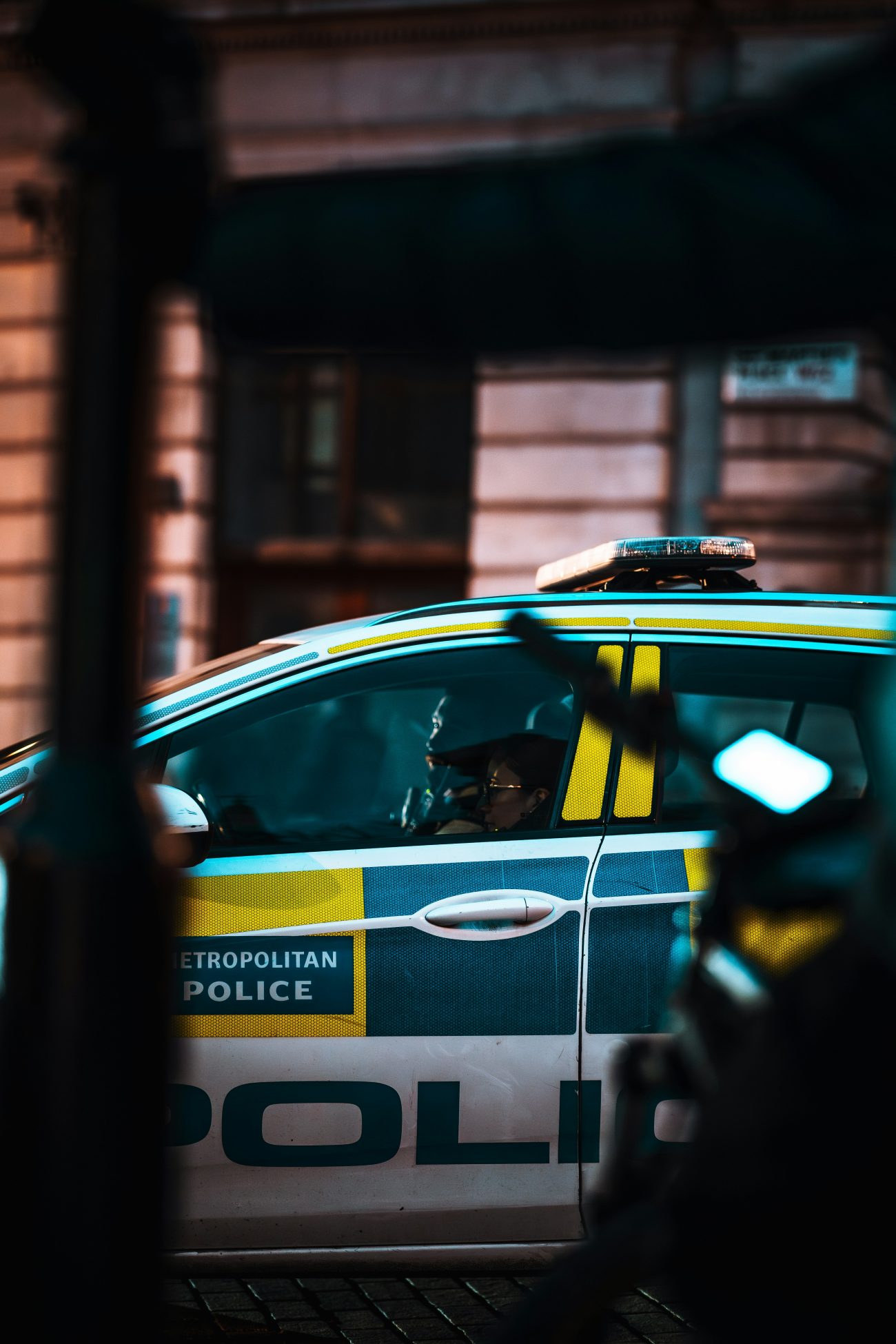
There is no universal answer because police practices vary.
An officer’s approach may depend on the department’s training, the circumstances of the stop, the type of vehicle, the position of surrounding traffic, and the officer’s own established routine.
Modern technology has also changed how traffic stops are documented.
Body-worn cameras can record an officer’s interaction with a driver, subject to the agency’s policies, applicable laws, and any technical limitations.
Dashboard cameras may capture the stopped vehicle and the surrounding roadside area from the patrol car.
Dispatch records can document when an officer reports a traffic stop and may preserve important details about the event.
Digital incident reports can record the reason for the stop, observations, enforcement decisions, and other relevant information.
These systems can provide a much more detailed record than a fingerprint alone.
However, technology does not automatically eliminate traditional habits. Some officers continue routines they learned earlier in their careers, while others follow updated procedures that do not include touching the vehicle.
The important distinction is that a modern officer’s actions should not be judged by whether they perform one particular gesture.
A tail-light tap is neither a universal requirement nor a reliable indicator of how carefully an officer is conducting a traffic stop.
6. Does a Tail-Light Tap Mean the Officer Suspects Something?
No. The gesture alone does not mean the officer believes the driver has committed a crime.
A vehicle may be stopped for an ordinary traffic matter, such as speeding, an equipment problem, a registration issue, or another suspected violation.
Touching the rear of the vehicle does not automatically indicate that the officer has discovered something suspicious.
It also does not tell a driver whether the officer intends to issue a warning, write a citation, or conduct any further lawful investigation.
Those decisions depend on the circumstances and the information available to the officer.
Drivers sometimes interpret unfamiliar movements as signs that something serious is about to happen. But a brief touch to a vehicle’s rear is not enough to draw that conclusion.
The most sensible response is to remain calm, keep your hands visible, and listen to the officer’s instructions.
If you have questions about the reason for the stop, you can ask politely when it is appropriate to do so.
7. Why Might an Officer Approach From a Different Direction?
Tail-light tapping is not the only part of a traffic stop that can make drivers curious.
Some officers approach from the driver’s side. Others may approach from the passenger side or choose a different position around the vehicle.
There can be several practical reasons.
The officer may be trying to avoid moving traffic, obtain a clearer view of the occupants, or position themselves where they can communicate more safely. A narrow shoulder, roadside barrier, nearby vehicles, or the design of the stopped car can also influence the approach.
For example, stopping beside a busy highway is different from stopping in a quiet parking lot. An officer may have to account for passing vehicles, limited space, poor visibility, or other hazards.
The type of vehicle can matter as well. A large truck, van, or vehicle with dark windows may create different visibility challenges from a small passenger car.
There is no single approach that fits every traffic stop.
What looks unusual to a driver may simply be an adjustment to the conditions at that particular location.
8. What Should Drivers Do When Police Pull Them Over?
Understanding police procedures is useful, but knowing how to respond during a traffic stop is even more important.
Laws differ between states and countries, so drivers should familiarize themselves with the rules that apply where they live and travel. Still, several general practices can help reduce confusion and make the interaction safer.
Pull Over Somewhere Safe
When you see police emergency lights behind you, look for a suitable place to stop.
