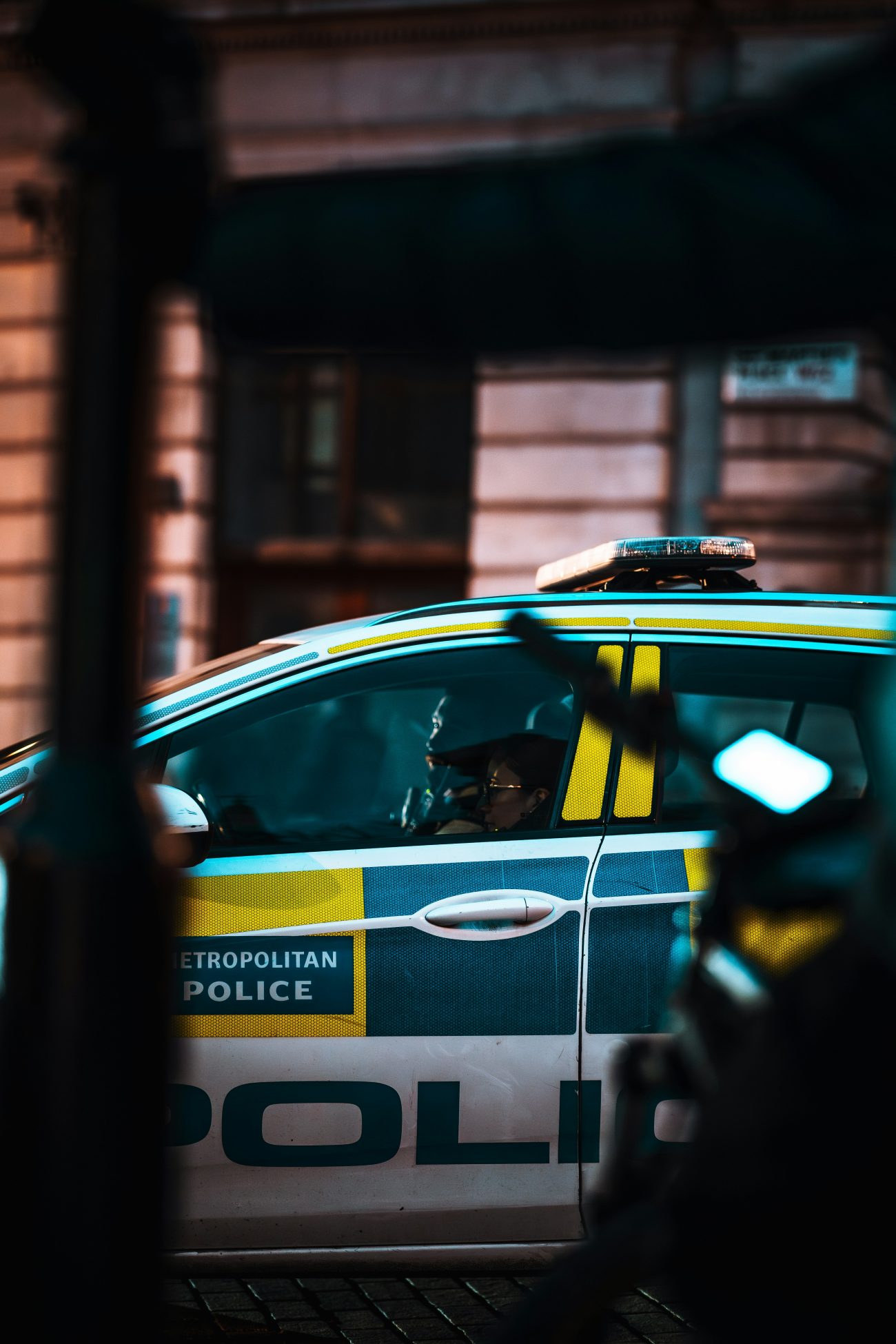
Why Do Police Officers Tap Your Tail Light During a Traffic Stop? The Real Reason Behind the Gesture
Have you ever noticed a police officer briefly touch the back of a car before approaching the driver’s window during a traffic stop?
It is a small movement that can happen so quickly that many drivers barely notice it. Yet the gesture has sparked years of curiosity, online discussions, and competing explanations.
Some people believe officers touch the rear of a vehicle to leave a fingerprint behind. Others think they are checking whether the trunk is securely closed. Still others assume the movement is part of a standard safety procedure that every officer is expected to follow.
The truth is more nuanced.
Touching the rear of a vehicle is commonly associated with older police traffic-stop practices, particularly the idea of leaving a physical trace that could help identify the officer’s contact with the vehicle if something went wrong. However, that explanation is not a universal rule, and it should not be treated as a scientifically reliable way to document a traffic stop.
Police procedures have also changed considerably over the years. Body cameras, dashboard cameras, dispatch records, and digital reporting systems now provide documentation that a fingerprint alone never could.
So why did officers develop the habit in the first place? Does the gesture still serve a purpose? And should drivers be concerned when they see it?
Understanding the history behind this small movement helps explain why it became so familiar—and why it is less common in some modern traffic-stop procedures.
1. The Fingerprint Explanation: The Most Famous Theory
The explanation most frequently associated with tail-light tapping is that an officer wants to leave a fingerprint on the vehicle.
The traditional reasoning is relatively simple.
Before approaching an unfamiliar car, an officer briefly touches its rear. If the encounter later becomes part of an investigation, the fingerprint might provide some evidence that the officer had physical contact with that particular vehicle.
For example, imagine a traffic stop that develops into a serious incident. Investigators may need to establish which officer approached the vehicle, whether the officer made contact with it, and what happened during the encounter.
A fingerprint could potentially be one small piece of evidence.
That is the theory behind the practice, and it is the explanation that has become most widely repeated in discussions about police traffic stops.
However, there are important limitations.
A fingerprint does not automatically establish when it was deposited. It also does not explain why the person touched the surface. A print may be incomplete, smudged, contaminated, or difficult to recover. Depending on the material and conditions, it may not be useful at all.
Even if investigators find a print, they would need other information to understand the circumstances surrounding it.
For that reason, leaving a fingerprint should not be described as a guaranteed way to prove that an officer was present during a traffic stop. It is better understood as a commonly cited historical rationale associated with the gesture.
It is also important to remember that police departments do not all follow identical procedures. Some officers may have learned the habit during earlier training, while others may never have been instructed to perform it.
In other words, the fingerprint explanation helps explain the tradition, but it does not tell us exactly why every officer touches a vehicle.
2. Is the Officer Checking Whether the Trunk Is Closed?
Another explanation sometimes offered is that an officer touches the rear of a car to check whether the trunk is properly secured.
At first glance, this may seem reasonable. The trunk is located at the back of many passenger vehicles, and an officer approaching from behind may be able to notice whether it appears closed.
