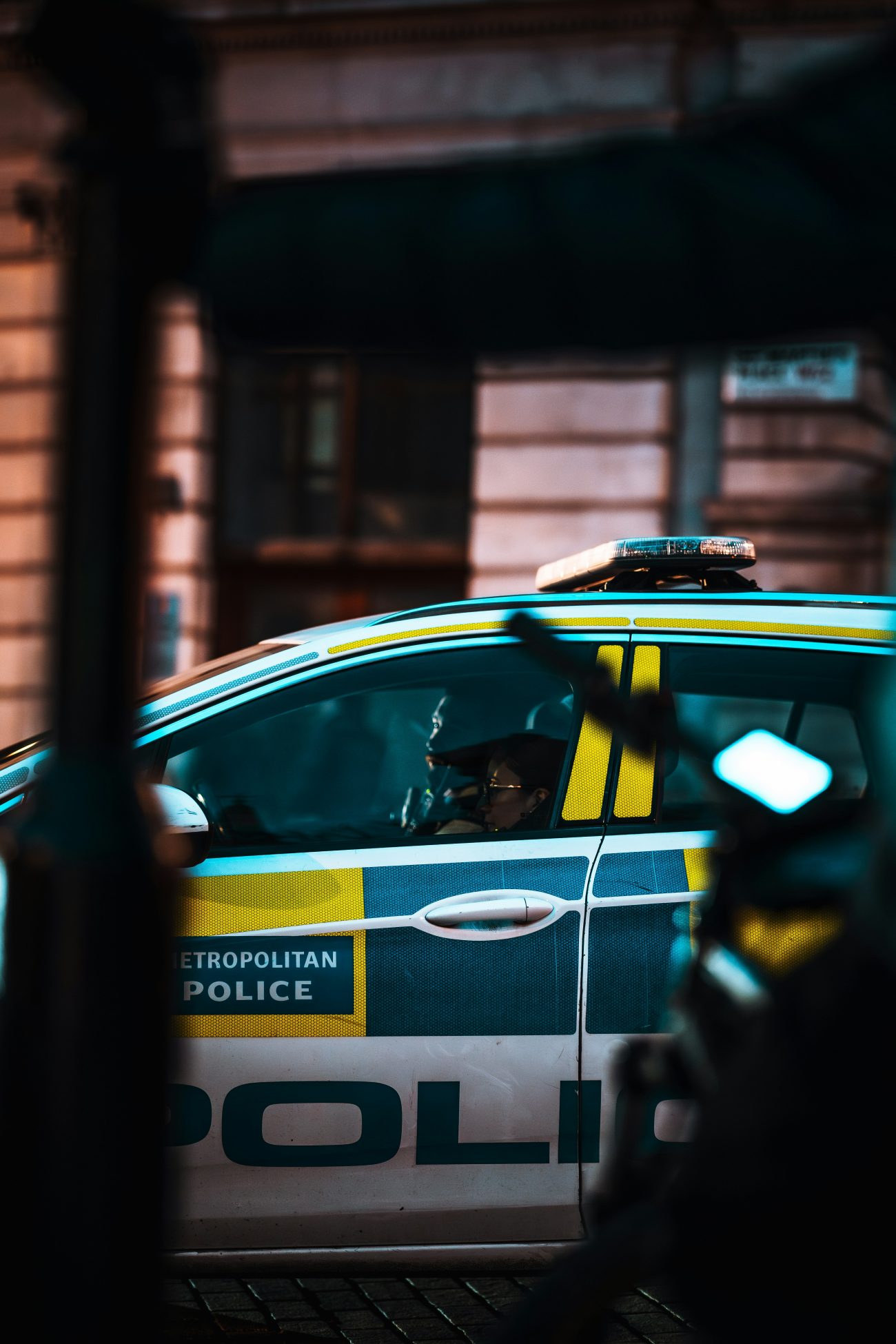
However, a quick touch to a tail light does not necessarily mean the officer is inspecting the trunk.
Modern vehicles have different trunk designs, locking systems, and warning indicators. Some vehicles have electronic release mechanisms, while others use conventional latches. A brief contact with the rear bodywork would not reliably establish whether every part of the trunk mechanism was secure.
There may be situations in which an officer notices something unusual about a vehicle’s rear compartment. But that is different from saying that tail-light tapping is a standard trunk-inspection procedure.
The distinction matters because popular explanations can become simplified over time.
A gesture that began as part of one officer’s routine may be repeated by others for different reasons. Someone watching from the roadside may see the same movement and assume it has one specific purpose.
Without knowing the officer’s training, department policy, and circumstances, it is difficult to determine the exact reason for that individual action.
3. Officer Safety Is the Larger Context
To understand why traffic-stop routines developed, it helps to consider the environment in which officers work.
A traffic stop may begin with something relatively minor: a speeding violation, an expired registration, a broken light, or a missing license plate.
But the officer approaching the vehicle usually has limited information.
They may not know how many people are inside, whether the driver is distracted, whether a passenger will suddenly move, or whether traffic conditions will make the roadside encounter dangerous.
They also have to pay attention to the road, nearby vehicles, the driver’s behavior, and their own position in relation to the stopped car.
That uncertainty is one reason traffic-stop training places considerable emphasis on awareness and communication.
Officers are taught to observe their surroundings, monitor movements, and approach vehicles in ways intended to reduce risk. Specific techniques vary by agency, training program, and situation.
The tail-light gesture is sometimes discussed as part of this older safety culture. However, it would be inaccurate to suggest that touching the rear of a vehicle is itself a complete safety measure or that every officer must do it.
The more useful point is that traffic-stop procedures developed around the need to manage uncertainty.
An officer may follow a familiar routine because it is part of their training. Another may use a different approach because of the road layout, traffic, vehicle design, or departmental policy.
The same small movement can therefore have different explanations in different circumstances.
4. How Did Tail-Light Tapping Become So Well Known?
The gesture became widely discussed partly because it is unusual enough to attract attention.
Most drivers expect an officer to approach the driver’s side window. They may not expect the officer to touch the rear of the vehicle first.
That brief movement creates an obvious question: Why?
For years, explanations circulated among drivers, police enthusiasts, television audiences, and people discussing roadside safety. The fingerprint theory was particularly memorable because it offered a simple explanation for something that otherwise seemed mysterious.
Television shows and online discussions helped spread the idea. As the explanation was repeated, it sometimes became more definite than the available evidence justified.
Eventually, many people began describing fingerprint tapping as if it were a universal police requirement.
It is not.
There is no single procedure that every law enforcement agency in every location follows. Departments establish their own training standards and operational policies, and individual officers may use different techniques.
The history of the gesture is therefore best understood as a combination of traditional practices, training habits, and explanations that became popular over time.
It is a recognizable part of traffic-stop culture, but it should not be confused with a mandatory rule.
5. Do Police Officers Still Tap Tail Lights Today?
Some officers may still touch the rear of a vehicle before approaching. Others walk directly toward the driver’s window without making contact.
