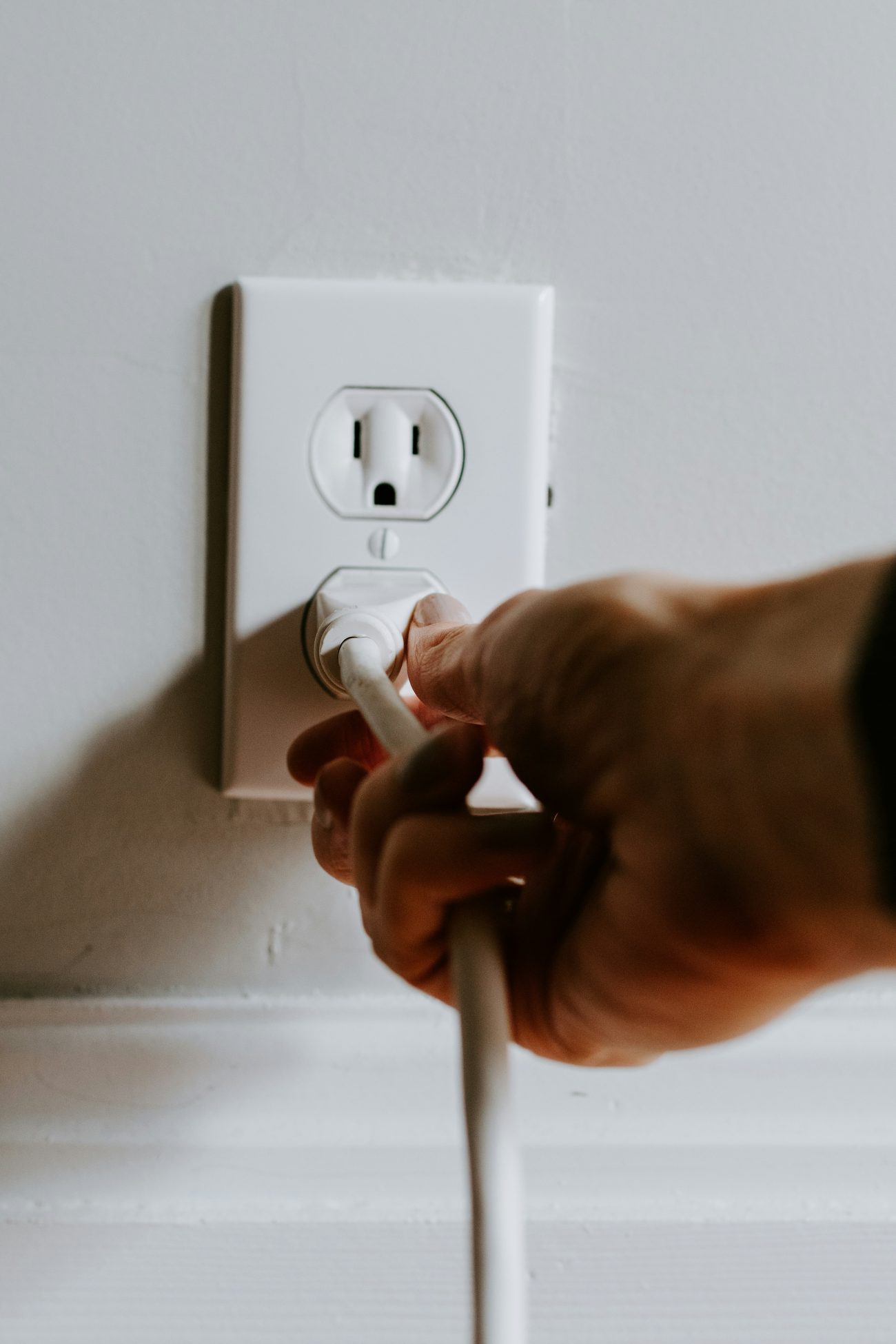
Many basic toasters use electricity only when activated, but some newer kitchen appliances include electronic controls, displays, or programmable functions.
The same applies to certain kettles, countertop appliances, and cooking equipment.
Check whether the device has a digital display or other features that remain active when it is not being used.
If it does, consult the manufacturer’s instructions to determine whether disconnecting it between uses is appropriate.
Which Appliances Should You Leave Plugged In?
Unplugging unused electronics can be helpful, but it isn’t sensible to disconnect everything.
Some household appliances need a continuous electricity supply to perform their essential functions.
Refrigerators and freezers are obvious examples. They must remain powered to keep food at safe temperatures.
Other equipment may also need a permanent connection, depending on its purpose and design.
These can include:
- Medical devices that require continuous power.
- Security systems and equipment that must remain operational.
- Internet routers or network equipment needed for household connectivity.
- Appliances with manufacturer-required continuous power functions.
- Equipment connected to monitoring or safety systems.
Before disconnecting an unfamiliar device, check the manufacturer’s instructions.
The goal is to eliminate unnecessary electricity consumption, not to interrupt essential functions or create new problems.
A Switched Power Strip Can Make Things Easier
One of the simplest ways to manage several electronics at once is to use a power strip equipped with an on/off switch.
Instead of unplugging individual devices, you can connect suitable equipment to the same strip and switch off the group when it is no longer needed.
For example, a television area might include:
- A television.
- A gaming console.
- A sound system.
- A streaming device.
- Other entertainment accessories.
If these devices do not need to remain powered, a switched power strip can make it easier to disconnect them together.
<AsyncImage query=”switched power strip multiple plugs on off switch home electronics” aspectRatio=”16:9″ width=”100%”/>
This approach can be particularly useful in rooms where several electronics share one area.
However, there are a few important precautions.
Choose a power strip that is properly rated for the equipment connected to it. Avoid overloading it or connecting multiple power strips together. Keep it away from moisture and inspect the cord and plugs for damage.
Also, don’t connect high-power appliances to an ordinary power strip unless the manufacturer specifically permits it. Devices such as space heaters and certain kitchen appliances may require a dedicated wall outlet.
A switched power strip is most useful for suitable electronic equipment, not as a universal solution for every appliance in the house.
How Much Money Can You Actually Save?
This is the question most homeowners want answered.
Unfortunately, there isn’t one fixed amount that everyone can expect to save.
The financial benefit depends on several factors:
The number of devices: A household with many televisions, computers, consoles, and other electronics may have more standby consumption than a home with only a few devices.
The power used in standby mode: Some appliances use very little electricity when inactive. Others may consume more because they maintain network connections, displays, or background functions.
How long devices remain connected: An appliance that stays in standby mode around the clock may consume more electricity over a month than one used only occasionally.
Your electricity rate: The financial value of reducing consumption depends on how much you pay for each unit of electricity.
A simple example illustrates how the calculation works.
Suppose an appliance uses 5 watts in standby mode and remains in that state continuously.
Over 24 hours, it would use:
5 watts × 24 hours = 120 watt-hours, or 0.12 kilowatt-hours.
Over 30 days, that becomes approximately 3.6 kilowatt-hours.
That is the consumption of just one appliance under those assumptions. Several similar devices could use more when their standby consumption is combined.
