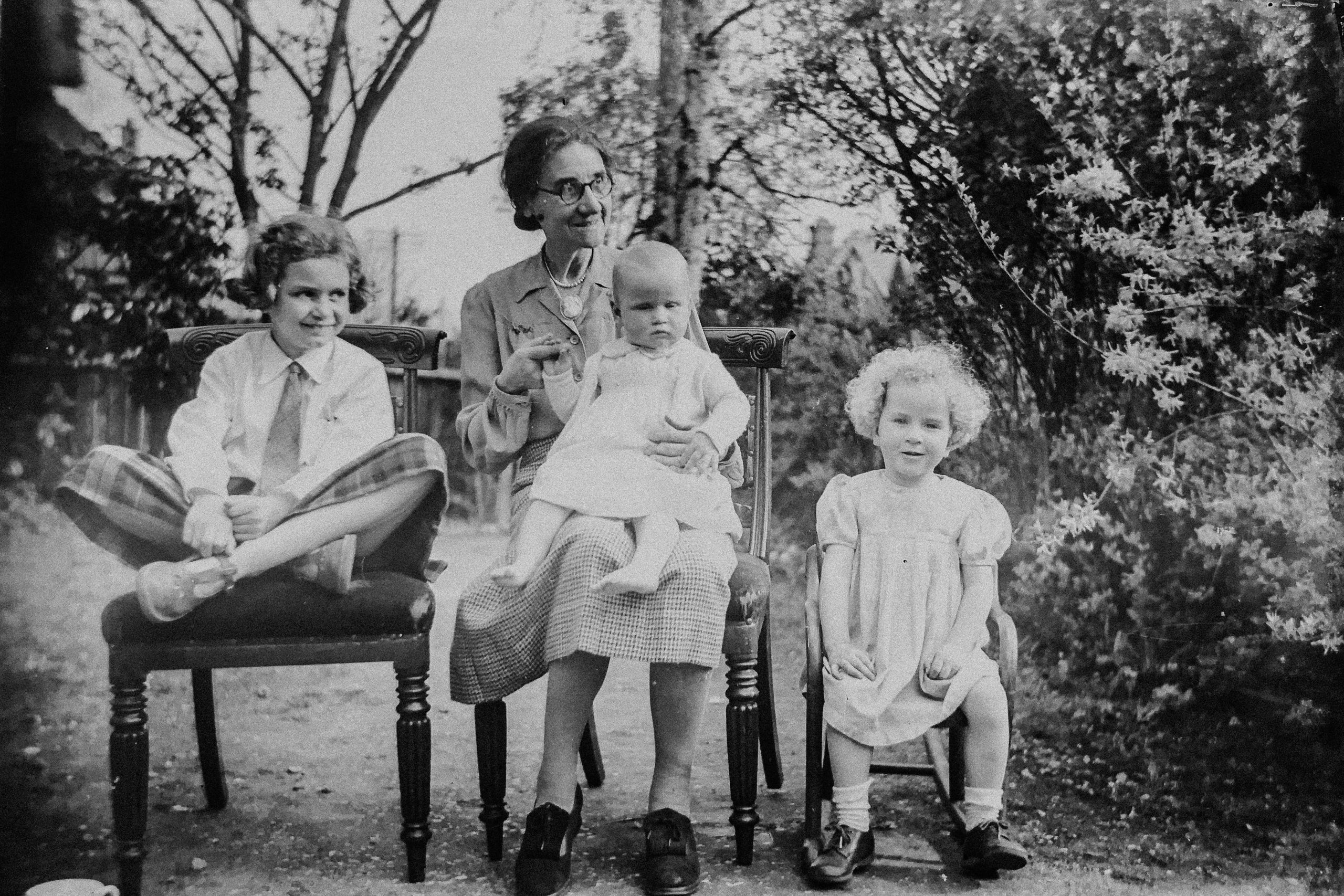
A family portrait draws attention to the family. A photograph of a vehicle encourages viewers to examine the vehicle. A picture of a public event naturally directs attention toward the people participating.
Yet the background may contain some of the most valuable historical information.
A street sign, shop window, advertisement, distant building, or object placed near the edge of the frame can help researchers understand the photograph more accurately.
For example, a sign may reveal the original name of a business. A visible street number could help identify the location. A billboard or advertisement might provide a clue about the year, particularly if the product or campaign can be dated through other records.
Even the presence of modern-looking infrastructure can be useful.
Streetlights, electrical wires, road markings, telephone poles, and public transportation features may help establish the stage of development a community had reached.
Background details can also challenge assumptions.
A photograph that initially appears to show a quiet residential street might reveal a commercial district when viewers notice signs, delivery vehicles, or workshops in the distance.
This is one reason historians often examine the entire image rather than focusing only on its central subject.
A photograph is a composition of many elements, and each one may contribute something to its interpretation.
8. Photography Technology Can Help Establish a Date
The photograph itself can provide clues about when it was created.
Different periods of photography produced different types of images, and changes in cameras, printing methods, and photographic materials left recognizable characteristics.
Early photographic processes included daguerreotypes, ambrotypes, and tintypes. Later developments made it possible to produce photographs more efficiently and distribute them more widely.
The appearance of an image may therefore offer clues about its approximate age.
A photograph printed on a particular type of paper, mounted on a distinctive card, or preserved in a recognizable format may be associated with a specific photographic era.
The condition of the image can also be informative, although age should not be judged from deterioration alone.
Fading, discoloration, scratches, and damaged edges may result from storage conditions rather than the original date of the photograph.
Some older photographs have been carefully preserved and remain remarkably clear. Others may have deteriorated much more quickly because of exposure to sunlight, moisture, or unsuitable storage materials.
Photographic technology also influenced what people chose to capture.
As cameras became smaller, less expensive, and easier to operate, photography gradually moved beyond formal studio portraits and professional documentation. More people could record holidays, family gatherings, celebrations, and ordinary activities.
That change created an enormous visual record of everyday life.
9. Historical Context Is Essential to Understanding an Image
Although photographs can reveal many details, they do not always explain what those details mean.
An image may show a group of people standing outside a building, but without additional information, viewers may not know whether they were employees, relatives, visitors, or participants in a public gathering.
A photograph of an empty street might reflect an ordinary quiet moment, a particular time of day, or circumstances that are not visible in the frame.
This is why historical context matters.
Captions, handwritten notes, family albums, newspaper archives, official records, and other photographs can help explain what an image documents.
When a photograph includes a date, location, photographer’s name, or description, that information can make interpretation much more reliable.
Researchers may also compare the image with other historical materials.
A building visible in the background might be matched with an old map. A vehicle could be compared with manufacturer records. A public gathering might be connected to a newspaper report from the same period.
