The process requires care because photographs can be misleading when separated from their original context.
Images may be cropped, incorrectly dated, mislabeled, or shared online with descriptions that have no reliable connection to the original photograph.
A compelling story attached to an old image does not automatically make that story true.
For this reason, viewers should distinguish between what a photograph clearly shows and what they are only guessing.
That distinction does not make historical photography less interesting. Instead, it encourages a more thoughtful appreciation of what can actually be learned from an image.
10. Why Historical Photographs Continue to Fascinate New Generations
Historical photographs have an unusual ability to connect people who lived in different periods.
Someone looking at an image from a century ago may notice clothing, technology, or buildings that seem completely unfamiliar. Yet other details may feel remarkably familiar.
Children playing together, families gathering for celebrations, people working in shops, and neighbors standing outside their homes are experiences that remain recognizable across generations.
This combination of difference and familiarity is part of what makes old photographs so appealing.
They show how much the world has changed while reminding viewers that many aspects of human life have remained similar.
Digital archives and online collections have also made historical photographs easier to discover.
Museums, libraries, universities, and cultural institutions increasingly provide access to digitized collections. Family photographs that once remained in albums or storage boxes can also be scanned and shared with relatives and researchers.
As a result, an image created for a small personal occasion may eventually become part of a much wider historical conversation.
A photograph that once seemed important only to one family might help preserve information about a neighborhood, a local business, a traditional celebration, or a way of life that no longer exists.
The ability to examine and share these images has also encouraged people to research their own family histories.
Old photographs can help younger relatives recognize ancestors, discover where previous generations lived, and learn more about the environments in which their families grew up.
Sometimes, a single photograph becomes the starting point for a much larger investigation.
11. Preserving Photographs Means Preserving More Than Memories
Historical photographs are valuable, but they can also be fragile.
Printed images may be damaged by moisture, excessive heat, sunlight, dust, and repeated handling. Older albums can deteriorate, while handwritten notes and captions may become difficult to read.
Preservation therefore requires more than simply keeping photographs in a box.
Physical photographs should ideally be stored in a cool, dry environment, away from direct sunlight and unnecessary handling. Suitable archival-quality sleeves or albums can help protect them from damage.
Digitizing photographs provides another way to preserve their contents.
Scanning an original image creates a digital copy that can be backed up, shared with family members, and accessed without repeatedly handling the original. When possible, it is useful to keep a high-quality master scan rather than relying only on a small compressed image.
Captions and other identifying information should also be preserved.
A photograph without a date, location, or names may still be visually interesting, but its historical value can be much greater when its background is documented.
Families can help by recording the names of people in old photographs, identifying locations, and writing down any reliable stories associated with the image.
Even a short note can make a difference to someone trying to understand the photograph many years later.
Preserving an image is ultimately about preserving the information and memories connected to it.
The Stories Hidden in a Single Photograph
The most fascinating historical photographs are not always the ones showing famous people or extraordinary events.
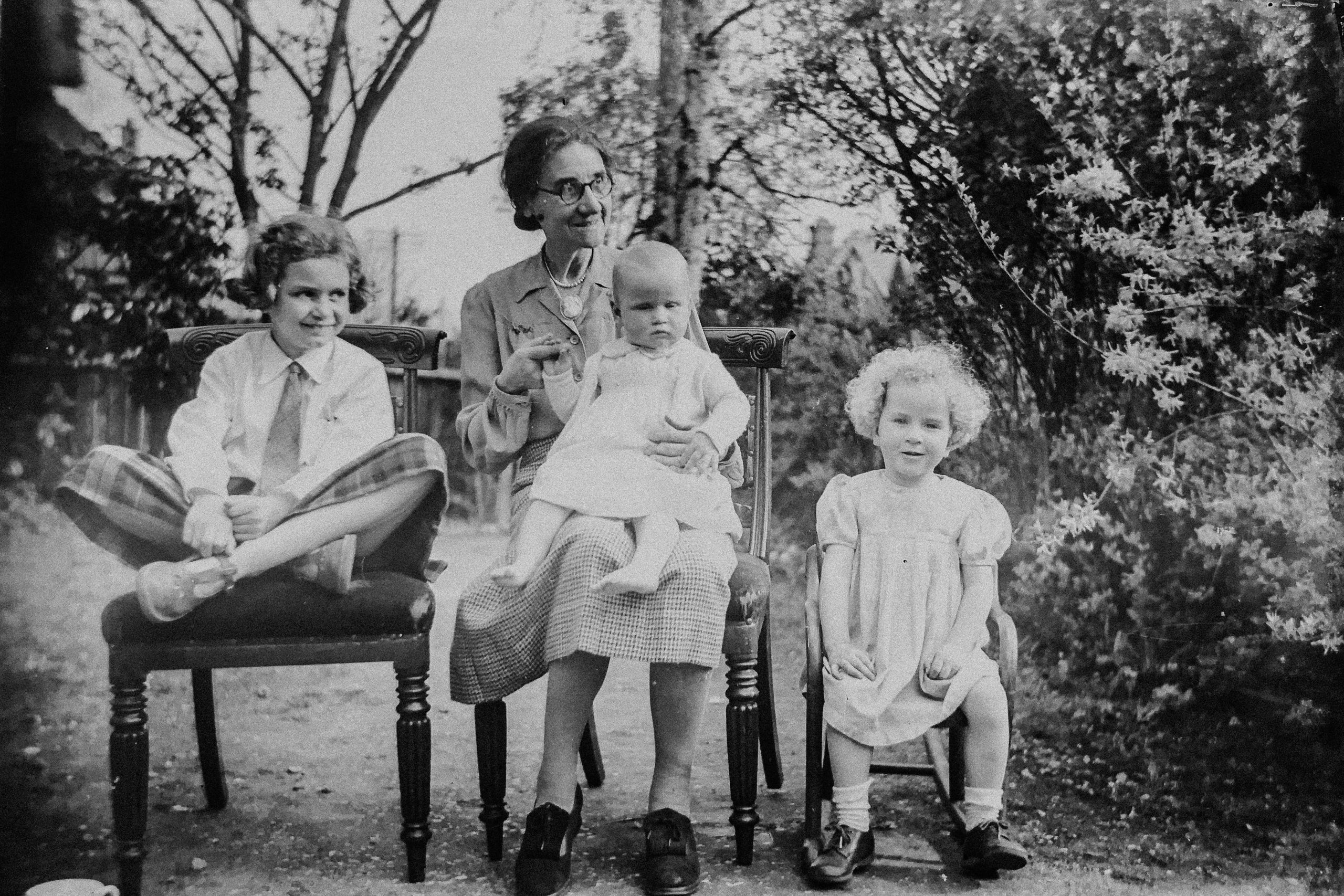
Sometimes, the most revealing images are simple records of ordinary life: a family standing outside its home, workers gathered after a long day, children playing in a street, or neighbors meeting in a familiar public space.
Their value often becomes clearer with time.
A hairstyle, a household object, an old advertisement, or a building in the background may help explain how people lived and how their surroundings changed. Details that once seemed insignificant can become meaningful records of a world that no longer exists in quite the same way.
Of course, photographs do not tell complete stories on their own. Their meaning becomes stronger when they are examined carefully and supported by reliable historical context.
But that is part of their appeal. Every image offers an opportunity to look closer, ask questions, and discover something that might otherwise have been forgotten.
The next time you come across an old photograph, take a moment to examine more than the faces. Look at the clothing, the buildings, the objects, and everything happening in the background.
You may find that the smallest detail is the one that makes the entire image unforgettable.
