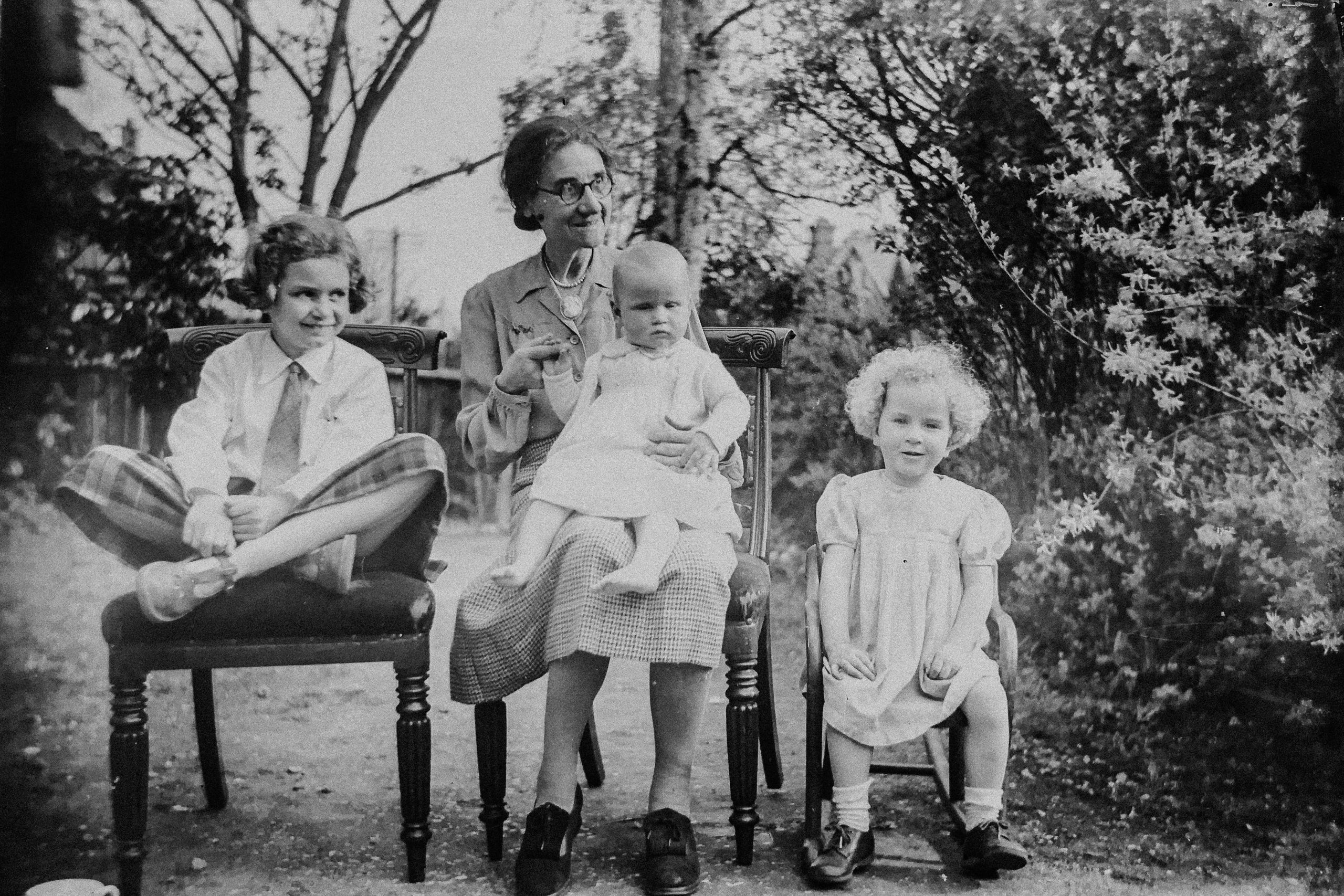
Many household items were used until they became damaged or outdated, then discarded. Photographs sometimes provide the only surviving visual evidence of how such objects looked in their original settings.
Transportation offers another useful example.
A street photograph containing bicycles, horse-drawn carts, early automobiles, buses, or trams can help illustrate how people moved around their communities. The vehicles visible in the background may even help establish an approximate date when compared with historical records.
Objects also reveal technological change.
A telephone, camera, sewing machine, typewriter, or television set can suggest how technology entered ordinary homes and workplaces. These items remind us that inventions often changed daily routines gradually rather than transforming society overnight.
The more carefully viewers examine the background of an old photograph, the more they may discover.
5. Buildings and Streets Preserve the Shape of the Past
Architecture is another important source of historical information.
Buildings often survive for decades or even centuries, but their surroundings can change dramatically. Roads may be widened, storefronts replaced, houses demolished, and entire neighborhoods redesigned.
An old photograph can preserve the appearance of a place before those changes occurred.
A street scene may show buildings that no longer exist, while a familiar landmark might appear surrounded by a completely different environment.
Windows, doors, rooflines, balconies, decorative details, and construction materials can all provide clues about architectural styles and building practices.
The arrangement of a neighborhood can also reveal how communities developed.
For example, older photographs may show homes positioned close to commercial buildings, workshops, markets, or public gathering spaces. They may also document the gradual introduction of paved roads, street lighting, public transportation, and other infrastructure.
Photographs of rural communities can be equally informative. They may preserve traditional building techniques, agricultural structures, fences, wells, and other features that have since disappeared.
Comparing an old photograph with a recent image of the same location can be particularly interesting.
A building might still stand in almost its original form, while everything around it has changed. In other cases, only a street name or a distant landmark may help identify the location.
Such comparisons demonstrate that places are not static. Communities continually adapt to new needs, economic conditions, technology, and changing populations.
Historical photographs provide a way to observe those changes across generations.
6. Body Language Offers a Glimpse Into Social Customs
The people in historical photographs are not simply decorative elements. Their expressions, posture, and interactions can also attract attention.
In formal portraits, individuals often stand or sit in carefully arranged positions. Families may be organized according to age or perceived social roles, with parents seated prominently and children positioned nearby.
Groups of workers might stand in rows, while school photographs often show students arranged according to height or class.
These arrangements can reflect the conventions of photography at the time, as well as the social expectations of the people being photographed.
It is important, however, not to interpret body language too confidently.
A serious expression does not necessarily mean someone was unhappy. Early photographic processes sometimes required people to remain still for relatively long exposures, making relaxed smiles more difficult to capture.
Formal portraits also encouraged people to adopt composed expressions.
The photographer’s instructions, the occasion, and the expectations of the period all influenced how people appeared.
Informal photographs can offer a different perspective. People caught laughing, talking, working, or interacting naturally may provide a stronger sense of movement and everyday social life.
A group gathered around a table, for instance, might reveal how people celebrated a special occasion or spent time together.
These details can make historical photographs feel surprisingly personal. Although viewers may know nothing about the individuals pictured, their ordinary gestures can create a sense of connection across time.
7. Background Details Can Be More Important Than the Main Subject
When people look at a photograph, their attention usually goes first to the central subject.
