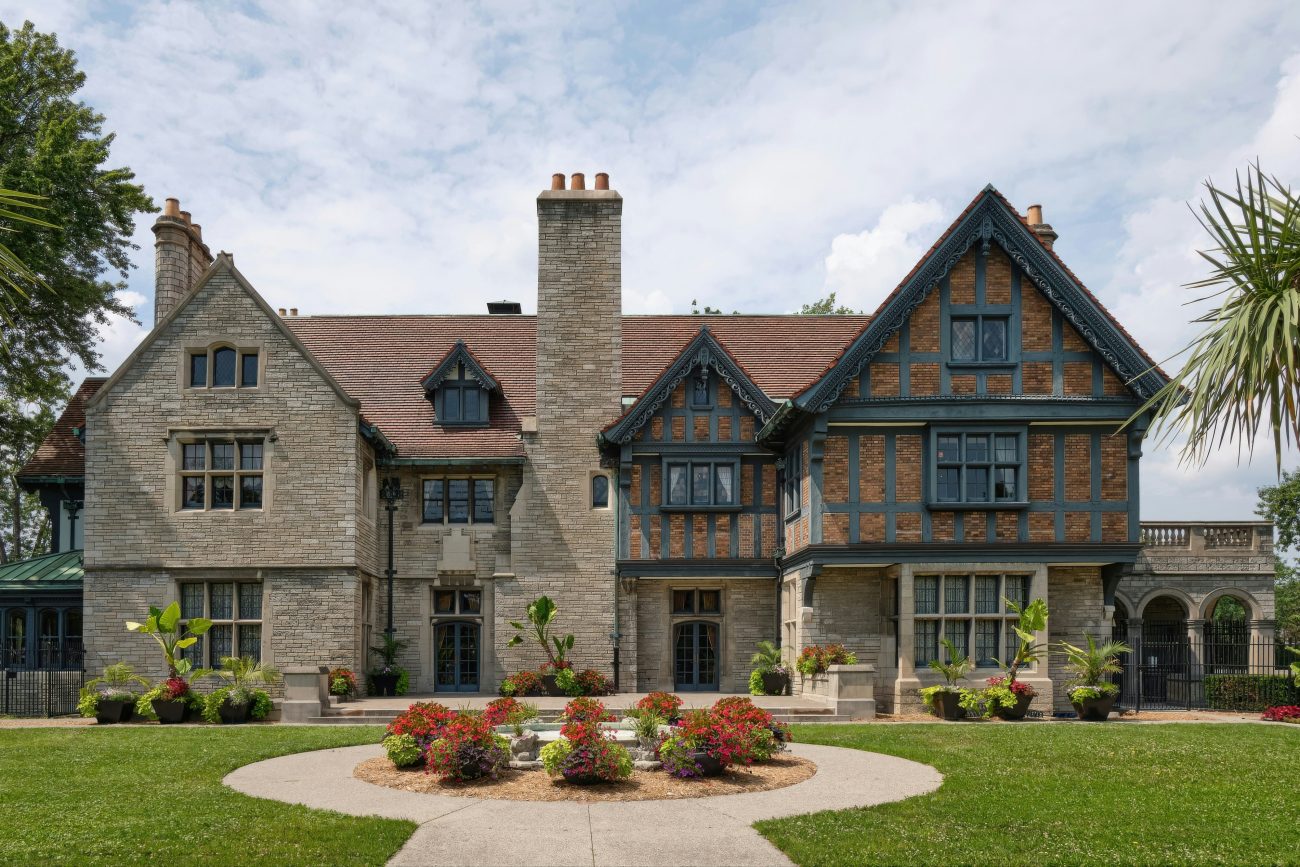
Inside a Restored Tudor Estate in Detroit’s Palmer Woods, Where Historic Elegance Meets Modern Luxury
Some homes impress with their size. Others stand out because of the details that make them feel timeless. In Detroit’s prestigious Palmer Woods neighborhood, a restored Tudor-style residence brings together both qualities, offering architectural grandeur, carefully preserved craftsmanship, and the comfort expected from a modern luxury home.
From its distinctive stone exterior and slate roof to its beautifully detailed interior, the residence reflects an approach to restoration that respects the character of the past without sacrificing the conveniences of contemporary living.
Set among landscaped grounds, the property makes a memorable first impression. Its traditional architectural elements give it a sense of permanence, while the surrounding trees and outdoor spaces contribute to an atmosphere of privacy and quiet refinement.
Inside, the home reveals a collection of design details that give each space its own personality. White oak paneling, decorative moldings, reclaimed wood floors, and hand-carved beams create a warm interior that feels both substantial and welcoming.
Rather than relying entirely on modern finishes, the residence allows its original character to remain part of the experience.
A Distinctive Tudor Exterior in Palmer Woods
The home’s exterior establishes its identity before visitors even step inside.
Its stone façade, slate roof, and leaded-glass windows reflect the traditional Tudor style, an architectural approach known for its distinctive materials, detailed craftsmanship, and recognizable character.
The combination gives the residence a strong presence within Palmer Woods, one of Detroit’s most prestigious residential neighborhoods.
The landscaping adds another layer to the property’s appeal. Mature trees and carefully maintained grounds provide a natural setting around the home, creating a sense of separation from the surrounding streets.
For buyers who appreciate traditional architecture, these exterior details can be just as important as the interior finishes. They establish a visual identity that cannot easily be recreated through a conventional renovation.
The residence’s appeal begins with that sense of individuality.
An Interior Defined by Craftsmanship
Inside, the home’s historic character continues through a collection of carefully considered materials.
White oak paneling brings warmth to the interior, while decorative moldings add definition to the walls and ceilings. Reclaimed wood floors introduce texture and character, creating a connection between the home’s architectural past and its restored present.
Hand-carved beams provide another striking detail.
These elements give the rooms a sense of depth and craftsmanship that is often difficult to achieve in newer construction. Instead of making every surface look perfectly uniform, the design allows natural materials and traditional details to remain visible.
The result is an interior that feels elegant without becoming overly formal.
This balance is especially important in a historic residence. A successful restoration should preserve the qualities that make a property distinctive while ensuring that its rooms remain comfortable and practical for everyday use.
Here, the combination of traditional finishes and updated amenities creates that sense of continuity.
A Living Room Filled With Natural Light
One of the home’s most impressive spaces is its soaring living room.
Arched windows draw natural light into the room, emphasizing the scale of the interior and highlighting its architectural details. The height of the space creates a feeling of openness, while the traditional materials help maintain a welcoming atmosphere.
The room offers an appealing setting for both everyday relaxation and larger gatherings.
Its architectural features provide visual interest without requiring excessive decoration. The windows, proportions, and craftsmanship become part of the room’s character.
In a home with such a strong historical identity, this kind of space can serve as a natural centerpiece.
It connects the home’s formal architectural style with the more relaxed experience of spending time with family and guests.
A Kitchen That Preserves a Piece of the Past
The kitchen brings together contemporary convenience and an especially memorable piece of the home’s history.
