Updated appliances provide the practical features expected in a modern kitchen, while a restored original refrigerator preserves a distinctive connection to the residence’s past.
It is an unusual detail, but one that gives the space personality.
In many historic restorations, older features are removed in favor of entirely new installations. Preserving an original element can create a different experience, allowing the home’s history to remain visible in a room used every day.
The kitchen demonstrates how modern improvements and historic character can coexist.
Its updated appliances support contemporary living, while the restored refrigerator serves as a reminder that the residence has a story extending beyond its latest renovation.
That combination makes the kitchen more than a functional space. It becomes another expression of the property’s overall design philosophy.
A Primary Suite Designed for Privacy
The primary suite offers a quieter atmosphere, providing a private retreat within the larger residence.
Its features include a spa-inspired bathroom, a dedicated dressing area, and a private sitting space.
Together, these elements create a more complete personal living area rather than a bedroom designed solely for sleeping.
The bathroom brings a sense of relaxation to the suite, while the dressing area offers additional organization and convenience. The sitting space provides room to read, unwind, or enjoy a quieter moment away from the home’s shared living areas.
This arrangement reflects the way luxury homes are increasingly designed around different experiences.
Shared spaces allow family members and guests to gather, while private rooms provide opportunities for rest and personal time.
The primary suite brings those ideas together in a setting that emphasizes comfort and privacy.
Additional Bedrooms and Welcoming Gathering Spaces
Beyond the primary suite, additional bedrooms provide privacy for family members and guests.
The arrangement gives the residence flexibility, allowing different household members to enjoy their own spaces while remaining connected through the home’s larger living areas.
Formal dining and generous living spaces further support the property’s role as a place for entertaining.
A dedicated dining area offers a traditional setting for meals and special occasions. The larger living spaces provide room for conversation and gatherings without making the home feel limited to formal entertaining.
That balance between private and shared areas is one of the qualities that makes a large residence practical.
A home can be architecturally impressive, but it must also support the routines and relationships of the people who live there.
The Palmer Woods residence brings together spaces for both.
A Secluded Stone Veranda Surrounded by Nature
The outdoor setting adds another dimension to the home.
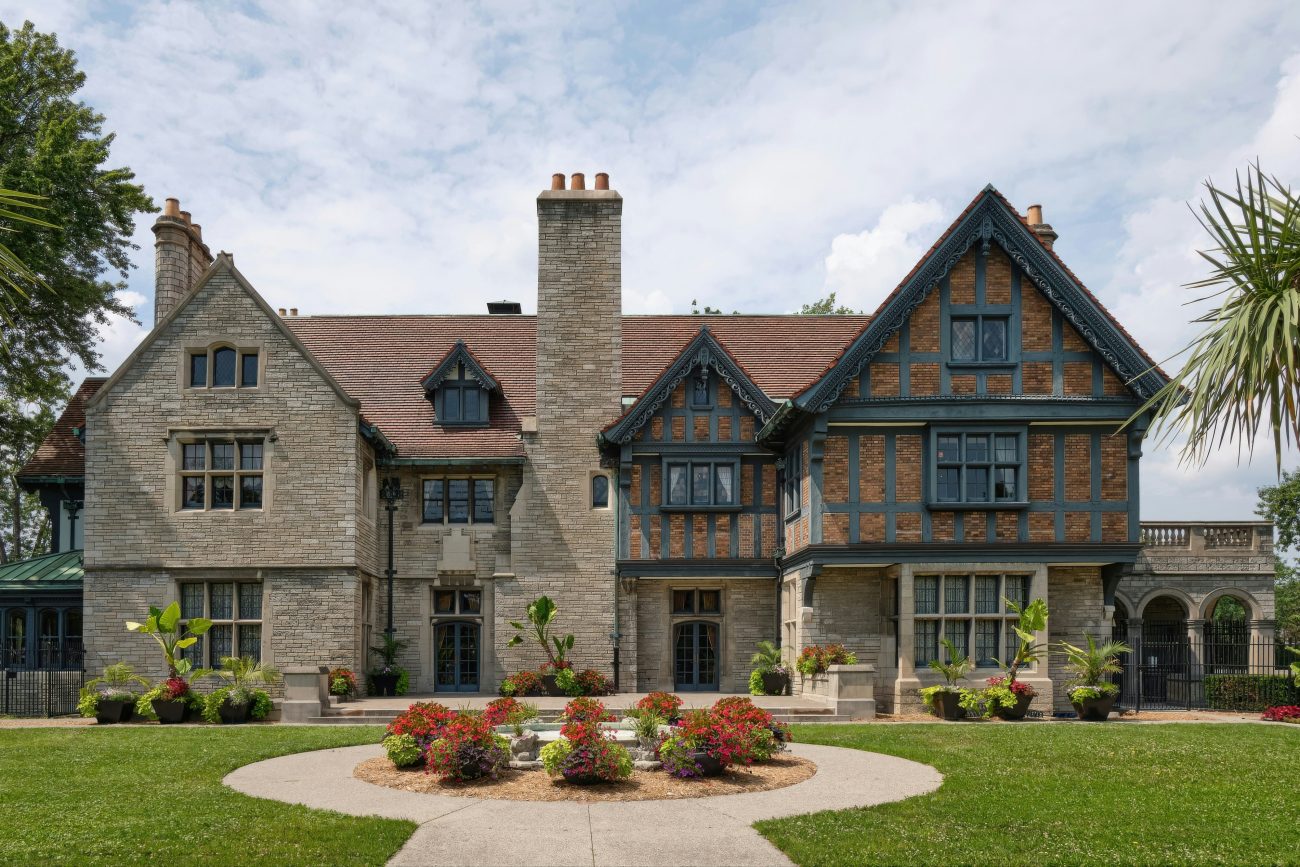
A secluded stone veranda overlooks a fountain and mature trees, creating a peaceful place to enjoy the surrounding landscape.
Its location offers a natural extension of the interior living spaces, providing an outdoor setting for quiet mornings, relaxed afternoons, or conversations with guests.
The fountain adds a focal point, while the mature trees contribute to the sense of privacy.
Rather than treating the outdoor area as a separate feature, the residence incorporates it into the overall living experience.
For a property with such a strong architectural identity, this connection between the house and its landscaped grounds is particularly appealing.
The veranda offers a quieter alternative to the home’s larger gathering areas, allowing residents to enjoy a more relaxed setting without leaving the property.
A Prestigious Detroit Location
The residence is located in Palmer Woods, a well-known and prestigious neighborhood in Detroit.
Its proximity to Detroit Golf Club and local amenities adds to the property’s location appeal.
For prospective buyers, location is an important part of evaluating a luxury residence. Architecture and interior design may determine the first impression, but the surrounding neighborhood influences how the home fits into everyday life.
