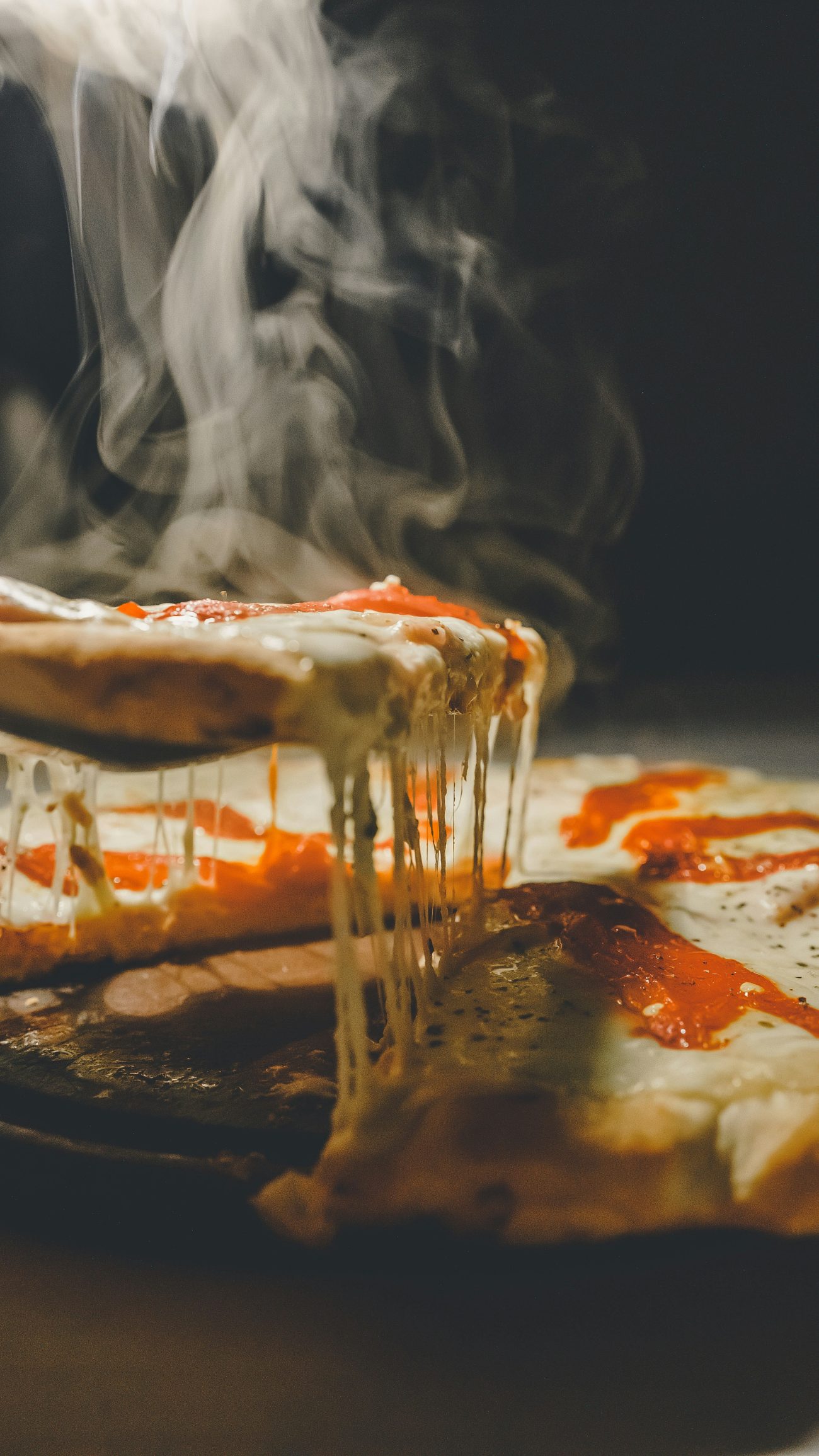
As a pizza bakes, the temperature rises rapidly across the surface. Moisture within the cheese begins to heat up, while the fat softens and the protein structure changes.
Under certain conditions, steam and expanding pockets of gas can contribute to small raised areas. The cheese may puff up in places, creating rounded bubbles or blisters across its surface.
The exact appearance depends on several factors, including the type of cheese, its moisture content, how finely it has been shredded, the thickness of the layer, and the temperature of the oven.
Some cheeses melt into a relatively smooth layer. Others develop more noticeable blisters, especially when exposed to intense heat.
This is one reason two pizzas prepared in different ovens can look noticeably different even when they use similar ingredients.
A pizza baked at a very high temperature may develop small browned spots and raised areas. Depending on the cheese and baking conditions, those changes can happen quickly.
The bubbles may also look different after the pizza has been removed from the oven. As the temperature drops, the cheese begins to settle, but some raised areas remain visible.
That is why a pizza can arrive with a surface covered in tiny domes even though the baking process has already ended.
In other words, an unusual-looking cheese surface does not automatically mean that something went wrong.
Does Bubbling Mean the Pizza Is Burned or Spoiled?
Not necessarily.
Small bubbles, blisters, and browned spots are common characteristics of melted cheese that has been exposed to heat. They can appear on homemade pizzas, restaurant pizzas, and other baked dishes.
However, appearance alone cannot establish whether a pizza is safe to eat.
That distinction is important.
A pizza can have perfectly normal cheese bubbles and still require proper food-handling precautions. Likewise, a pizza that looks attractive is not automatically safe if it has been stored improperly or contaminated.
If the food has an unusual sour or rotten smell, visible mold, unexpected discoloration, or other signs of spoilage, it should not be eaten. If there is reason to believe the pizza was left at an unsafe temperature for too long, the safest decision is to discard it.
The same applies if the packaging appears tampered with or there is another legitimate concern about how the food was handled.
But tiny bubbles in freshly baked cheese, by themselves, are not a reason to assume that a pizza is spoiled.
That was the important distinction I had been missing when I first opened the box.
The First Bite Changed Everything
After reading about the baking process, I put my phone down and looked at the pizza again.
Nothing about it had changed. The little bubbles were still there, scattered across the melted cheese exactly as before.
The difference was that I now had a reasonable explanation.
I picked up a slice.
The crust was warm and crisp around the edges. The cheese stretched slightly as I lifted it, and the familiar smell of tomato sauce and melted cheese filled the kitchen.
I took a bite.
It tasted exactly like the pizza I had ordered.
There was no strange flavor, no unexpected texture, and nothing that suggested the unusual appearance had affected the meal. It was simply a good pizza with a slightly different-looking cheese surface.
I continued eating, and before long, I had almost forgotten what had made me hesitate in the first place.
Still, the experience stayed in my mind.
Sometimes the Most Ordinary Things Look Strange Until We Understand Them
What surprised me most wasn’t the explanation itself. It was how quickly my thoughts had changed after noticing something unfamiliar.
