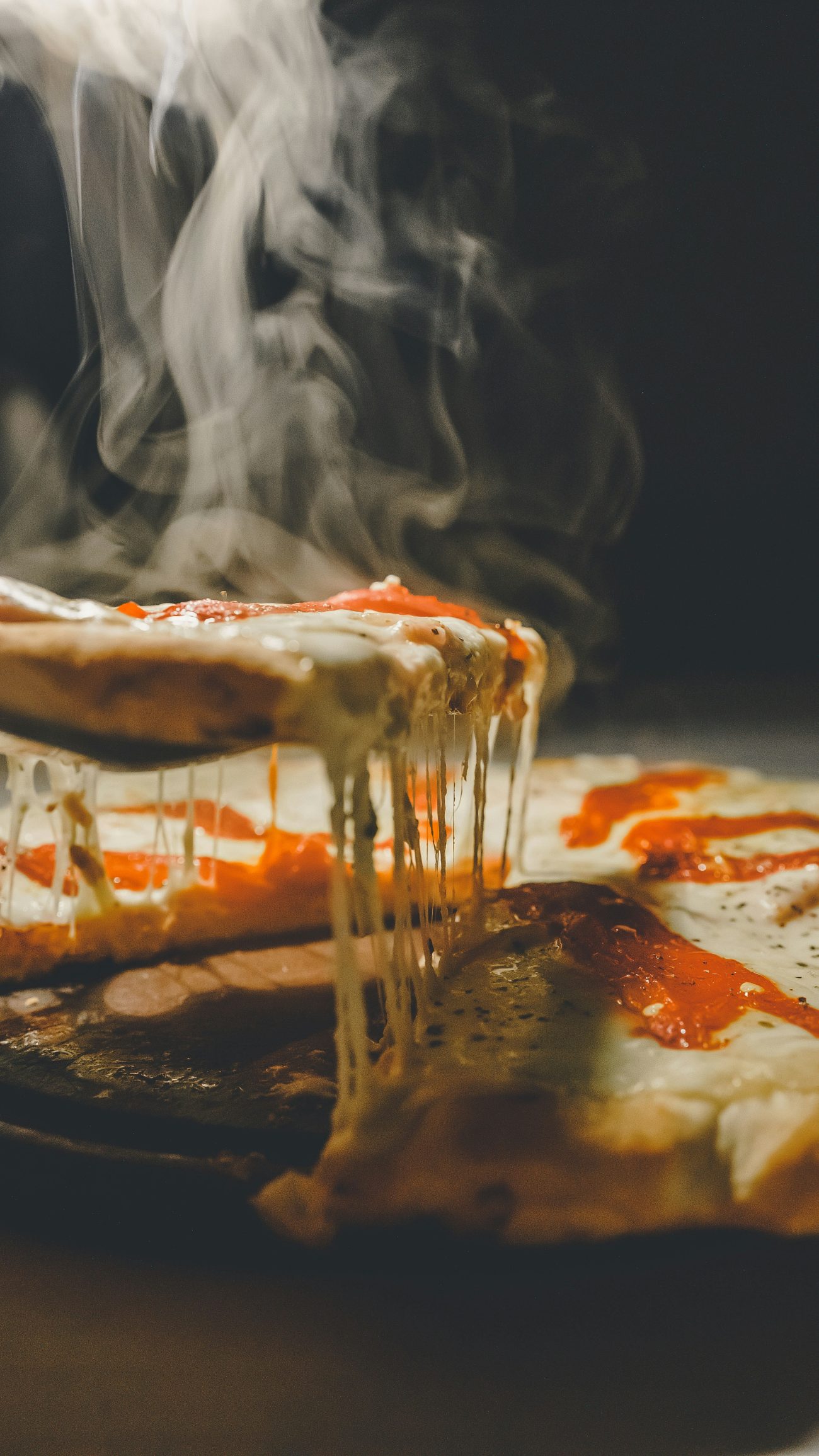
I Ordered a Pizza for Dinner, but Something About the Cheese Made Me Stop Before Taking a Bite
I ordered a pizza one evening, expecting the usual experience: a warm box delivered to my door, melted cheese, a golden crust, and an easy dinner after a long day. Nothing about the order seemed unusual. I wasn’t trying a new restaurant or experimenting with unfamiliar toppings. I simply wanted something comforting that required almost no effort.
When the delivery driver arrived, I took the box, thanked him, and carried it straight into the kitchen.
Everything seemed perfectly normal.
But when I finally opened the box, something about the pizza caught my attention immediately.
At first glance, it looked delicious. The crust was golden, the toppings were evenly distributed, and the cheese covered the surface just as I expected. Then I noticed the texture.
Instead of looking completely smooth, the melted cheese was covered with dozens of tiny raised bubbles. Some were barely noticeable, while others looked like little rounded domes scattered across the pizza.
I stopped and stared.
It wasn’t the kind of appearance I usually associated with a freshly delivered pizza. The cheese wasn’t simply browned or slightly blistered. Its surface looked almost uneven, as though something had pushed upward from underneath.
For a moment, I wondered whether something had gone wrong during preparation.
The Strange Little Bubbles Across the Cheese
I leaned closer to get a better look.
The bubbles varied in size, creating a pattern that seemed almost too organized to be accidental. Some were clustered together, while others appeared individually across the melted cheese.
My first explanation was that the pizza had been left in the oven too long.
That would have made sense. High heat can change the appearance of cheese, and some varieties develop browned spots or raised areas during baking. Perhaps the oven temperature had been higher than usual. Maybe the pizza had spent an extra minute or two inside.
But the more I examined it, the more questions I had.
The bubbles didn’t look particularly burned. They weren’t dry or crusty, either. They appeared soft and rounded, almost as if air had become trapped beneath the surface.
I began wondering whether the restaurant had used a different kind of cheese or whether something unusual had happened during the baking process.
It was a small detail, but once I noticed it, I couldn’t stop looking.
The pizza had gone from an ordinary dinner to something I suddenly wanted to understand before eating.
I Reached for My Phone to Find an Explanation
Like many people, I have developed a habit of searching for answers whenever I encounter something unfamiliar.
Instead of immediately taking a bite, I picked up my phone and searched for descriptions of the texture.
I tried phrases such as “pizza cheese bubbles,” “small domes on melted cheese,” and “why does cheese bubble when baking?”
The results were reassuring.
Photographs and explanations showed that the same appearance can occur on perfectly ordinary baked pizzas. The raised areas were not necessarily signs of a problem. In many cases, they were simply the result of how cheese behaves when exposed to heat.
That explanation made considerably more sense than the possibilities I had been imagining.
The cheese hadn’t necessarily been prepared incorrectly. It hadn’t automatically become spoiled or unsafe. What I was seeing could be a normal part of the cooking process.
And once I understood that, the pizza looked different to me.
Why Does Cheese Develop Small Bubbles During Baking?
Cheese is made up of water, fat, and proteins, and those components respond to heat in different ways.
