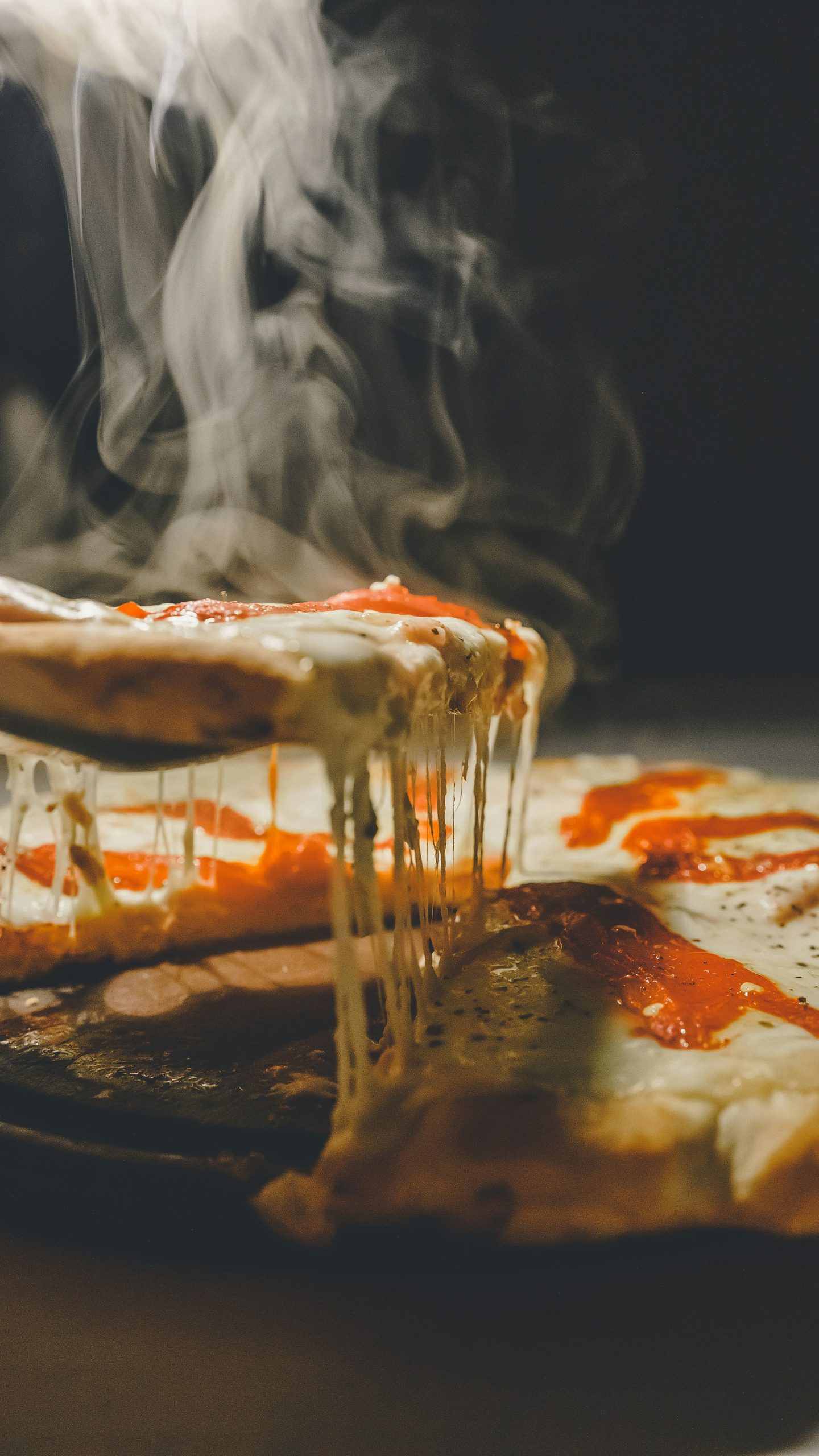
When air or water vapor becomes trapped beneath a layer of melted cheese, pressure can build locally. The surface may rise, forming a small pocket or dome.
As baking continues, some bubbles expand while others collapse. When the pizza is removed from the oven and begins to cool, the cheese can retain some of the raised shapes.
This is why two pizzas prepared with similar ingredients can look noticeably different.
One may have a relatively smooth surface, while another develops numerous small bubbles or a few larger ones.
Several factors can influence the result.
1. The Type of Cheese
Different cheeses behave differently when heated.
Mozzarella, a common pizza topping, melts readily, but its moisture content and composition can affect how it behaves in the oven. Low-moisture mozzarella may produce a different surface from fresh mozzarella, which generally contains more water.
The blend of cheeses can also matter. Some varieties soften and spread more evenly, while others brown or develop bubbles more readily under certain cooking conditions.
Even two products labeled mozzarella can behave differently depending on how they were made and stored.
2. Oven Temperature
Pizza is often baked at high temperatures, particularly in commercial ovens designed to cook the crust quickly while melting the cheese and heating the toppings.
Intense heat can cause moisture to evaporate rapidly and create localized pockets of steam. The surface may bubble before the cheese has fully settled.
The timing matters, too. A pizza removed from the oven at one moment may have a different appearance from one left inside for another minute.
A bubbly surface alone, however, does not establish that the oven temperature was incorrect.
3. Moisture Content
Water plays an important role in the way pizza cheese melts.
As moisture heats, it can produce steam. If that steam becomes trapped beneath a layer of cheese, the surface may rise.
The amount of moisture in the cheese, the thickness of the topping, and the way the ingredients are distributed can all influence the final texture.
This is one reason a pizza made with fresh mozzarella may look different from one prepared with a lower-moisture variety.
4. How the Cheese Melts and Browns
The surface of a pizza is constantly changing during baking.
As the cheese warms, it softens and spreads. In some areas, small pockets form, while other sections remain smooth. If the surface stays under intense heat, some areas may begin to brown more quickly than others.
These differences can produce the familiar spotted, blistered appearance seen on many baked pizzas.
Small, pale bubbles are not necessarily a sign of a problem. Their appearance must be considered alongside the pizza’s overall condition.
Are Bubbles on Pizza Cheese a Sign That Something Is Wrong?
This was the question that mattered most to me.
Once I understood how bubbles could form during baking, the pizza looked less mysterious. But I also realized that knowing one possible explanation didn’t automatically prove that every unusual-looking pizza was safe.
A bubbly surface is often harmless, particularly when the pizza has been freshly cooked and otherwise looks and smells normal.
However, appearance alone cannot establish whether food is safe to eat.
A pizza can have perfectly normal-looking cheese and still have been handled or stored improperly. Conversely, an unusual but harmless texture may look concerning even when the food has been prepared correctly.
The important thing is to consider the broader circumstances.
For example, it is worth paying attention to whether the pizza:
- Arrived hot or appropriately warm for a freshly delivered meal.
- Has an unusual, sour, rancid, or otherwise unexpected smell.
- Shows signs of contamination or damage to the packaging.
- Contains ingredients that appear spoiled or otherwise abnormal.
- Was delivered after an unusually long delay or left at an unsafe temperature.
These observations cannot guarantee safety, but they can help identify reasons for caution.
