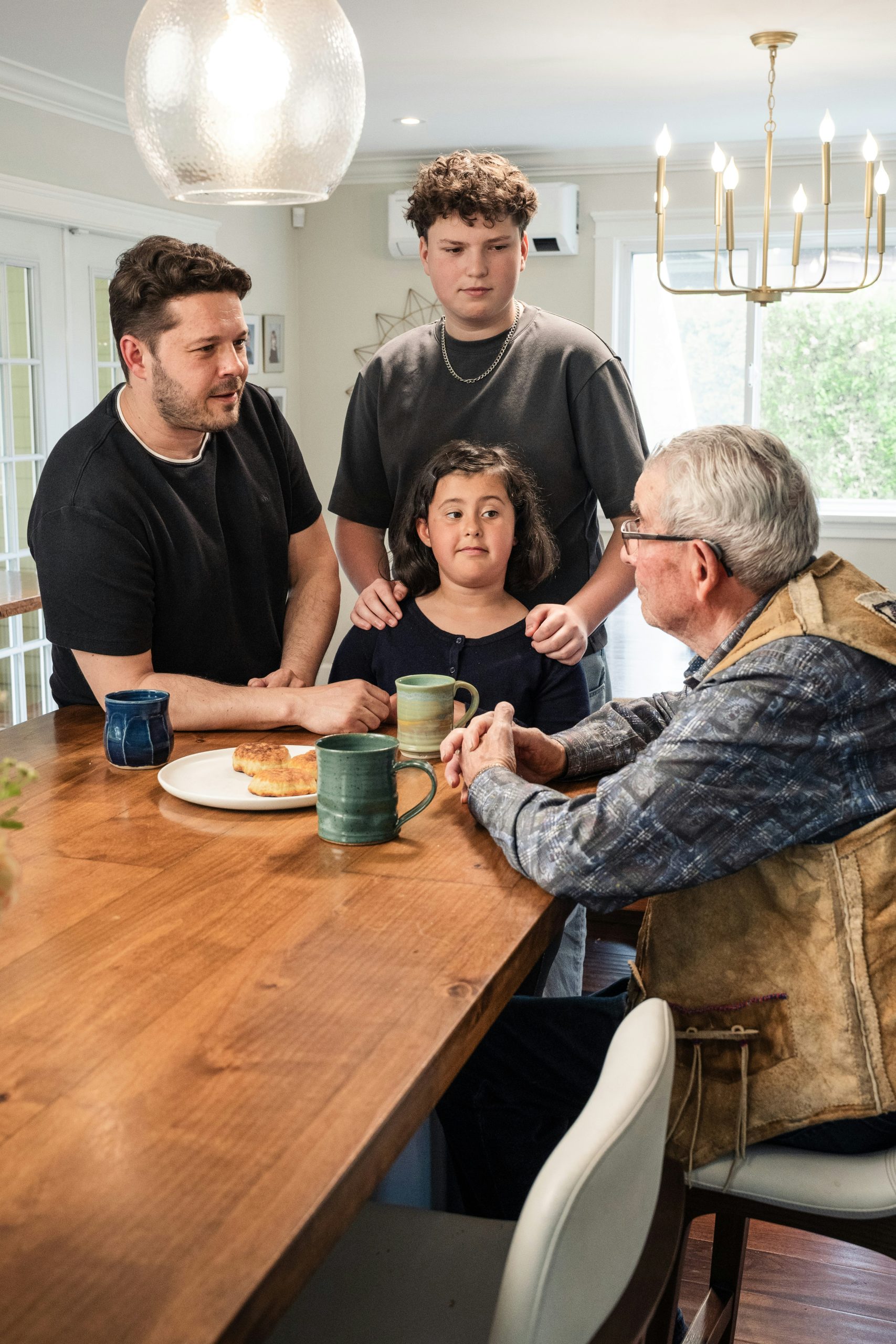
The money could have transformed their business and provided opportunities they had struggled to secure on their own.
But the offer was not presented without conditions.
Grant wanted their cooperation with the documentary and an arrangement that would allow Willa to live with him temporarily.
The proposal appeared to combine several things: a financial investment, a public family reunion, and a chance for Grant to present himself as a devoted father.
Nathan and Reid immediately recognized the problem.
Their daughter was not a business asset, a publicity opportunity, or a character in someone else’s carefully prepared story.
Reid made it clear that they would not negotiate Willa’s future in exchange for money.
Nathan agreed.
They had worked too hard to build a home where Willa felt secure to allow a financial offer to determine where she should live or how her childhood should be described.
Grant left his contact information and departed without securing the agreement he wanted.
But Nathan and Reid knew that the conversation could not end there.
Willa was sixteen. She deserved to know that her biological father had appeared, what he had requested, and what the offer involved.
They decided to tell her the truth.
Willa Wanted Answers, Not Promises
At first, Willa responded with humor.
She recognized Grant from one of his movies and made a joke about the family’s opinion of his acting. It was a familiar way of dealing with an unexpected situation, and for a moment, the conversation seemed less difficult.
Then she learned about the proposed documentary and the money.
Her reaction became more serious.
She asked whether Nathan and Reid had considered accepting the offer.
They reassured her immediately that they had not.
But Willa had another question.
Had Grant known about her before the adoption?
Nathan explained what he understood from the adoption process. The agency had contacted her biological father, but he had declined to become involved. His parental rights were eventually terminated.
The records did not provide every detail behind his decision.
Willa sat quietly with that information.
She wondered whether her blindness had influenced his choice. Had he been afraid of raising a child with additional needs? Had he ever thought about her after she entered foster care? Had he tried to find her at any point during the twelve years that followed?
Her fathers could not answer questions for which they had no reliable information.
They did not want to invent explanations simply to make the situation easier.
Eventually, Willa decided she wanted to meet Grant and ask him directly.
But she established a boundary before agreeing.
She would not participate in a documentary, repeat prepared answers, or accept an arrangement simply because someone wanted to tell her story.
Nathan and Reid respected that decision.
They understood that the meeting had to happen on terms Willa was comfortable with.
The Meeting Without Cameras
The family contacted the production company and requested a private meeting.
They wanted no cameras, recording equipment, or prepared interview.
The producer, Claire, agreed to meet them. Grant was also present.
When Willa entered the room, Grant stood and attempted to greet her warmly. She politely declined a hug.
She wanted to talk first.
Her opening question was direct: When had he actually raised her?
Grant struggled to provide a clear answer.
Willa then asked about the childhood memories included in the documentary script.
He acknowledged that some details could be changed.
But changing the wording would not solve the underlying problem.
The events described had never happened.
Willa explained that she had spent part of her early childhood in foster care. She described meeting Nathan and Reid, gradually becoming comfortable in their home, and learning to bake with their encouragement.
