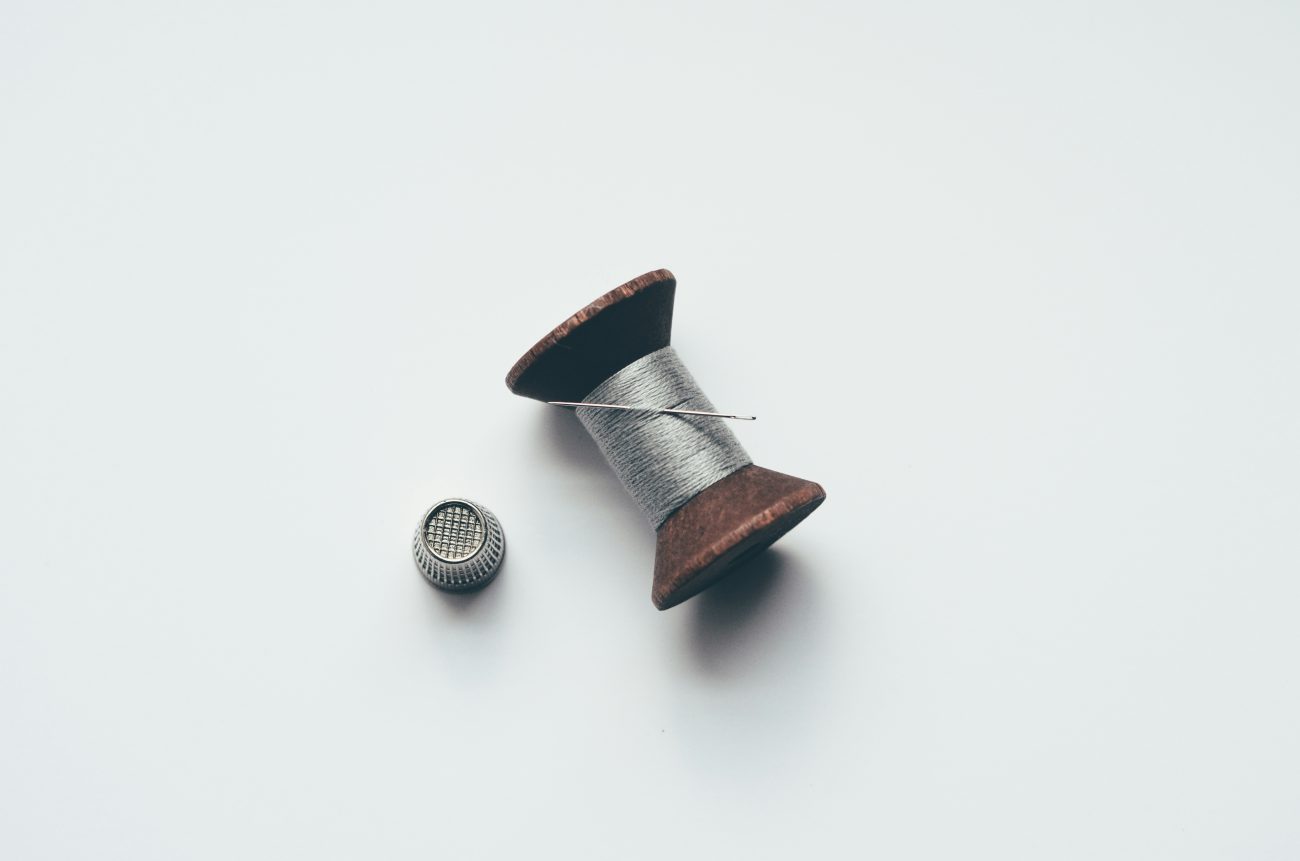
Their suitability depends on the construction and the type of sewing being performed.
Plastic Thimbles
Plastic thimbles are lightweight and generally affordable.
They are available in different colors and sizes and can be convenient for occasional household repairs. Some have textured surfaces designed to improve grip.
Silicone Thimbles
Silicone versions are flexible and can provide a comfortable fit for people who dislike rigid metal thimbles.
They come in different shapes and designs, including styles that cover only part of the fingertip.
As with any protective sewing accessory, the important thing is to choose a design that stays securely in place and provides adequate protection.
Specialized Thimbles
There are also thimbles designed for particular sewing techniques.
Quilters, embroiderers, dressmakers, and people who work with heavy fabrics may prefer different styles depending on how they hold their needles and how much pressure their work requires.
Some specialized designs are open at the top, while others cover only the side or tip of the finger.
The best choice depends on the task rather than simply the appearance of the accessory.
Why Did Almost Every Household Have a Thimble?
To understand why thimbles were once so familiar, it helps to remember how different clothing habits used to be.
Before inexpensive ready-made clothing became widely available, sewing and mending were essential household skills.
People regularly repaired worn garments, replaced missing buttons, adjusted clothing, patched holes, and made new items from available fabric.
A damaged shirt or torn dress was not automatically thrown away. Someone in the household might take out a needle and thread and repair it.
In many families, mothers, grandmothers, and other relatives passed sewing skills from one generation to the next. Children sometimes learned basic stitching at home or in school.
Because needles were used so frequently, protecting the fingers was important. A thimble was a practical addition to the sewing basket, often stored alongside scissors, thread, pins, buttons, measuring tape, and spare needles.
It was a small object that could be used again and again.
For some households, a thimble was not simply a tool. It was part of a familiar routine: sitting near a window, repairing a garment, preparing clothes for the next day, or working on a sewing project in the evening.
Many people remember seeing their mothers or grandmothers reach for one without even looking. It was simply something that belonged in the sewing box.
Why Did Thimbles Become Less Familiar?
Thimbles did not disappear because they stopped being useful. Everyday clothing habits gradually changed.
Mass-produced garments became more affordable and widely available. Instead of repairing every damaged item, many people found it easier to replace it.
Modern clothing production also reduced the amount of hand sewing required in ordinary household life. Sewing machines, professional alteration services, and inexpensive replacement garments changed the way people approached clothing repairs.
As a result, fewer households needed a complete sewing basket.
That does not mean hand sewing has vanished. Quilting, embroidery, needlework, clothing alterations, and other crafts remain popular. Many people still enjoy making or repairing items by hand.
However, a thimble is no longer something every household necessarily keeps in a drawer.
For younger people who have never learned traditional hand sewing, the small metal cup may look like an unfamiliar antique.
Are Old Sewing Thimbles Collectible?
Some antique thimbles attract the interest of collectors, especially those made from precious metals or featuring unusual designs.
Older examples may have decorative patterns, engraved initials, maker’s marks, or other details that help identify their origin.
Thimbles made from silver can be particularly interesting, although their value depends on more than the material alone.
