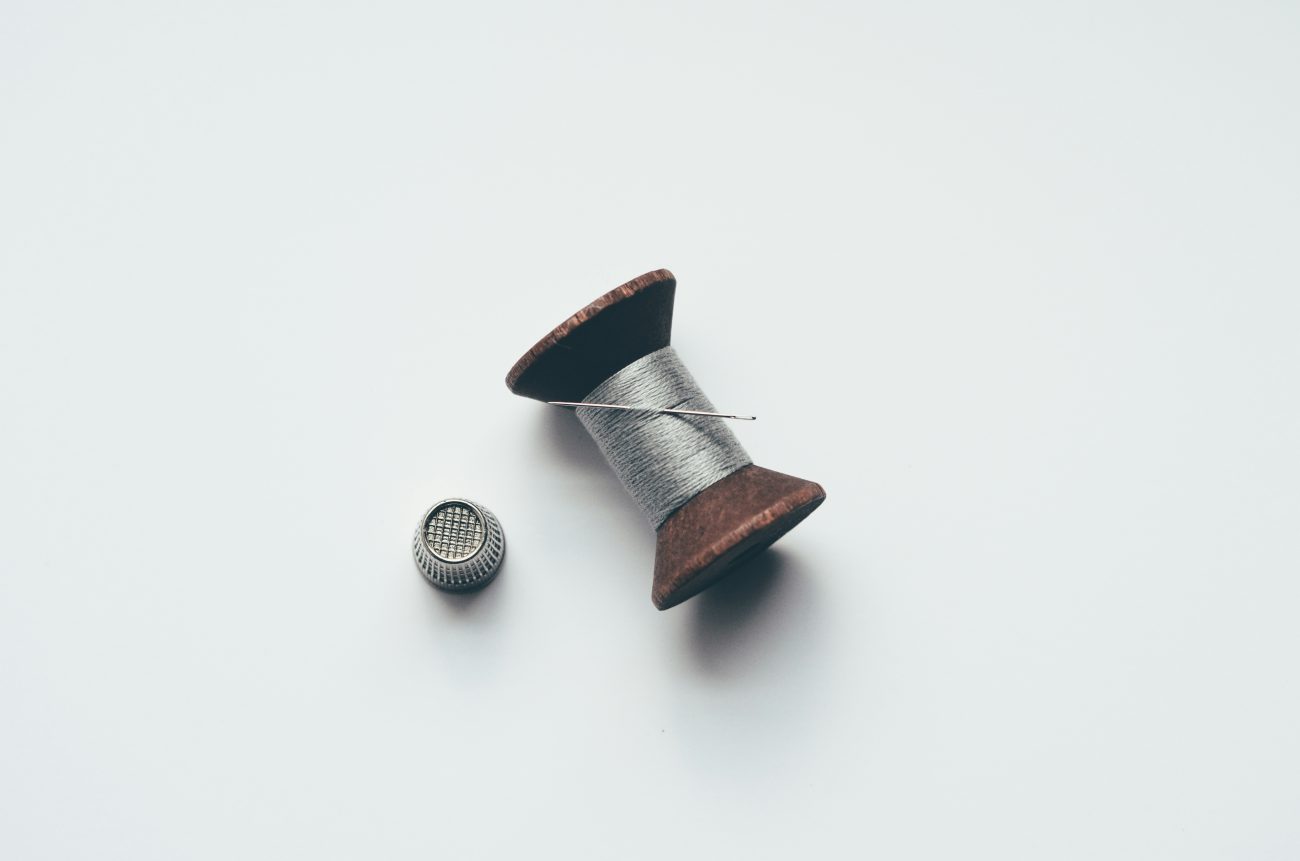
Those signs do not necessarily mean the object is damaged. They may simply tell the story of a tool that was used regularly.
How Do You Use a Sewing Thimble?
Using a thimble is relatively simple, even if you have never tried one before.
First, identify the finger you naturally use to push the needle through the material. Many traditional hand sewers prefer the middle finger, although some people find the index finger or another finger more comfortable.
There is no universal rule. The right position depends on your sewing technique and the way you hold the needle.
Here is a basic way to use one:
- Put on the thimble. Slide it onto the finger you use to push the needle. It should sit securely without squeezing your skin.
- Hold the needle. Grip the needle between your thumb and index finger.
- Position the fabric. Keep the material steady and guide the needle toward the place where you want the stitch.
- Place the needle against the thimble. Use the protected finger to press against the blunt end of the needle.
- Push carefully. Apply controlled pressure to move the needle through the fabric.
- Pull the needle through. Once the point comes out on the other side, use your fingers to pull the needle and thread through.
- Repeat the process. Continue stitching, adjusting your grip whenever necessary.
A properly fitted thimble can make longer sewing sessions more comfortable. It can also help prevent the small punctures and sore fingertips that sometimes happen during hand sewing.
If you’re new to using one, start with a simple repair, such as attaching a button or closing a small tear. With practice, the movement becomes more natural.
How Should a Thimble Fit?
Finding the right size is just as important as choosing the right material.
A thimble should fit securely enough to stay on your finger while you work, but it should not be so tight that it restricts movement or causes discomfort.
If it is too loose, it may rotate, slide down, or fall off when you push the needle. If it is too tight, it may leave pressure marks and become uncomfortable during longer sewing sessions.
When choosing a thimble, consider four things:
Comfort: It should feel natural when you bend and move your finger.
Stability: It should stay in position during ordinary sewing movements.
Size: The opening should fit your finger without squeezing it.
Material: Choose a material that provides suitable protection while feeling comfortable against your skin.
Some people prefer traditional metal thimbles because they are firm and durable. Others find leather or silicone versions easier to wear, particularly if they are not accustomed to sewing with a rigid accessory.
If possible, try several styles before deciding which one works best.
Different Types of Sewing Thimbles
Although the traditional metal design is the one most people recognize, thimbles come in several materials and shapes.
Each type has advantages depending on the sewing task and the user’s preferences.
Metal Thimbles
Metal thimbles are among the oldest and most familiar styles. They are commonly made from brass, steel, or silver.
Their firm construction makes them useful when considerable pressure is needed to push a needle through fabric. Many antique examples have a rounded top and a dimpled surface.
Silver thimbles may also feature decorative engravings or maker’s marks, making some examples interesting to collectors.
Leather Thimbles
Leather thimbles offer a softer alternative to rigid metal designs.
They may appeal to people who find traditional thimbles uncomfortable or prefer a more flexible fit. Some designs cover the fingertip, while others provide protection to a specific area of the finger.
