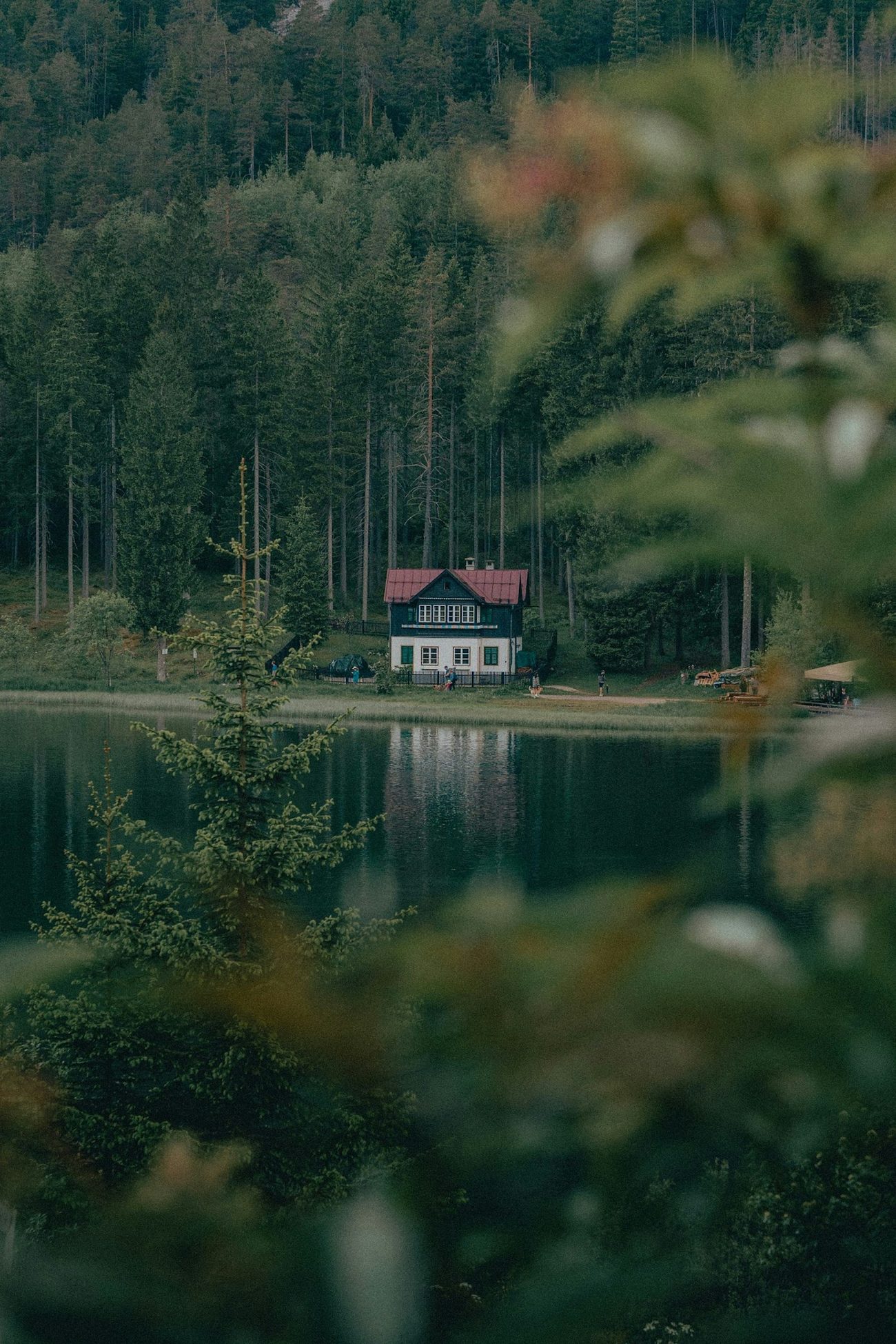
My Parents Brought 20 Guests to My Lake House Without Permission—Then They Broke In After the Sheriff Made Them Leave
The first time my parents brought a crowd of people to my lake house without permission, they acted as though I had committed the offense by refusing to welcome them.
My father stood on the porch, surrounded by twenty guests, luggage, and groceries, insisting that he had been invited. My mother called me dramatic. The guests looked increasingly uncomfortable as the sheriff began asking questions about who actually owned the property.
I watched everything unfold through my security cameras.
And when my father told the sheriff that I was his daughter, as if those four words automatically gave him the right to enter my home, I knew exactly what he expected me to do.
He expected me to surrender.
For most of my life, that had been the pattern. My parents made decisions, crossed boundaries, and then waited for me to accept the consequences because we were family.
But this time, I had something they couldn’t argue away.
The deed was in my name.
And I was no longer willing to pretend that being related to someone meant they could do whatever they wanted with what I had worked to build.
The First Confrontation
The sheriff initiated the conversation on the porch. Although the camera feed did not provide perfect audio, I could hear enough to understand what was happening.
“Is there any issue here?” he asked.
My father immediately stepped forward, apparently relieved to have an audience.
“Indeed there is,” he said. “This belongs to our daughter, yet she has locked us out. We were specifically invited here.”
The sheriff tilted his head.
“Invited by the owner herself?”
“Naturally,” Dad replied without hesitation.
I was sitting on my bed when I heard that answer. I got up, walked to my desk, and opened my laptop.
There was no reason to argue with a claim that could be settled through paperwork.
I pulled up the property deed, title documents, and purchase records. Every document identified me as the owner. I also opened an email I had sent to the sheriff’s office earlier that morning, attaching copies of the same paperwork.
With one click, I forwarded the message directly to the officer at the property.
A moment later, I saw the sheriff glance down at his phone.
His posture changed.
When he looked back at my father, his tone was no longer conversational.
“Sir, do you possess explicit permission from the property owner to be here today?”
Dad gave a short, dismissive laugh.
“She’s my daughter.”
“That was not my question.”
For a moment, nobody spoke.
Twenty guests stood around the porch with suitcases and groceries. Some of the food was already beginning to warm in the afternoon sun. They had arrived expecting a comfortable family getaway, apparently without considering whether the person who owned the house had agreed to host them.
My mother stepped forward.
“Officer, this is simply a misunderstanding,” she said in a softer voice. “She’s being dramatic. She tends to overreact.”
I almost laughed.
There was nothing dramatic about what I was doing. I had documents proving ownership, a record of my communication with law enforcement, and security footage showing people arriving after I had refused permission.
The sheriff raised one hand.
“Ma’am, I need direct confirmation from the property owner that you have permission to be on these premises.”
My father turned away and called me again.
I answered.
“What is it now?”
His voice sounded genuinely offended.
“Did you actually call the sheriff on your own parents?”
