This Historical Photograph Looks Ordinary at First—But Its Small Details Make People Look Twice
Some photographs become famous because they document important moments in history. Others attract attention for a completely different reason: the longer people look at them, the more they notice details they initially overlooked.
An old photograph can preserve far more than the appearance of the people standing in front of the camera. It captures clothing, decorations, lighting, surroundings, and the subtle arrangements that make a particular moment unique. Sometimes, those elements combine in an unexpected way, creating an image that viewers find difficult to interpret at first glance.
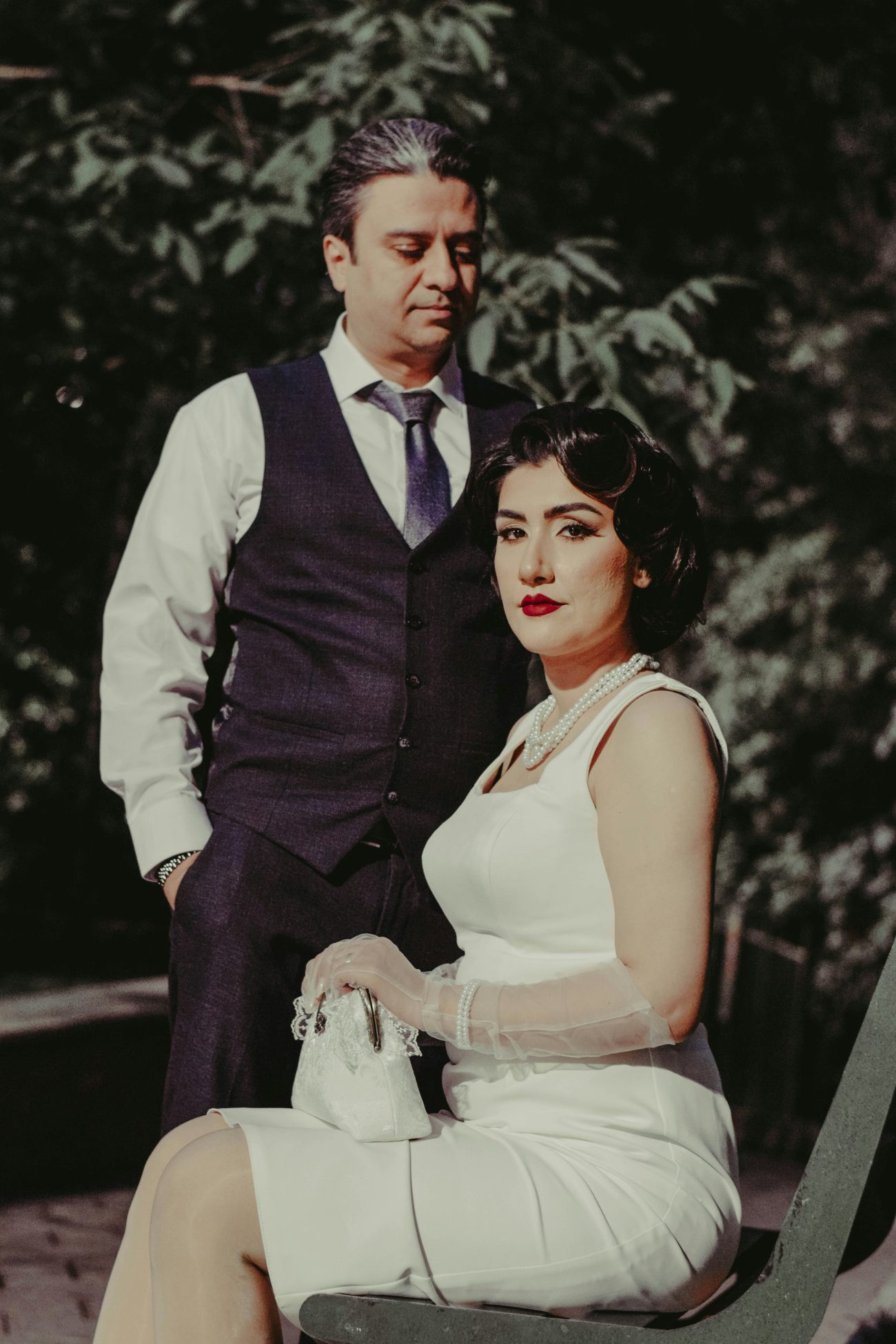
One particular photograph has drawn attention because of its unusual composition. It appears to show a formally dressed man and woman standing together during an elegant occasion. A rich red curtain fills much of the background, while a large metallic decorative figure occupies part of the surrounding space.
The man’s dark jacket and white shirt contrast with the woman’s pale purple gown. Their close positioning creates overlapping shapes around their arms and clothing, while the reflective decoration introduces additional visual complexity.
Nothing about the scene necessarily suggests that anything extraordinary happened. Yet the arrangement of these ordinary details makes the image interesting enough to encourage a second look.
And that raises a fascinating question: Why can a perfectly ordinary photograph sometimes look so unusual?
Why Some Historical Photographs Keep People Looking
A photograph does not need to document a major historical event to become memorable.
Some of the most interesting images from earlier decades capture everyday occasions: family gatherings, formal celebrations, public appearances, parties, and moments when people simply stopped to pose for a camera.
These photographs become valuable over time because they preserve details that are difficult to recreate.
Fashion is one obvious example. A dress, hairstyle, jacket, or accessory can help viewers recognize the style of a particular period. Background decorations can also reveal something about the occasion or the environment in which the photograph was taken.
Even the way people stand can provide clues about changing social customs and photographic traditions.
Older formal photographs often feature carefully arranged poses. Subjects might stand close together, keep their hands in specific positions, or face the camera with expressions that appear more serious than those commonly seen in casual modern pictures.
These details give historical photographs a distinctive atmosphere.
However, viewers are not always drawn to the most obvious elements. Sometimes, it is a small visual detail that makes an image stand out.
The Details Behind This Unusual Composition
At first glance, the photograph appears relatively straightforward.
A man wearing a dark jacket and white shirt stands beside a woman dressed in a pale purple gown. Behind them is a deep red curtain, creating a dramatic backdrop. A large metallic figure is positioned nearby, adding another decorative element to the scene.
The contrast between the colors is particularly noticeable.
The man’s dark clothing provides a strong visual anchor, while the woman’s lighter dress introduces a softer appearance. The red curtain creates a bold background, making the subjects stand out from their surroundings.
The woman’s gown also contains several folds and gathered sections of fabric. These create natural shadows and overlapping shapes that can become more noticeable when someone examines the image closely.
The positioning of the two individuals adds another layer of visual interest.
When people stand close together, their arms, hands, and clothing can overlap. A hand may appear partly hidden behind a fold of fabric, while an arm can blend into another person’s clothing depending on the camera angle.
The result is a collection of shapes that may not be immediately easy to separate.
