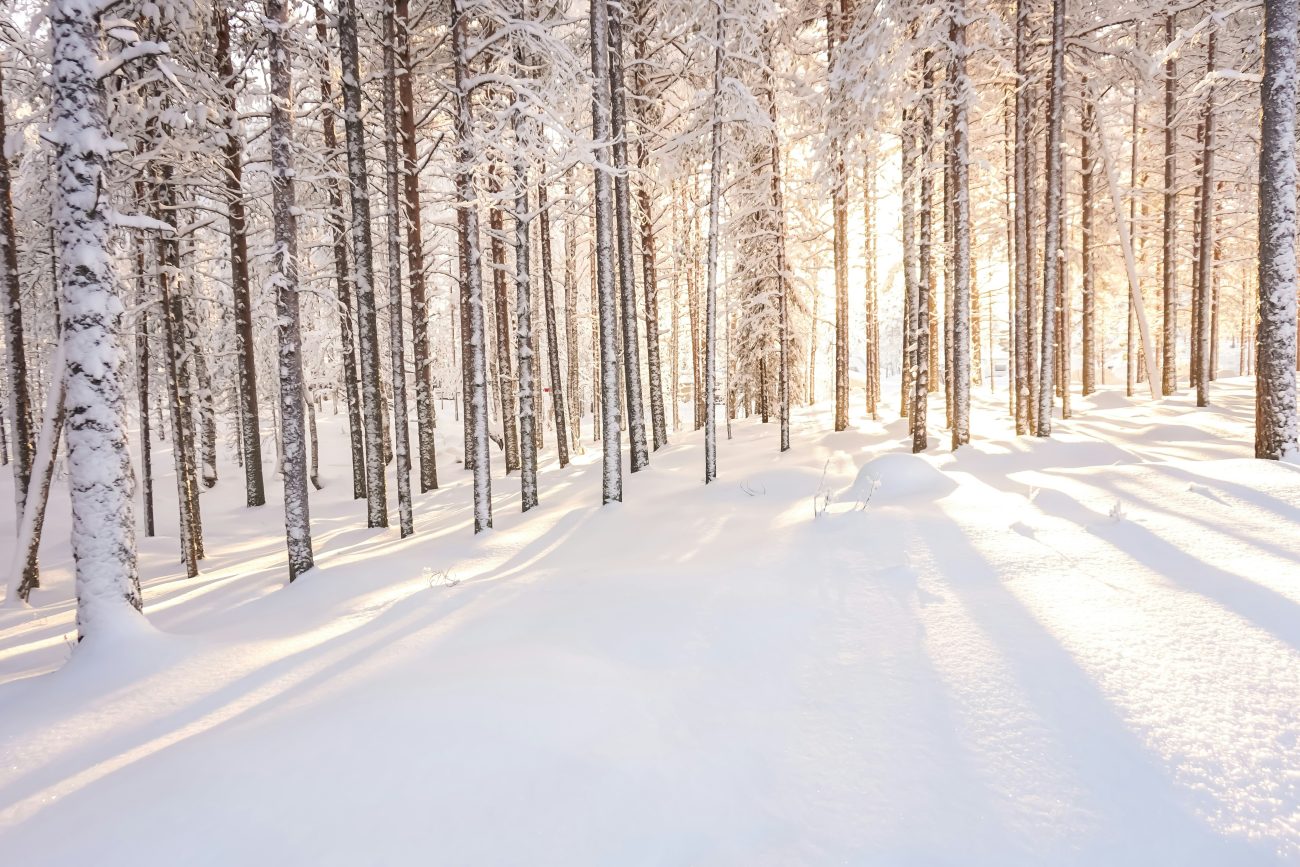
This is not necessarily an illusion caused by the sky.
The optical properties of snow can produce a real blue appearance under certain conditions.
When light enters a thick layer of snow or ice, it can travel a considerable distance before emerging. During that journey, some wavelengths are absorbed more strongly than others.
Longer wavelengths, particularly red light, tend to be absorbed more strongly than blue light in relatively pure ice.
As a result, light that has traveled farther through snow or ice can become relatively richer in blue wavelengths.
This effect is easier to notice in deep snow, compacted snow, ice caves, and thick glacial ice than in a thin layer covering a sidewalk.
The depth matters because light needs to travel far enough for wavelength-dependent absorption to become noticeable.
That is why a snowbank may appear white on its surface but show a cool blue tone inside a deep shadow or along a compacted edge.
The snow hasn’t changed its chemical composition.
The light has simply traveled through a different optical environment.
Why Snow Changes Color During Sunrise and Sunset
Snow also reflects the colors of the surrounding environment.
Think about a winter landscape shortly before sunset.
The sunlight may appear golden, orange, or pink as it passes through a longer path in the atmosphere. Snow reflects that changing illumination, so a white field can take on warm colors.
The same thing happens during sunrise.
A fresh layer of snow may look pale pink or peach-colored when the sky is illuminated by the rising sun.
Under a cloudy gray sky, snow may look duller and less brilliant. Beneath trees, it may appear greenish or gray because of the light filtering through the branches.
At night, snow can look blue under moonlight or artificial lighting.
These changes don’t mean the snow itself has developed a new pigment. They happen because the light reaching and leaving the snow has changed.
Our eyes interpret the reflected light, and the surrounding illumination plays a major role in what we see.
This is one reason photographs of snowy landscapes can look dramatically different depending on the time of day.
The same field can appear brilliant white at noon, golden at sunset, and blue in the evening.
Why Fresh Snow Looks Brighter Than Old Snow
Not all snow looks equally white.
Freshly fallen snow often appears especially bright because its crystals are relatively clean and have not yet undergone extensive melting, refreezing, or contamination.
As snow ages, several things can change its appearance.
The crystals change shape. Snow grains gradually become larger and more rounded as they undergo metamorphism. Their arrangement and the way light moves through the snowpack also change.
Dirt and debris accumulate. Dust, soil, pollen, soot, and other particles can become trapped in snow. These materials absorb light and reduce its brightness.
Melting changes the structure. When snow partially melts and refreezes, the grains can become more compact and connected. This changes the number and arrangement of ice-air boundaries that incoming light encounters.
Water can fill air spaces. Wet snow has a different optical structure from dry, freshly fallen snow. It may look darker, heavier, or more translucent in places.
This explains why the snow beside a busy road often becomes gray or brown while a newly covered field remains bright white.
The difference isn’t simply age. It’s the combination of changing crystal structure, moisture, and accumulated particles.
Why Snow Can Look Almost White Even in the Shade
One of the most interesting things about snow is how bright it can remain even when direct sunlight is limited.
On a cloudy winter day, the landscape may receive mostly diffuse light rather than strong direct sunshine.
