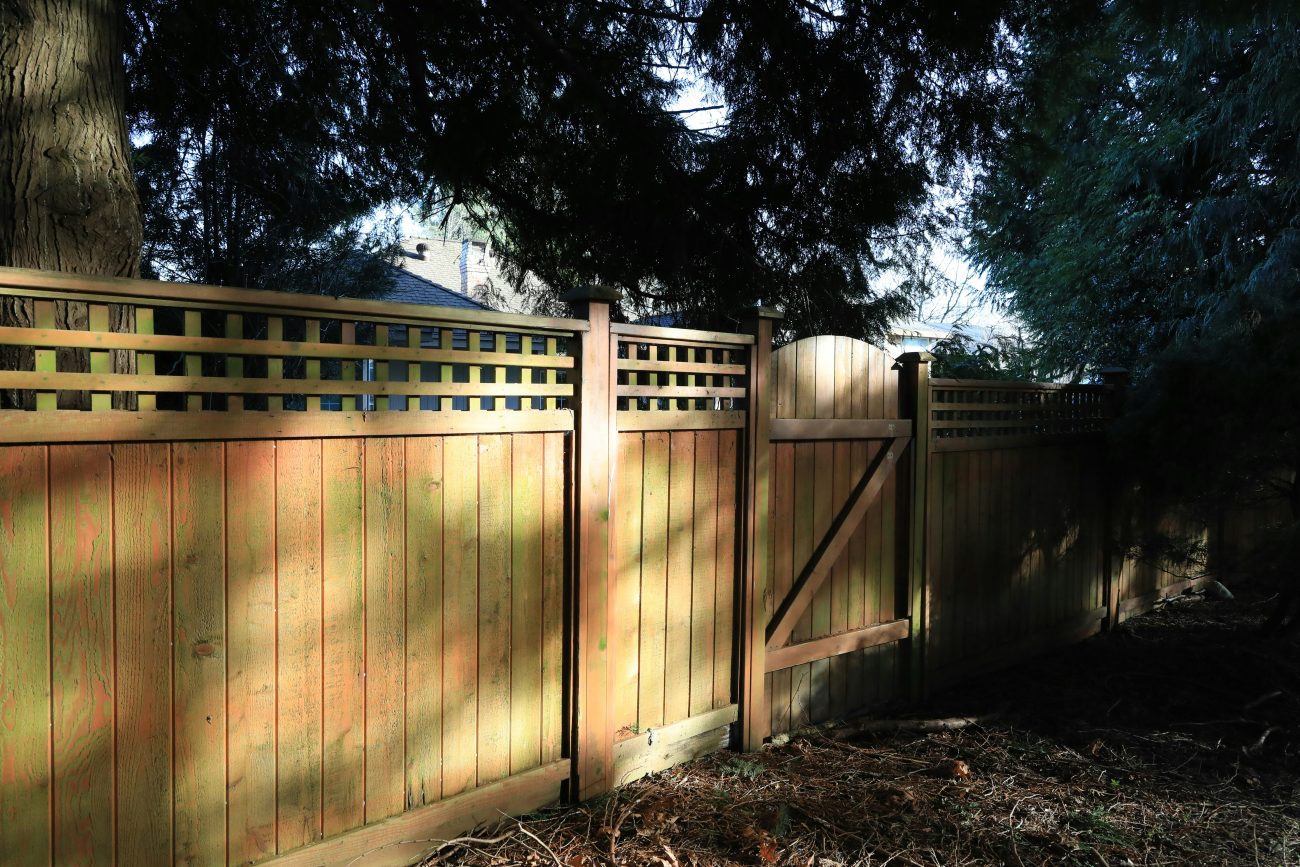
A useful approach is to keep the discussion focused on practical questions rather than accusations.
Instead of saying, “You’re being selfish by putting the ugly side toward my yard,” a neighbor could explain, “I was hoping we could discuss the fence orientation before construction because it will affect the appearance of my backyard.”
That kind of conversation gives the other person an opportunity to respond without immediately becoming defensive.
It can also help to consider alternatives rather than treating the issue as an all-or-nothing decision.
A different panel design, a double-sided fence, or a mutually agreed arrangement may satisfy both homeowners.
If the conversation becomes difficult, a neutral contractor, mediator, or local professional may help clarify the practical issues.
The goal should not be to win an argument. It should be to find a solution that respects property rights and allows both households to enjoy their homes.
Is There One Universal Rule About Which Side Faces the Neighbor?
No. There is no single universal rule that applies to every fence and every property.
In some communities, local regulations or homeowners association requirements may specify that the finished side must face outward.
In other places, the direction may be determined by the property owner, a private agreement, or the specific circumstances of the installation.
The familiar practice of placing the finished side toward the street or neighboring property is often viewed as courteous, but homeowners should not automatically treat that custom as a legal obligation.
The exact answer depends on where the property is located, how the fence is positioned, and which rules apply.
That is why checking the relevant requirements is more reliable than relying on neighborhood assumptions.
A Better Fence Shouldn’t Create a Worse Relationship
A fence can improve privacy, provide security, define outdoor spaces, and make a home more attractive.
But its value should not be measured only by the appearance of the finished boards.
A poorly planned installation can create disagreements that last far longer than the construction itself. A homeowner may spend thousands of dollars improving a property only to find that the project has damaged an important neighborly relationship.
The simplest way to avoid that outcome is to discuss expectations before construction begins.
Confirm the property boundaries. Review the local requirements. Understand who owns the fence and who will maintain it. Talk about the finished side before the contractor starts working.
If both sides cannot agree on a traditional design, consider whether a double-sided alternative would solve the problem.
Most importantly, remember that the people living next door will still be there long after the installation crew has left.
Sometimes, the best fence is not the one with the most expensive materials or the most attractive boards.
It is the one that provides privacy and security without creating unnecessary conflict between the people on either side of it.
