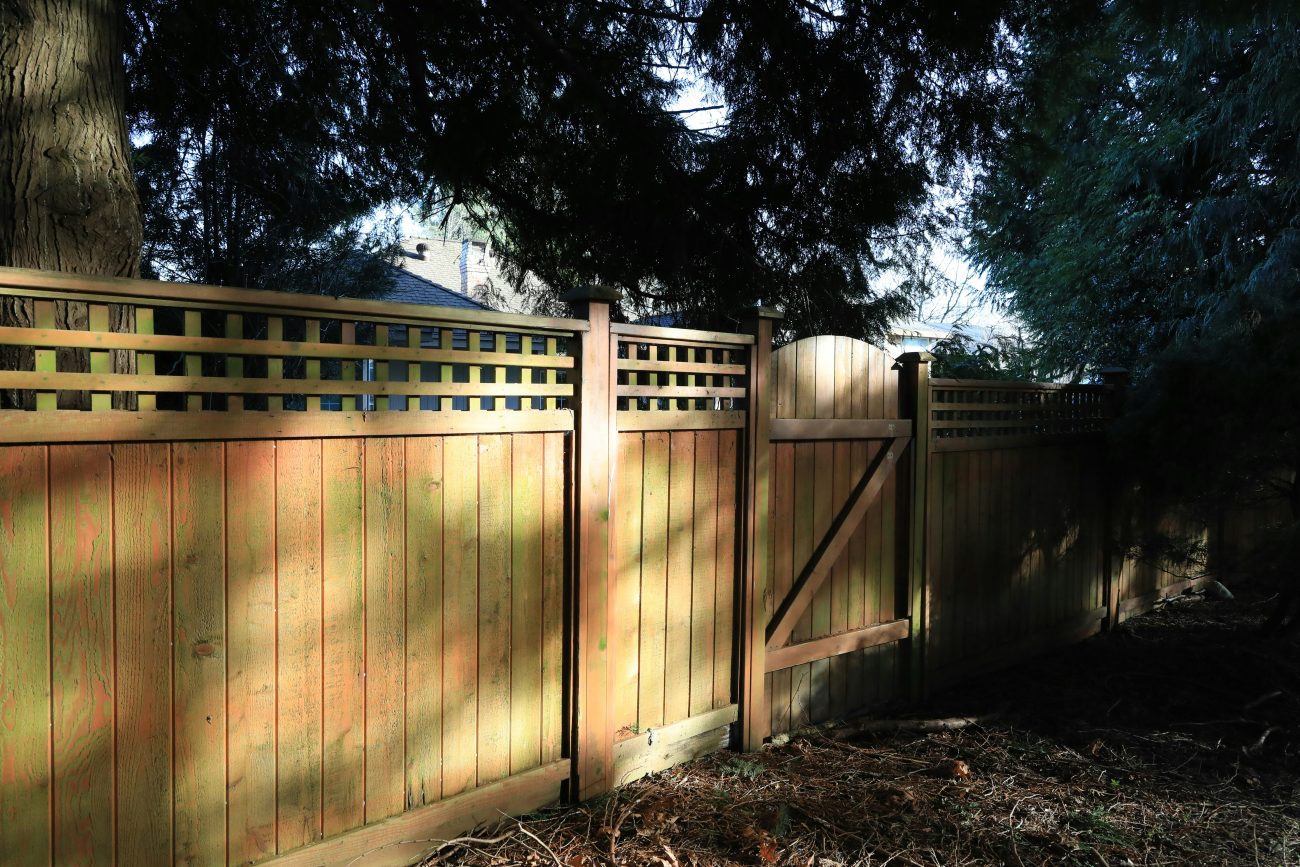
Likewise, paying for the entire installation does not always give a homeowner unlimited freedom to position a fence however they wish.
Local building regulations, boundary rules, and private community requirements may impose restrictions that apply regardless of who pays.
Before assuming that either neighbor has the final say, it is important to check the rules that govern the specific property.
What If the Person Paying for the Fence Wants the Finished Side?
One of the most common arguments begins when a homeowner decides to replace an old fence or install a new one entirely at their own expense.
They choose the materials, arrange the contractor, pay the invoice, and expect to make the final design decisions.
From their perspective, it may seem unreasonable for the neighbor to dictate which direction the fence should face.
There is some practical logic behind that position.
If a fence is entirely within one person’s property and no local rule or agreement says otherwise, the owner may have considerable control over its design and placement.
But the situation can be different when the fence sits directly on a boundary line, when both neighbors contribute to the costs, or when local rules specify how it must be constructed.
The question of who pays is therefore only one part of the situation.
Homeowners should also consider:
- Whether the fence is entirely on one property or positioned on a shared boundary.
- Whether the neighbor has contributed financially.
- Whether an existing agreement covers the fence.
- Whether local regulations specify the finished-side orientation.
- Whether a homeowners association has additional design requirements.
- Whether the installation could interfere with access, drainage, or neighboring property.
A homeowner who pays for the fence may still need to follow rules concerning its location, height, materials, and construction.
For that reason, it is better to establish the requirements before ordering supplies or scheduling installation.
Can Local Rules Require the Finished Side to Face Outward?
Yes, in some locations, local regulations or community rules may specify which direction the finished side must face.
However, requirements vary considerably depending on the municipality, neighborhood, and type of property.
Some communities have guidelines intended to preserve a consistent appearance along residential streets. These rules may address fence height, approved materials, placement, visibility near driveways, and the appearance of exterior-facing surfaces.
Homeowners associations may also have architectural standards that require approval before a fence can be installed or replaced.
In certain communities, the rules may specifically require the finished side to face the street or neighboring property.
In others, there may be no such requirement at all.
This is why homeowners should avoid relying entirely on what a neighbor says, what a contractor remembers from another project, or what is customary in a nearby neighborhood.
The correct information should come from the relevant local authority or governing documents.
Before construction begins, homeowners can contact their municipal building department or review the applicable regulations. If the property belongs to a homeowners association, they should also check its current architectural and fencing requirements.
It is much easier to resolve a design question before construction than to discover afterward that the fence does not comply with the rules.
Why Property Boundaries Matter More Than Many Homeowners Realize
The direction of the finished side may attract the most attention, but the location of the fence can be an even more important issue.
A fence that appears to sit directly between two properties may not actually follow the legal boundary.
Over time, landscaping, old fences, driveways, trees, and other features can create the impression of where one property ends and another begins. Unfortunately, visual assumptions are not always accurate.
