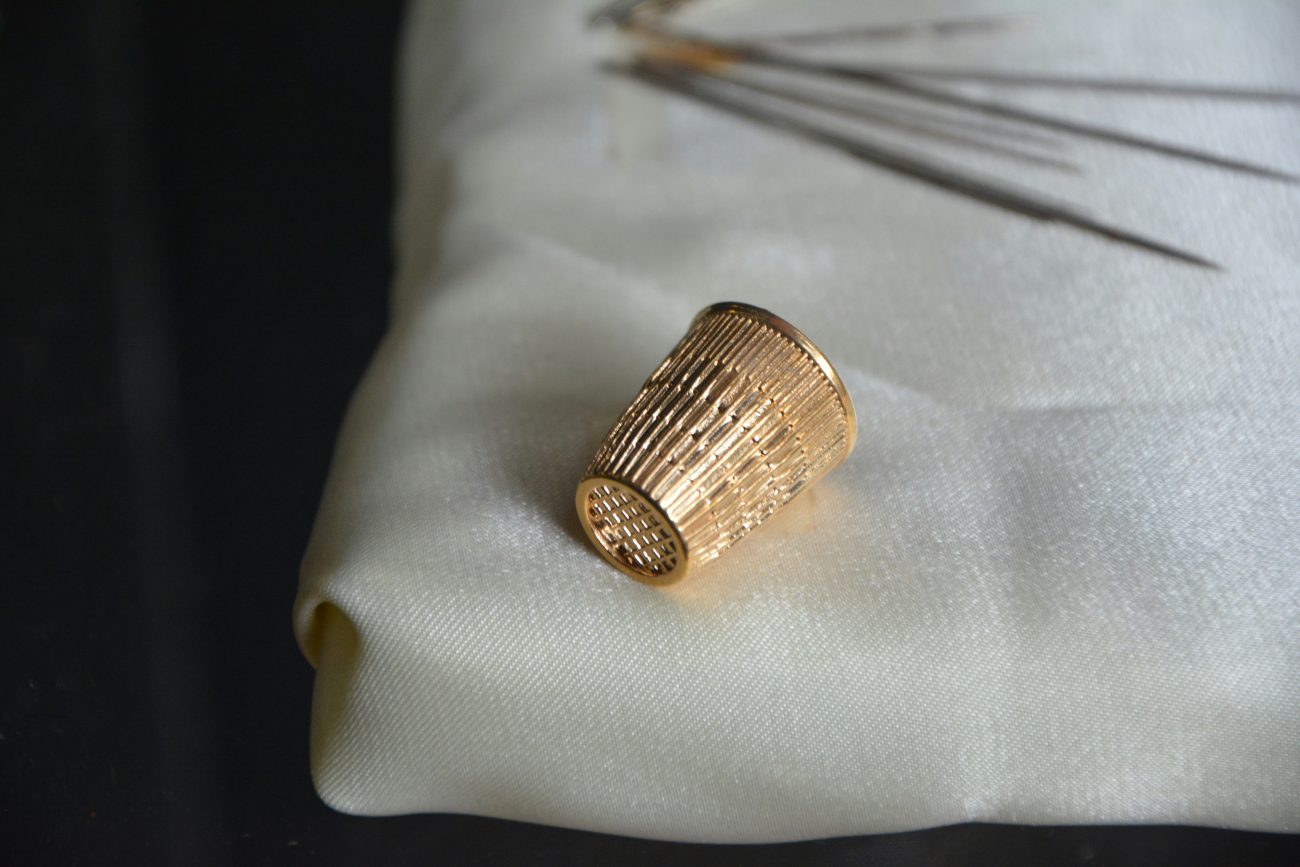
Quilters, for example, may prefer a thimble that provides a secure surface for repeated needle movements. Some hand quilters use open-sided or adjustable designs that allow greater fingertip contact.
Embroidery and other detailed sewing techniques may call for a different style, depending on the needle, fabric, and movements involved.
There is no single thimble that works perfectly for every sewing activity. Comfort and the type of work matter more than choosing the most traditional design.
Why Was a Thimble Once Found in Almost Every Household?
To understand why thimbles were once so familiar, it helps to consider how people managed clothing before inexpensive ready-made garments became widely available.
For many families, sewing was an ordinary household responsibility. Clothes were made, altered, repaired, and passed down rather than immediately replaced when something became damaged.
A loose button, torn seam, or worn section of fabric could mean taking out a needle and thread. Many people learned basic sewing skills at a young age, and hand stitching was a regular part of maintaining a household wardrobe.
Because needles were used so frequently, protecting the fingers was important.
Thimbles were commonly kept in sewing baskets alongside scissors, pins, needles, thread, buttons, and spare fabric. Their small size made them easy to store, while their practical function made them useful for a wide range of repairs.
In some families, a thimble became a personal possession passed from one generation to another. A well-used example might carry memories of a parent, grandparent, or another relative who regularly repaired clothing by hand.
As manufacturing methods changed and affordable clothing became easier to purchase, everyday sewing became less necessary for many households.
Sewing machines also made certain tasks faster, although they did not eliminate the need for hand stitching. People still use needles for finishing details, repairs, embroidery, quilting, and other work that machines cannot easily handle.
The thimble gradually became less familiar to people who did not sew regularly, but it never disappeared.
Are Antique Sewing Thimbles Worth Anything?
An old thimble discovered in a sewing box may be more than a practical household accessory. Some examples are collectible, particularly those made from precious metals or featuring unusual craftsmanship.
Collectors may be interested in several characteristics:
- Material: Silver thimbles can attract interest because of their metal content and craftsmanship.
- Maker’s marks: Identifying marks may help establish the manufacturer or origin.
- Age: Certain historical examples are more desirable than ordinary modern versions.
- Decoration: Engraving, unusual patterns, and distinctive designs can increase collector interest.
- Condition: Damage, repairs, missing sections, and wear can affect value.
Some antique thimbles have decorative details that make them interesting even to people who do not sew. Others are valued because they represent a particular period or manufacturing tradition.
However, finding an old thimble does not automatically mean finding something valuable.
Many ordinary metal thimbles were mass-produced and may have little monetary value beyond their usefulness or sentimental importance. A silver example, on the other hand, may deserve closer inspection, particularly if it has identifiable hallmarks.
If you discover one among inherited belongings, avoid polishing it aggressively before identifying its material and condition. Harsh cleaning can damage delicate finishes or remove details that collectors may want to preserve.
A jeweler or antiques specialist may be able to help identify a potentially valuable example.
How to Tell Whether an Old Thimble Is Silver
If an old thimble looks different from the ordinary brass or steel versions, it may be worth checking whether it contains silver.
One place to look is the inside or outside of the rim. Some silver thimbles carry small hallmarks or maker’s marks indicating their metal content or origin.
