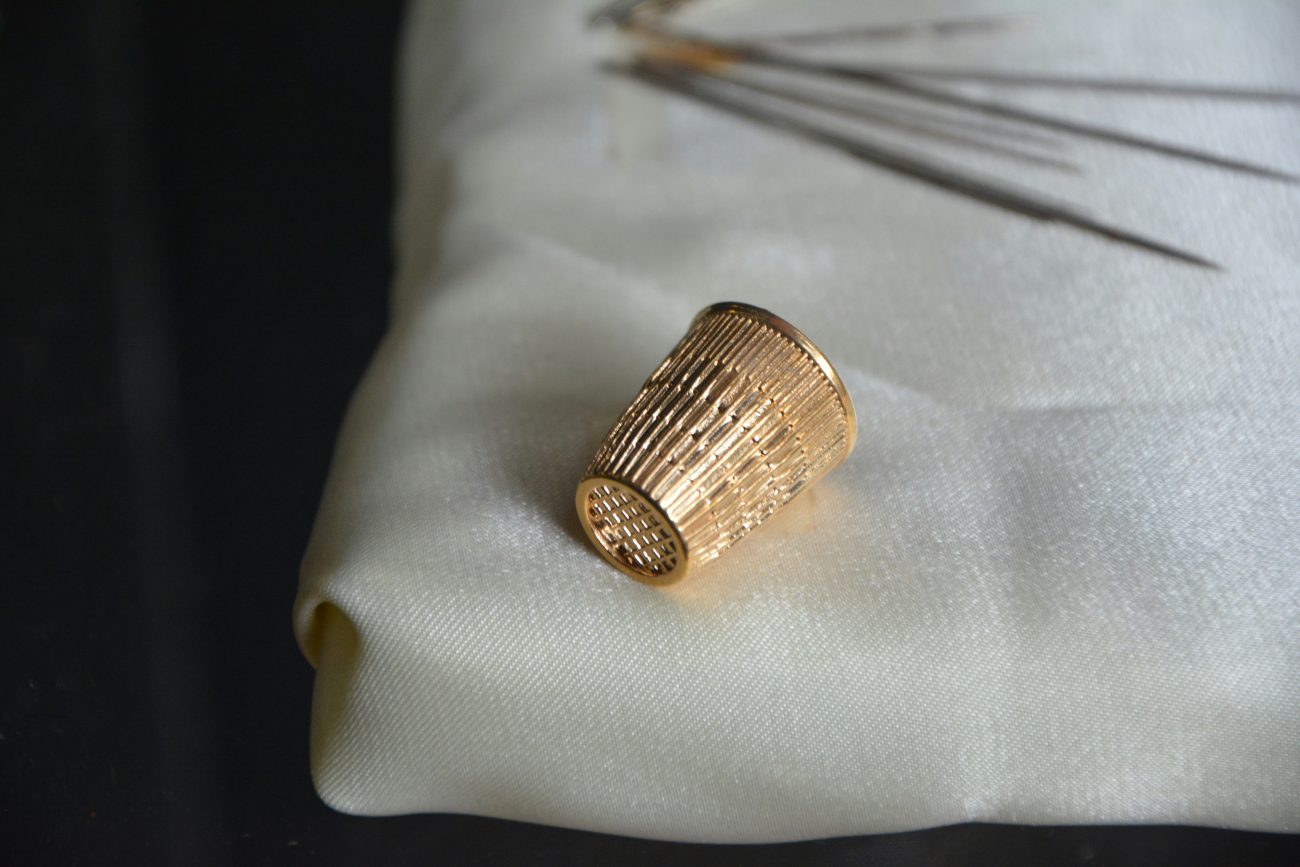
What Is That Small Dimpled Metal Cap in an Old Sewing Box? The Surprising Purpose of a Sewing Thimble
Have you ever opened an old sewing box and discovered a tiny metal object that looked like a miniature cup? Covered in small dents and shaped to fit over a fingertip, it might seem like an unusual piece of jewelry or an unidentified household trinket. In reality, it is a sewing thimble, one of the simplest and most useful tools in traditional hand sewing.
For generations, thimbles helped people sew without repeatedly pressing a sharp needle into their fingers. They may look ordinary, but their distinctive shape and textured surface serve a very practical purpose: protecting the finger used to push a needle through fabric.
Today, many people rarely encounter thimbles outside antique shops, inherited sewing kits, or craft stores. Ready-made clothing and modern sewing machines have reduced the need for everyday hand stitching, making this once-familiar accessory less recognizable.
But a thimble is far from obsolete. Anyone who repairs clothing, enjoys quilting, embroiders by hand, or works with thick fabric can still benefit from using one.
What Exactly Is a Sewing Thimble?
A sewing thimble is a small protective covering worn on a finger while hand sewing. It is designed to shield the fingertip from the blunt end of a needle as the sewer pushes it through fabric.
The most familiar version is a short, rounded metal cap. Traditional examples are commonly made from materials such as brass, steel, or silver, although modern thimbles are also manufactured from plastic, leather, silicone, and other flexible materials.
One of the easiest ways to recognize a traditional thimble is by looking at its surface. Most have rows of tiny indentations, sometimes called dimples.
These marks are not simply decorative. They help the needle’s end stay in position when pressure is applied, making it less likely to slide sideways. This is especially useful when sewing through dense fabric or several layers of material.
A thimble also distributes pressure across a more protected area of the finger. Instead of repeatedly pressing the needle directly against the skin, the sewer uses the thimble as a barrier.
Its small size makes it easy to overlook, but the design reflects centuries of practical experience with one of humanity’s oldest everyday activities.
Why Do Thimbles Have Tiny Dents?
The little indentations are perhaps the most recognizable feature of a traditional metal thimble.
When someone pushes a needle through fabric, the blunt end of the needle needs a stable surface against which to press. Without protection, repeated pressure can cause soreness, particularly when working with thick materials.
The dimples help provide grip and positioning. They give the needle’s end small recessed areas in which to rest, helping prevent it from slipping across the smooth metal surface.
This becomes particularly helpful when working with materials such as denim, canvas, upholstery fabric, or several layers of cotton.
The indentations also distinguish many traditional sewing thimbles from smooth protective finger covers. Although designs vary, the textured surface is one of the features that makes the classic thimble so recognizable.
How to Use a Sewing Thimble Correctly
Using a thimble is not complicated, but finding the right finger and learning how to position it can take a little practice.
Most people wear a traditional thimble on the middle finger of their dominant hand because that finger commonly provides the pressure needed to push the needle through the fabric.
However, sewing techniques differ. Some people prefer using their index finger or another finger, depending on how they hold the needle.
The important thing is to place the thimble on the finger that naturally presses against the back of the needle.
