Luke would have to come to terms with the fact that he had lost his chance to meet his father.
And Ben and Lily would eventually need an explanation that respected their childhood while giving them the truth.
None of those things could be rushed.
But I began to understand something important.
Daniel’s life had been larger than the part of his story I knew. He had existed before our marriage, before our children, and before the apple trees became a symbol of our family.
Learning about Luke didn’t erase the years Daniel and I had shared.
It didn’t make our marriage less real or the memories less precious.
It simply revealed that there had been another chapter, one written without my knowledge.
I couldn’t change that chapter.
What I could do was decide whether the next one would be shaped by resentment or understanding.
I could protect my children without teaching them to hate their brother. I could hold Monica accountable without allowing her bitterness to determine the rest of our lives.
And I could remember Daniel not only as the husband I had lost, but as a man whose life had touched people in ways I was only beginning to understand.
Sometimes, the truth arrives at the worst possible moment.
Sometimes, it brings grief, anger, and questions that have no easy answers.
But discovering the truth also gives us a choice.
We can use it to deepen old wounds, or we can face it honestly and decide what kind of future we want to build.
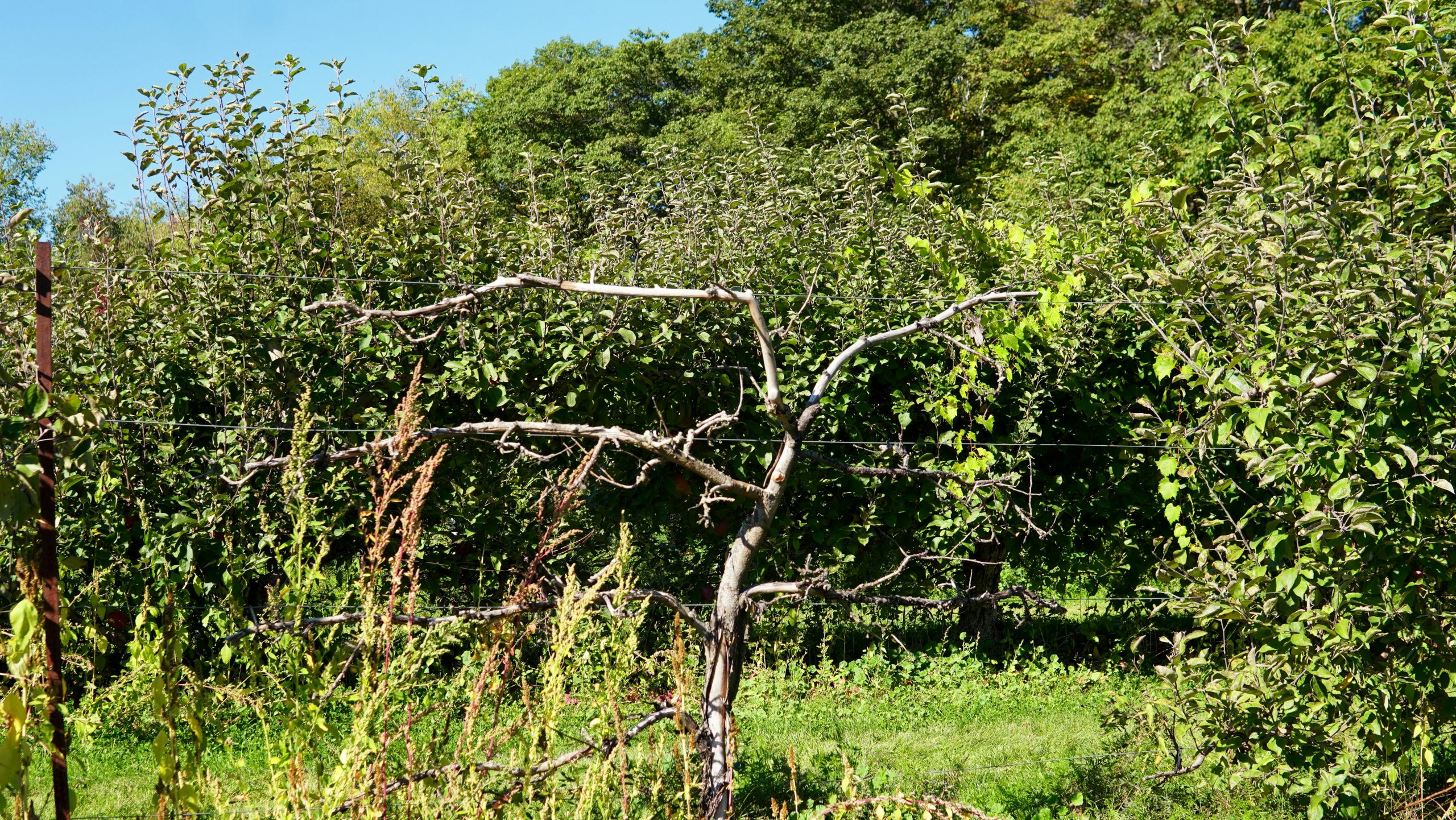
As I watched Ben help Lily carry plates to the table that evening, I thought about the apple trees outside.
Daniel had planted them years earlier, never knowing how many seasons they would survive or how many people would eventually gather beneath their branches.
He had simply planted them, cared for them, and trusted that they would keep growing.
Perhaps that was what I needed to do now.
I couldn’t bring Daniel back.
I couldn’t recover the years Luke had lost.
But I could help my children grow up knowing that family history can be complicated without making love meaningless.
And I could refuse to let another person’s bitterness decide what kind of family we would become.
Because sometimes, the most meaningful response to betrayal isn’t revenge. It’s choosing not to pass the hurt on to the next generation.
