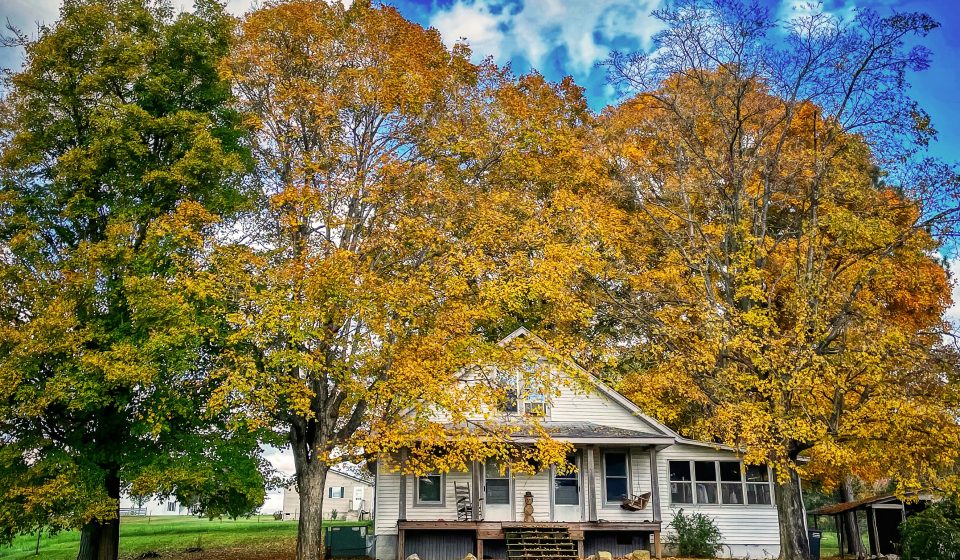
This Historic Kentucky Farmhouse Is a Dream for Anyone Who Loves Country Living—and It’s Full of Possibilities

This Historic Kentucky Farmhouse Is a Dream for Anyone Who Loves Country Living—and It’s Full of Possibilities
There is something special about an old farmhouse surrounded by rolling fields, towering shade trees, and peaceful countryside views. These properties offer more than a place to live. They provide an opportunity to slow down, reconnect with nature, and create a home that reflects a simpler way of life.
In Greensburg, Kentucky, a historic farmhouse offers exactly that kind of possibility. Set amid an inviting rural landscape, the property features open acreage, a picturesque pond, a traditional barn, and a house filled with old-fashioned character. Although the residence needs extensive renovation, its setting and potential could make it an appealing project for buyers who appreciate vintage homes and the rewards of restoring them.
For anyone who has imagined waking up to birdsong, tending a vegetable garden, or spending quiet evenings on a shaded front porch, this property offers plenty of inspiration.
A Peaceful Setting Surrounded by Kentucky Countryside
<AsyncImage query=”historic Kentucky farmhouse surrounded by rolling green fields mature shade trees rural countryside” aspectRatio=”16:9″ width=”100%” />
The first thing that draws attention to a rural property like this is its surroundings.
Away from the noise and congestion of city life, the farmhouse sits amid a landscape of open fields, mature trees, and broad country views. The scenery provides a sense of space that can be difficult to find in more developed neighborhoods.
For some buyers, that privacy is the greatest attraction. Instead of looking out onto neighboring houses and busy streets, they can enjoy a landscape that changes with the seasons. Spring brings fresh greenery, summer fills the fields with color, autumn transforms the trees, and winter reveals the quiet structure of the countryside.
The setting also offers room for outdoor activities and personal projects. A spacious property can accommodate a garden, walking paths, outdoor seating, or areas dedicated to growing flowers and vegetables.
Of course, the precise acreage, property boundaries, and any restrictions on land use should be confirmed through the listing and local records. Still, the overall appeal is easy to understand: this is the kind of rural environment that encourages people to spend more time outdoors and make their homes part of the surrounding landscape.
A Classic Barn, Open Pastures, and a Picturesque Pond
<AsyncImage query=”traditional old red Kentucky country barn beside open pasture and small rural farm pond” aspectRatio=”16:9″ width=”100%” />
The land adds another dimension to the property’s appeal.
Open pastureland can provide opportunities for small-scale agricultural activities, while a traditional barn adds the familiar character associated with historic American farms. Depending on its condition, the barn might offer useful storage, workspace, or shelter for equipment.
Buyers interested in keeping animals could also explore whether the land is suitable for a small hobby farm. Chickens, goats, or other livestock may be possibilities, provided the property meets local zoning requirements and has appropriate fencing, water access, and shelter.
The pond adds a particularly attractive feature to the landscape. It could become a peaceful place to sit with a book, enjoy the morning light, or watch wildlife moving through the surrounding fields.
Before purchasing a property with a pond, however, prospective owners should inspect its condition, drainage, maintenance needs, and any applicable safety requirements. The same careful approach applies to the barn, fences, and other outbuildings.
For the right buyer, these outdoor features could become an important part of a rural lifestyle rather than merely decorative elements.
Inside the Farmhouse, History Meets Restoration Potential
<AsyncImage query=”historic Kentucky farmhouse interior original wood floors exposed beams rustic country home restoration” aspectRatio=”16:9″ width=”100%” />
The farmhouse itself is where imagination becomes especially important.
Older country homes often possess details that are difficult to reproduce in newer construction. Traditional proportions, original woodwork, vintage flooring, distinctive window arrangements, and timeworn architectural features can give a house a sense of identity.
The property’s existing condition means a buyer should approach the interior with realistic expectations. Extensive remodeling can involve much more than fresh paint, new cabinets, or updated flooring. Depending on the inspection findings, work could include electrical and plumbing upgrades, roof repairs, structural improvements, insulation, heating and cooling systems, and repairs related to moisture or pests.
Even so, a house that needs substantial work can offer an opportunity to create something personal.
Rather than trying to make the property look like every other modern home, a thoughtful renovation could preserve its traditional character while introducing the comfort and convenience expected today.
Original materials that remain in good condition might be restored. Older rooms could be adapted for modern living, and carefully chosen finishes could complement the farmhouse’s history instead of overwhelming it.
The key is to establish which features are worth saving and which parts of the building require professional attention before deciding on a renovation budget.
The Front Porch: A Reminder of a Slower Way of Life
<AsyncImage query=”traditional historic American farmhouse shaded front porch wooden rocking chairs overlooking green countryside” aspectRatio=”16:9″ width=”100%” />
Few features capture the appeal of country living quite like a farmhouse porch.
In the American countryside, the front porch has long served as an informal extension of the home. It is a place to greet visitors, enjoy a cool breeze, drink coffee before the day begins, or sit outside as evening settles over the fields.
A shaded porch overlooking the surrounding landscape could become one of this property’s most inviting spaces.
With appropriate repairs, comfortable seating, simple lighting, and a few potted plants, it could provide a welcoming transition between the house and the outdoors.
The porch may also be an opportunity to preserve the home’s historic appearance. Instead of replacing traditional details with a contemporary design, a restoration could retain the character of the original structure wherever practical and safe.
Before undertaking work, buyers should check the condition of the porch’s supports, flooring, steps, and railings. Older exterior structures can require significant repairs, especially if they have been exposed to years of weather.
Once restored, however, a porch like this could become the natural gathering place for family members and friends.
An Upstairs Loft With Room for New Ideas
<AsyncImage query=”unfinished upstairs loft in historic farmhouse with exposed wooden rafters natural light rustic renovation potential” aspectRatio=”16:9″ width=”100%” />
One of the property’s most intriguing features is its upper loft.
An unfinished or adaptable loft can open up several possibilities, depending on its dimensions, ceiling height, structural condition, and access.
For a family, the space might eventually accommodate additional bedrooms. Someone who works remotely could envision a quiet home office, while an artist or craft enthusiast might prefer a dedicated studio.
The loft could also become a reading room, hobby space, or private retreat away from the busier areas of the house.
However, not every loft can legally or safely be converted into living space. Before planning a bedroom or other regularly occupied room, a buyer should have the structure evaluated and confirm local requirements for stairs, emergency exits, insulation, ventilation, electrical work, and minimum ceiling heights.
Those details can significantly affect both the cost and feasibility of a conversion.
With the right framework, the loft could become a valuable part of a renovation that balances the farmhouse’s original layout with contemporary needs.
Modern Convenience in a Rural Location
Country living does not necessarily mean giving up access to modern technology.
The property description indicates that public water lines and broadband internet are reportedly nearby. If confirmed, those services could make the farmhouse more practical for full-time living, particularly for buyers who work from home or rely on reliable internet access.
Still, nearby infrastructure does not automatically mean that a property is already connected.
Prospective buyers should verify whether a water connection is available at the house, whether connection fees or installation work would be required, and what broadband providers actually serve the address. Internet service can vary considerably between locations, even within the same rural community.
Water and wastewater arrangements also deserve careful attention. Buyers should establish whether the property uses public water, a private well, a septic system, or another arrangement, and arrange appropriate inspections where necessary.
Heating, electrical service, road access, waste disposal, and year-round maintenance should all be considered when evaluating an older rural home.
These practical questions may not be as exciting as imagining a renovated kitchen or a beautiful garden, but answering them early can help prevent expensive surprises later.
Could This Become a Hobby Farm?
<AsyncImage query=”small Kentucky hobby farm vegetable garden rustic farmhouse chicken coop green pasture” aspectRatio=”16:9″ width=”100%” />
For buyers interested in growing their own food, the property could provide an appealing starting point for a small hobby farm.
A vegetable garden might produce tomatoes, peppers, beans, squash, herbs, and other seasonal crops. Fruit trees could add shade and provide harvests in the years ahead, while flower beds could bring color to the yard.
Depending on the available land and local regulations, there may also be room for a small flock of chickens or other suitable livestock.
The advantage of a hobby farm is that it does not have to operate on a commercial scale. It can be shaped around a household’s interests, available time, and budget.
Some owners might focus on gardening and preserving their harvest. Others could prefer a few animals, a greenhouse, or a small orchard.
The farmhouse and barn could potentially support these activities, although their suitability would depend on the actual condition of the buildings and the land.
Anyone considering livestock should research fencing, feed storage, veterinary care, shelter, water supply, and the daily work involved. A rural property can offer freedom, but caring for animals requires consistent attention.
For buyers who enjoy practical projects and outdoor work, those responsibilities may be part of the attraction.
The Reality of Restoring an Older Country Home
The romance of a historic farmhouse is easy to appreciate. The financial side requires more careful thought.
A renovation project can be rewarding, but the cost depends on the home’s condition, the scale of the work, local labor rates, material prices, and whether major structural problems are discovered.
Before making an offer, prospective buyers should consider hiring qualified professionals to assess the roof, foundation, framing, electrical systems, plumbing, heating equipment, and any signs of water damage. Depending on the age and condition of the property, additional testing for lead-based paint, asbestos, or other hazardous materials may also be appropriate.
The barn and other outbuildings should be inspected separately. A building that looks charming from a distance may need substantial work before it can safely serve as storage or a workspace.
It is also wise to create a realistic renovation budget that includes a contingency for unexpected repairs. Older buildings sometimes reveal problems only after damaged finishes or walls have been opened.
Buyers should compare the likely total investment—not just the purchase price—with the cost of other homes in the area.
Historic character can add tremendous personal value, but it does not automatically make a renovation financially worthwhile.
A Weekend Escape or a Permanent Home?
The property’s flexibility is another part of its appeal.
For some buyers, the farmhouse could become a full-time residence. For others, it might serve as a weekend retreat where they can escape busy schedules and spend time outdoors.
A gardening enthusiast could focus on the land, while someone with an interest in historic architecture might enjoy the challenge of restoring the house. A family could envision a gathering place where generations come together for holidays, outdoor meals, and summer afternoons.
The right use will depend on the home’s condition, access to essential services, commuting needs, and the amount of work the buyer is prepared to undertake.
Those considering the property as a second home should also think about security, winter maintenance, insurance, and the practicalities of leaving an older building unoccupied for extended periods.
If the long-term plan includes renting the property or using it for events, local regulations and insurance requirements should be investigated before relying on that potential income.
The farmhouse offers possibilities, but the most successful plan will be one that matches the property’s real capabilities with the owner’s goals.
A Chance to Preserve a Piece of Country History
<AsyncImage query=”weathered historic Kentucky farmhouse with wraparound porch old barn rolling countryside mature trees” aspectRatio=”16:9″ width=”100%” />
What makes a property like this memorable is not necessarily its current condition. It is the combination of its setting, its traditional architecture, and the opportunity to shape its future.
A carefully restored farmhouse can become more than a renovated building. It can be a home where old materials are given new life, outdoor spaces become part of everyday routines, and the surrounding land offers room for projects that might be impossible in a crowded neighborhood.
The process requires patience, planning, and a willingness to deal with unexpected challenges. Yet for someone who enjoys the character of older homes, those efforts may be part of the reward.
The open fields, pond, barn, shaded porch, and upstairs loft each offer a different way to imagine what the property might become.
Whether the goal is a comfortable country residence, a weekend getaway, or a small hobby farm, the possibilities begin with a realistic assessment of the land and buildings.
Ultimately, this Greensburg, Kentucky, farmhouse represents the appeal of starting with something weathered and creating something lasting.
For the right buyer, it could be an opportunity to build a home around a particular vision of country living—one that combines the charm of the past with the conveniences of the present.
Before purchasing, buyers should verify the property’s acreage, listing details, utility availability, structural condition, and local building requirements. Those facts will determine whether this promising rural setting can become the farmhouse of their dreams.