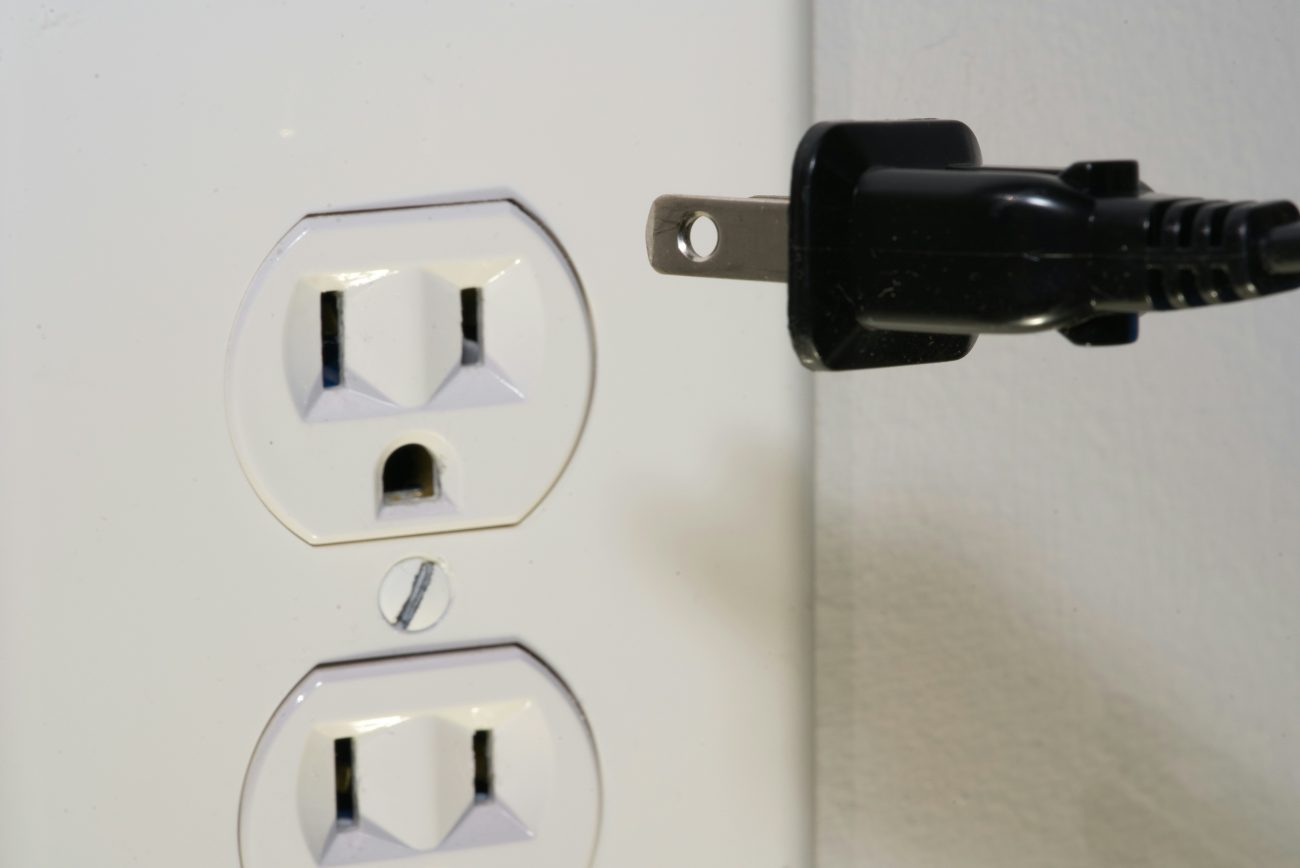
This is more convenient than reaching behind furniture to unplug several separate cords.
However, there are a few important precautions.
-
Use a properly rated power strip from a reputable manufacturer.
-
Do not connect several power strips together.
-
Avoid using ordinary power strips with high-power appliances such as space heaters.
-
Don’t overload the strip or hide it under rugs or furniture where heat can build up.
-
Leave essential equipment connected if it needs continuous power.
A switched power strip is most useful when several devices can safely be turned off together. The U.S. Department of Energy also recommends measuring standby consumption rather than assuming every appliance uses the same amount.
Department of Energy+1
How to Find Out Which Devices Are Wasting Electricity
If you want to go beyond guesswork, you can measure how much electricity individual appliances use.
A plug-in electricity meter can show the power consumption of a compatible device while it is operating, sleeping, or switched off but still connected.
This can help you identify which appliances are worth disconnecting.
For example, you might discover that an older entertainment device consumes more standby electricity than several modern chargers combined.
You can also check whether your television, computer, or gaming console has an energy-saving mode that reduces background consumption.
Another useful step is to review your electricity meter readings before and after making changes. Just remember that your overall consumption can also change because of heating, cooling, weather, and other household activities.
Measuring actual usage gives you a more realistic picture than relying on a general list of supposedly energy-hungry appliances.
How Much Money Can You Actually Save?
Standby power is sometimes estimated to account for around 5% to 10% of household electricity consumption. Lawrence Berkeley National Laboratory gives this range for residential electricity use in developed countries, although individual households can vary considerably.
Standby Power+1
To understand what that means financially, consider a household using 400 kWh per month.
If standby consumption represented 5% of that usage, it would equal 20 kWh per month. At 10%, it would equal 40 kWh.
The actual financial savings would depend on your electricity tariff and how much standby consumption you can eliminate.
Illustrative calculation, not a prediction of savings for every household.
Modern electronics are generally more efficient than older equipment, so unplugging one recently purchased charger may make almost no noticeable difference. The bigger opportunities may come from older devices, equipment that remains connected around the clock, and electronics that are rarely used.
The best approach is to identify the biggest unnecessary energy users first.
A Simple Nightly Routine to Reduce Wasted Electricity
You don’t need to walk around the house unplugging dozens of devices every night.
Instead, build a small routine around the appliances that don’t need to remain connected.
Before going to bed:
-
Check whether phone and tablet chargers are still plugged in unnecessarily.
-
Switch off suitable entertainment equipment using a power strip.
-
Disconnect small kitchen appliances that you rarely use.
-
Check whether office equipment can enter a lower-power mode or be switched off.
-
Leave refrigerators, security equipment, medical devices, and other essential appliances connected.
You can also make these checks before leaving for an extended holiday, provided you don’t disconnect anything that needs to operate while you’re away.
Over time, these small decisions become part of normal household maintenance.
Small Changes Can Add Up
You don’t have to replace every appliance or make major changes to your home to reduce unnecessary electricity consumption.
Understanding standby power is a useful starting point. Some devices continue drawing electricity even when they appear to be switched off, and several small energy users can contribute to household consumption over time.
Focus on electronics that spend long periods unused, use switched power strips where appropriate, and check actual consumption when you want to know which devices are costing you money.
Not every appliance needs to be unplugged, and the savings won’t be identical in every household.
But knowing which devices genuinely need electricity—and which ones are simply waiting for the next time you use them—can help you avoid paying for energy you don’t need.
PART 2 — WORD COUNT
Approximately 2,350 words
PART 3 — WORDPRESS SEO
SEO Title: 10 Everyday Appliances That May Be Using Electricity When Turned Off
SEO Slug: appliances-using-electricity-when-turned-off
Meta Description: Some appliances use electricity even when switched off. Learn about standby power, which devices to unplug, and how to reduce wasted energy.
