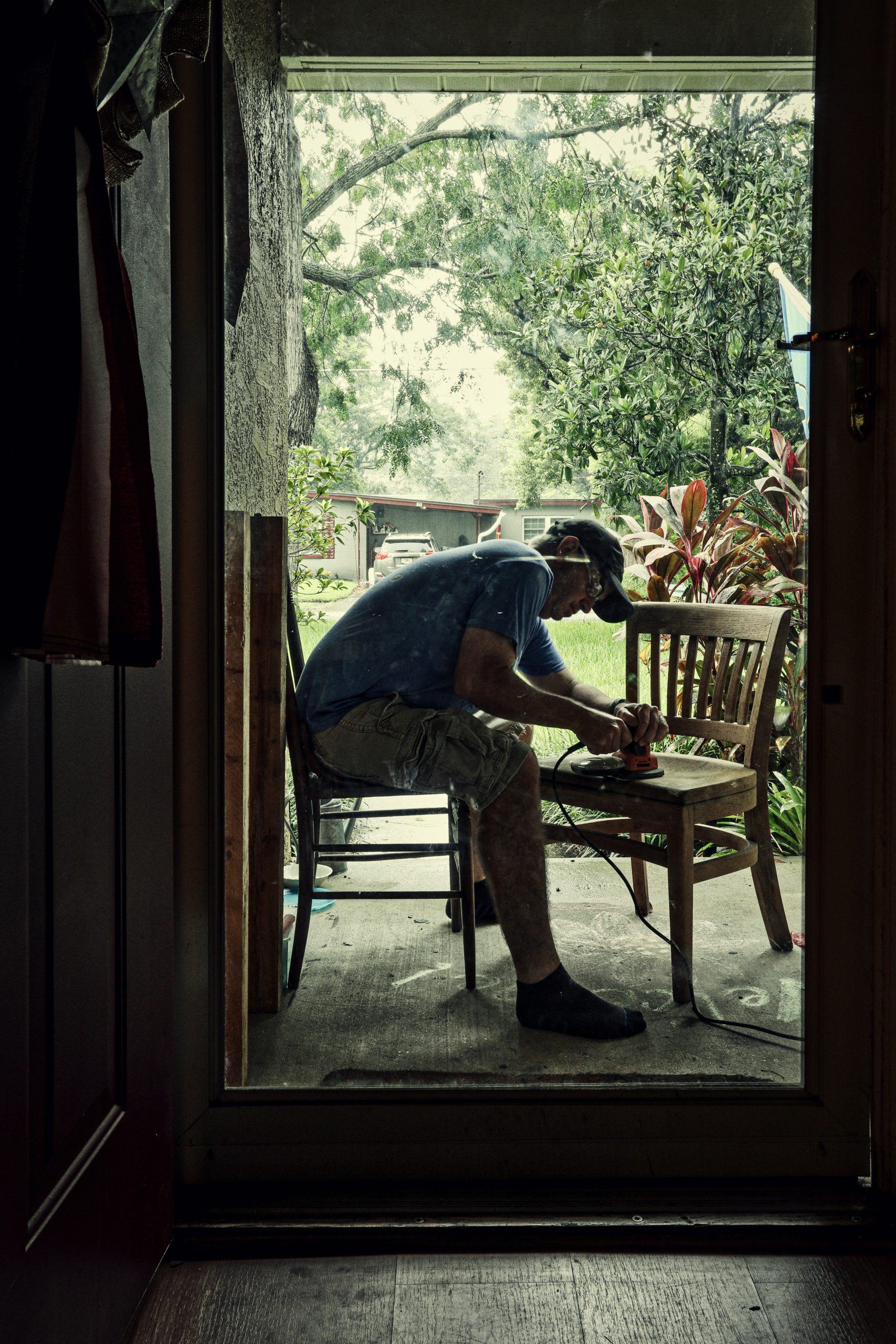
This time, he didn’t rush into it.
He met people through friends and local events, giving himself the chance to build connections without the pressure of searching for a relationship immediately.
Eventually, he met Jocelyn, a warm and thoughtful woman who owned a small bookstore and volunteered with a local historical preservation society.
Their first conversations revolved around architecture, old buildings, and the stories hidden inside the places people took for granted.
They discovered that they shared an appreciation for quiet afternoons, independent bookstores, and long walks through historic neighborhoods.
There was no dramatic declaration of love and no immediate promise of a future together.
Instead, their relationship developed gradually.
My father seemed comfortable around her. He laughed more often, made plans he genuinely looked forward to, and stopped treating every new connection as though it might end in disappointment.
One summer evening, I stopped by my childhood home to drop off some mail.
As I walked up the front steps, I passed beneath the oak tree that had once appeared in the security footage.
For months, I had associated that tree with the frightening discovery that someone had been watching my father.
Now, the house felt different.
Through the open living room windows, I heard the gentle strumming of an acoustic guitar. A moment later, my father’s laughter drifted into the garden.
It was a familiar sound, but one I hadn’t heard so freely in years.
I paused on the porch.
Inside, he was talking with Jocelyn in the kitchen. She said something I couldn’t quite make out, and he laughed again.
I stood there for a moment, feeling a quiet sense of relief.
My mother would always be part of our family. Her photographs would remain on the walls, the garden would continue to bloom, and the stories of her life would be passed down through the years.
Nothing about my father’s new relationship could change that.
But neither should her memory prevent him from experiencing the rest of his life.
I had once believed that the deepest expression of love was never moving on.
Now I understood that love could also mean allowing someone to keep living after loss.
My father had spent twelve years honoring the woman he loved. He had raised me, maintained their home, and carried memories that would always matter.
He didn’t need to prove his devotion by remaining alone.
And my aunt, despite the pain she had caused, had taught us something else: grief deserves compassion, but it cannot be allowed to become a prison for everyone around it.
As I finally knocked on the door, my father called for me to come in.
I stepped inside and found him standing beside Jocelyn, smiling.
For the first time in a long while, I didn’t see a widower trying to rebuild a life that had ended twelve years earlier.
I saw a man who had learned that life could continue without diminishing the love he had lost.
My mother would always have a place in our hearts.
But my father deserved a place for happiness, too.
Loving someone who has died doesn’t mean you must stop living. Sometimes, honoring their memory means finding the courage to let joy return.
What would you have done if you discovered that someone in your own family was secretly sabotaging a loved one’s chance at happiness?
