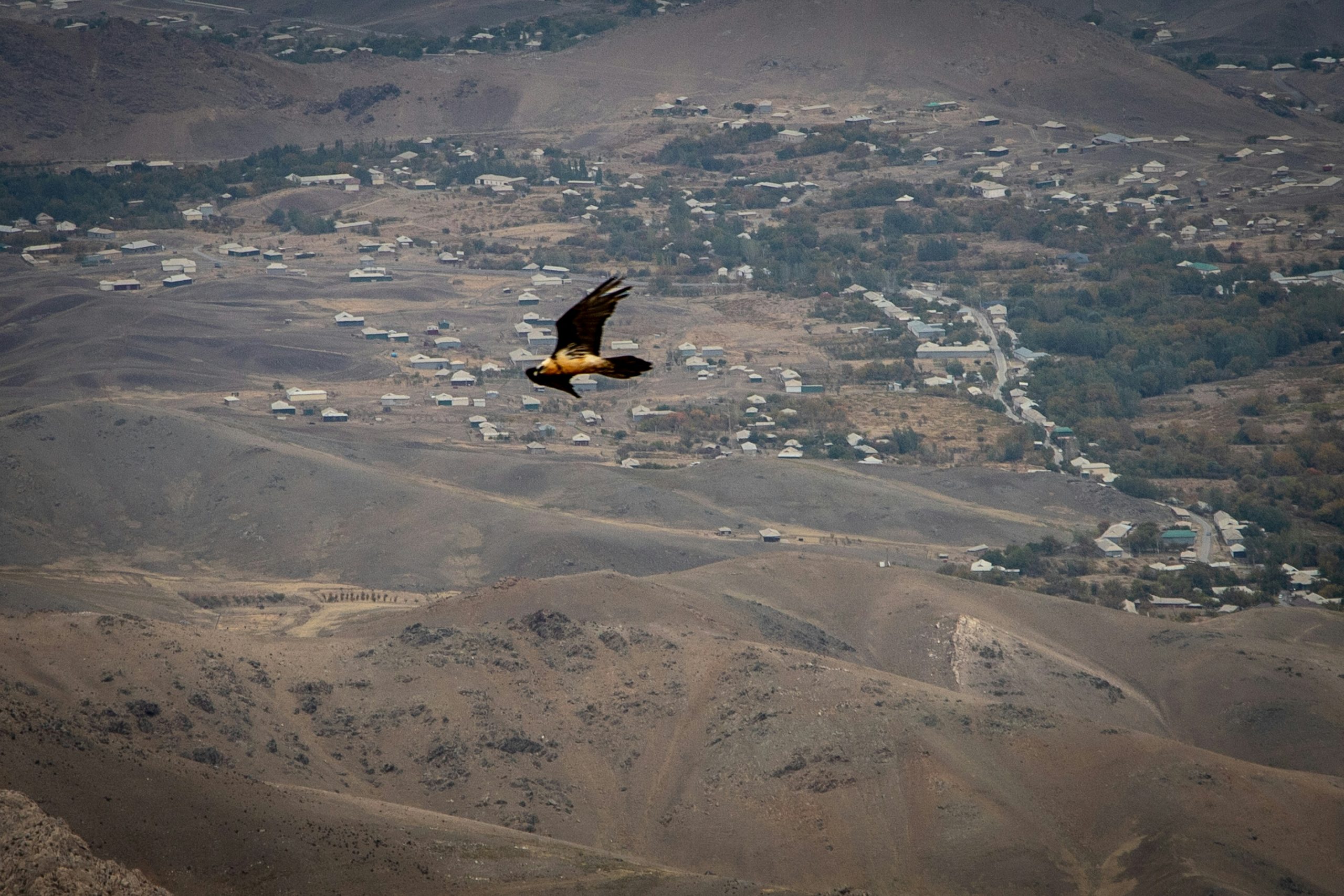
Long-term monitoring makes that possible.
When scientists have records collected across multiple seasons and years, they can compare different stages of an animal’s life and identify recurring patterns.
They may discover that an eagle regularly visits particular valleys during certain months or returns to the same general region after spending time elsewhere.
Such observations can provide valuable clues about habitat preferences and environmental conditions.
However, the duration of a tracking project does not automatically mean that one individual bird has been followed continuously for the entire period. Some long-running studies involve multiple animals, different tracking devices, or several generations of wildlife.
That distinction is important when evaluating claims about extraordinary tracking records.
How Eagles Navigate Across Vast Landscapes
One of the most fascinating aspects of eagle behavior is their ability to travel efficiently across complicated landscapes.
Unlike humans, these birds do not need roads, marked trails, or other artificial navigation systems.
Their movements are influenced by a combination of natural abilities, environmental conditions, and experience.
Researchers studying bird navigation have investigated several mechanisms that may help birds orient themselves, including visual landmarks, the position of the Sun, learned routes, and sensitivity to aspects of Earth’s magnetic field.
The relative importance of these mechanisms varies among species and situations.
Eagles also possess an impressive physical advantage: their ability to soar.
The Natural Power of Rising Air Currents
Large birds of prey often use rising air currents to remain airborne while conserving energy.
One important source of lift is known as a thermal.
Thermals develop when sunlight warms the ground unevenly. The heated air rises, creating upward-moving currents that soaring birds can use to gain altitude.
An eagle can circle within one of these rising columns of air before gliding toward another suitable area.
This technique allows it to cover considerable distances without continuously flapping its wings.
Mountain landscapes can provide additional opportunities for soaring. Wind moving upward along slopes and ridges can create conditions that help large birds remain airborne.
For researchers, understanding these environmental influences can help explain why an eagle follows a particular route.
A movement that initially appears unusual may simply reflect the availability of favorable air currents or suitable terrain.
GPS records become even more useful when combined with information about weather, topography, and habitat.
What Happens When GPS Data Reveals Unexpected Movements?
Tracking technology sometimes produces results that surprise researchers.
An eagle might travel farther than anticipated, visit an unfamiliar region, or repeatedly return to a location that initially appeared unimportant.
These observations can raise new scientific questions.
However, an unexpected movement does not necessarily mean that the bird is behaving in a mysterious or inexplicable way.
There may be several possible explanations.
A change in food availability could encourage an eagle to explore a different area. Weather conditions might influence its route. Human activity or habitat disturbance could make a previously suitable location less attractive.
Age and breeding behavior may also affect where the bird spends its time.
Researchers must examine these possibilities before drawing conclusions.
There are also technical considerations.
GPS devices do not always record an animal’s position continuously. Many trackers collect information at scheduled intervals to conserve battery power and extend the useful life of the equipment.
This means that a map connecting two recorded positions does not necessarily show the exact route followed between them.
A bird could have made several turns, stopped to rest, or changed altitude before the next position was recorded.
Tracking data can also contain gaps because of technical limitations, signal conditions, device settings, or other problems.
For these reasons, scientists evaluate the reliability of the records before interpreting unusual movements.
