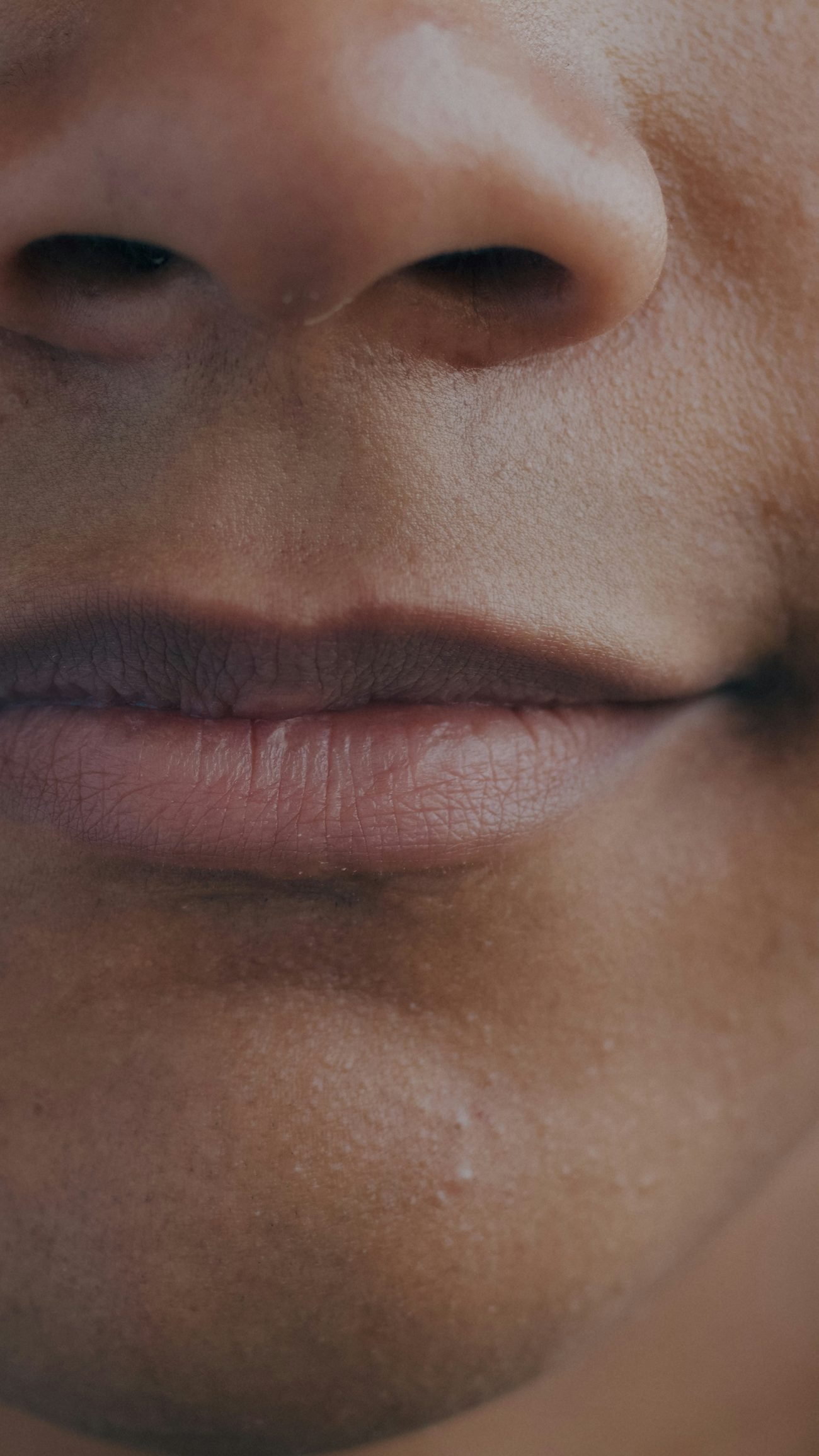
Frequent washing, harsh cleansers, exfoliating acids, scrubs, and acne treatments can all contribute to irritation. The skin around the mouth may be particularly uncomfortable when exposed to several products at once.
The result can be redness, dryness, flaking, and a stinging sensation.
Reducing unnecessary products and using gentle skin care may help, but persistent symptoms still deserve assessment.
Angular Cheilitis
Angular cheilitis affects the corners of the mouth rather than the entire area surrounding the lips.
It can cause redness, cracking, soreness, and sometimes crusting at one or both corners. Saliva collecting in the folds of the skin can contribute to irritation, while yeast or bacteria may also play a role.
Because it can have different contributing factors, treatment depends on the cause. A rash limited to the corners of the mouth should not automatically be treated as impetigo or perioral dermatitis.
Cold Sores
Cold sores are caused by the herpes simplex virus. They commonly begin with tingling, burning, or itching before small fluid-filled blisters appear, usually on or near the edge of the lips.
The blisters may break open and form crusts as they heal.
Cold sores can sometimes be confused with other skin problems, particularly during their early stages. Their typical blister pattern and preceding tingling sensation may offer clues, but an examination is useful when the diagnosis is uncertain.
Why the Right Diagnosis Matters
A rash near the mouth may look relatively minor, but treating the wrong condition can prolong the problem.
For example, antibiotics are used for bacterial infections such as impetigo, but they do not treat perioral dermatitis or an allergic reaction. Steroid creams may be appropriate for certain inflammatory conditions, yet they can worsen perioral dermatitis when used on the face.
Likewise, acne treatments containing strong active ingredients may irritate already inflamed skin.
This is why repeatedly experimenting with products is not always a good strategy. If the rash persists, spreads, returns, or becomes more uncomfortable, a clinician can assess its appearance and history before recommending treatment.
Depending on the symptoms, diagnosis may be based on a physical examination. In some cases, additional testing may be considered, particularly if the appearance is unusual or the condition does not respond as expected.
What to Do While Waiting for Medical Advice
If you have a rash around your lips and are arranging an appointment, a simple skin-care routine is generally a sensible approach.
The goal is to avoid adding further irritation while keeping the affected area clean.
Cleanse Gently
Wash the area with lukewarm water and a mild, fragrance-free cleanser if needed. Avoid vigorous rubbing, rough washcloths, and repeated scrubbing.
After washing, pat the skin dry rather than rubbing it.
Pause Harsh Skin-Care Products
Set aside exfoliating scrubs, strong acne treatments, and products that cause stinging or burning.
Avoid introducing several new products at once. Doing so can make the irritation worse and complicate the process of identifying a possible trigger.
Do Not Pick at the Rash
Scratching, squeezing, or removing crusts can damage the skin and increase irritation. If the condition is infectious, touching the affected area can also contribute to spreading it.
Keep your hands clean and avoid unnecessary contact with the rash.
Avoid Sharing Personal Items
If impetigo or another contagious condition is possible, do not share towels, washcloths, razors, or other personal items that touch the affected area.
Wash towels and clothing that have come into contact with the rash, and follow any additional hygiene instructions provided by your clinician.
Be Careful With Steroid Creams
Do not start a steroid cream on a rash around the mouth without medical guidance.
If you already use a prescribed steroid cream on your face, contact the prescribing clinician for advice rather than making an abrupt change on your own.
