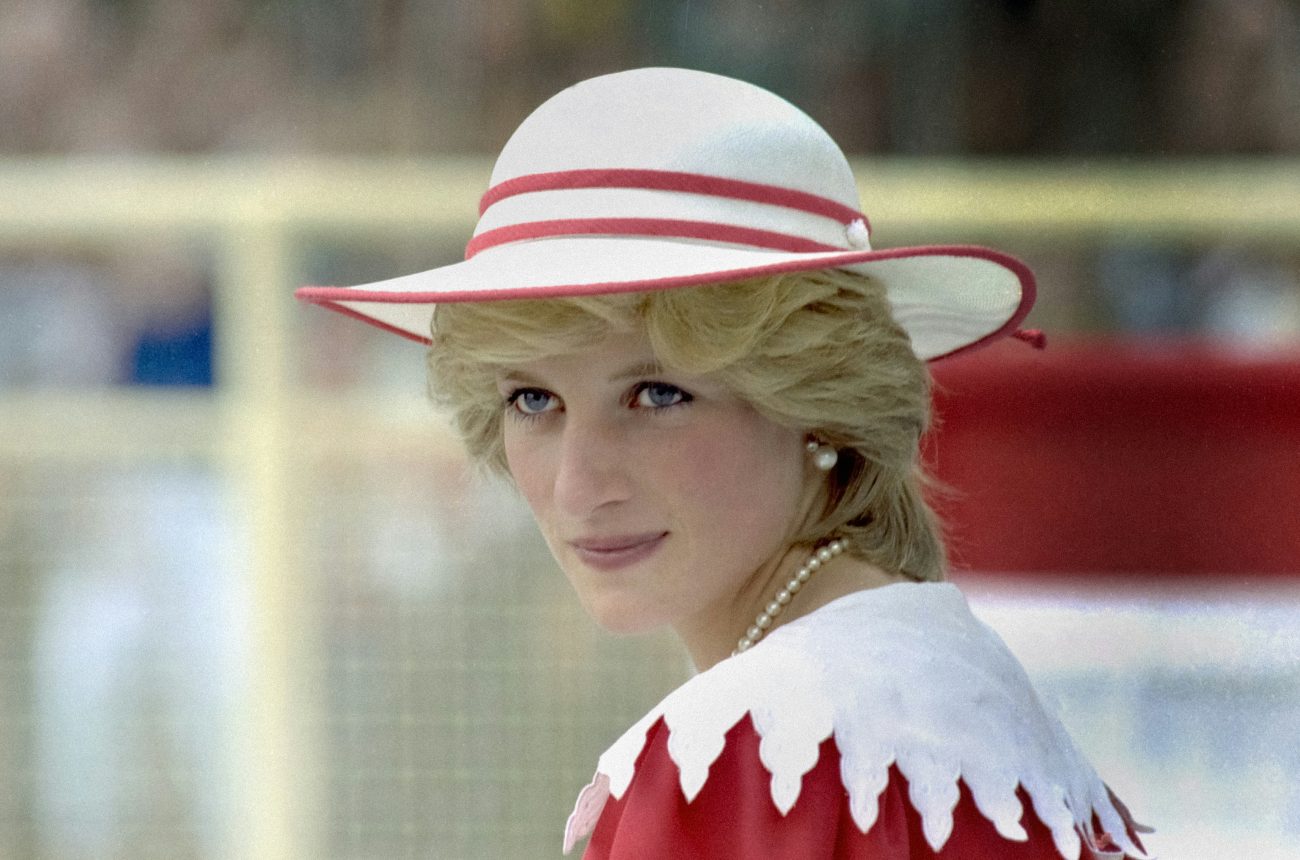
These pictures are valuable because they preserve moments from a childhood that was anything but ordinary.
Diana’s official biography also notes that family was important to her and that, following her separation and divorce from Charles, both parents continued to share responsibility for raising their sons. <Cite refs={[“turn136219search0”]}/>
The photographs cannot tell us everything about their private family relationships, but they offer a visual record of the time they spent together.
More Than a Fashion Icon
It is difficult to discuss Diana without mentioning fashion.
Throughout the 1980s and 1990s, her clothing attracted enormous attention. Her dresses, coats, hairstyles, and accessories were regularly featured in newspapers and magazines, and many of her outfits became reference points in discussions of royal style.
She developed a distinctive public image, moving from the traditional appearance expected of a young royal bride toward a more confident and individual approach to fashion.
But her wardrobe was only one part of her public identity.
Behind the photographs was a woman living through a marriage that became increasingly difficult. Diana and Charles announced their separation in December 1992, and their divorce was finalized on August 28, 1996. The breakdown of the marriage became a major international story, with intense media attention surrounding their personal lives. <Cite refs={[“turn136219search0″,”turn136219search3”]}/>
The contrast between the glamorous public image and the challenges of her private circumstances is an important part of understanding her life.
Diana was photographed at formal events, charity functions, and international engagements, but she was also experiencing the pressures of being one of the world’s most closely watched women.
Her photographs should therefore be seen as individual moments rather than a complete picture of her emotional life. A smiling image may preserve a happy occasion, but it cannot explain everything the person was experiencing outside the frame.
Her Work to Change Public Attitudes Toward HIV and AIDS
One of the most significant parts of Diana’s humanitarian legacy was her work to challenge the stigma surrounding HIV and AIDS.
During the 1980s, public understanding of HIV transmission was often limited, and people living with the condition faced considerable fear, discrimination, and social isolation.
Diana used her public position to help challenge those attitudes.
In 1987, she visited the HIV/AIDS unit at Middlesex Hospital in London. Photographs of her shaking hands with a patient without wearing gloves became widely recognized.
The significance of the gesture was straightforward but powerful: ordinary physical contact did not transmit HIV, and people living with the condition should not be treated as dangerous simply because of their diagnosis.
At the time, such an image helped communicate an important message to an audience that included people who had been exposed to misinformation and fear.
Her involvement was not limited to one visit. She continued supporting organizations and initiatives connected with people affected by HIV/AIDS.
The National Portrait Gallery identifies HIV/AIDS awareness as one of the important causes associated with her public work, while National Geographic also highlights her efforts to challenge stigma and bring attention to the experiences of people living with the condition. <Cite refs={[“turn136219search6″,”turn136219search1”]}/>
Looking back, the photographs from these visits remain meaningful because they capture a public figure using a simple human gesture to challenge a widespread misconception.
The Landmine Campaign That Became Part of Her Legacy
Another major humanitarian issue associated with Diana was the danger posed by landmines.
Landmines left behind by wars and conflicts can continue injuring and killing civilians long after fighting has ended. Children, farmers, and people simply walking through affected areas can become victims of explosives they may never have known were there.
In January 1997, Diana traveled to Angola, where she visited communities affected by landmines and walked through an area cleared for a demonstration of the dangers involved.
