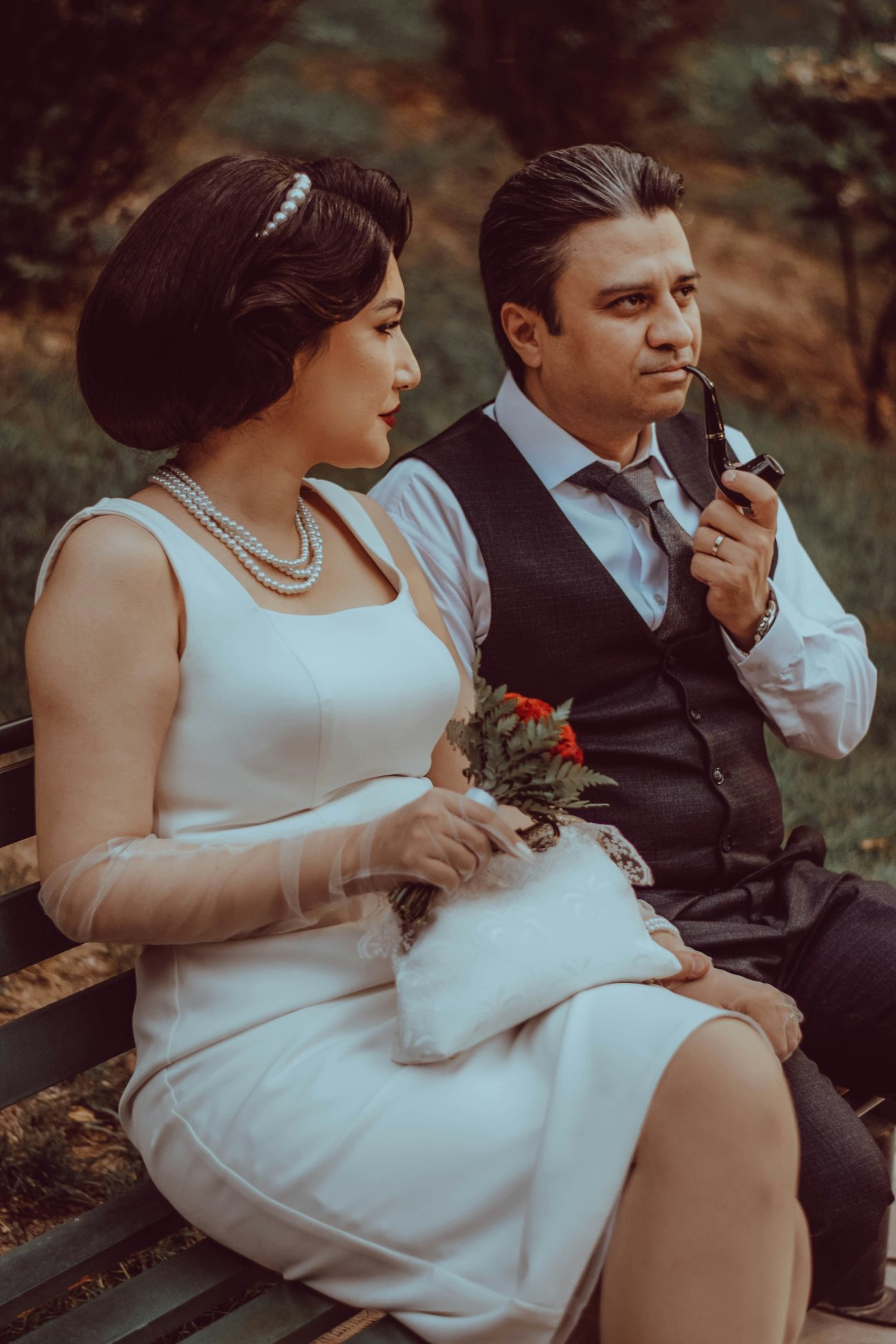
That small shift in perception can make an otherwise ordinary photograph much more interesting.
Why Historical Photographs Deserve a Closer Look
Older photographs offer something that modern images sometimes struggle to provide: a direct visual connection to a particular moment in the past.
They allow us to observe details that written descriptions may leave out.
A photograph can reveal how people dressed for an occasion, how a room was decorated, what hairstyles were popular, and how formal portraits were arranged.
Even the smallest details can provide useful clues.
For example, clothing can help researchers understand changing fashion trends. Furniture and decorations can reveal something about interior design. Buildings and street scenes can document how a location looked before later development changed it.
However, it is important to understand the limits of photographic evidence.
A picture can show what was visible to the camera, but it cannot necessarily explain everything happening outside the frame.
It cannot automatically tell us what the subjects were discussing, what their relationship was, or what happened immediately before or after the photograph was taken.
Those details require additional information.
The same caution applies when someone claims that an old photograph has been altered.
A strange-looking image is not automatically evidence of manipulation. To establish whether a photograph has been edited, researchers may need access to the original negative, early printed copies, archival records, or other reliable documentation.
Without that evidence, claims about editing should be treated carefully.
This distinction matters because interesting photographs often attract explanations that go beyond what the image can actually establish.
The Difference Between a Visual Mystery and a Real Historical Discovery
There is nothing wrong with enjoying a photograph that seems unusual.
In fact, looking carefully at an image can be a rewarding experience. It encourages observation and makes people think about how photographs are created.
But there is a difference between noticing something unexpected and claiming that the photograph reveals a hidden historical event.
A visual mystery is often simply a question about what we are seeing.
A real historical discovery requires evidence that supports a specific explanation.
For instance, if an object appears to be part of a person’s clothing, closer examination might reveal that it belongs to a nearby decoration. That is a reasonable visual observation.
But claiming that the object proves a particular incident occurred would require more than the photograph alone.
The same principle applies to the people in the image.
Their clothing and positioning can be described. Their expressions may be observed. But without reliable background information, it would be inappropriate to invent details about their identities, relationship, or reasons for attending the event.
Appreciating a photograph doesn’t require adding a story that cannot be supported.
Sometimes, what we can actually see is interesting enough.
Why Small Details Can Make a Photograph More Memorable Than the Event
It may seem surprising that a photograph can attract attention long after the original occasion has been forgotten.
But this happens frequently.
Many images become memorable because of an unusual detail rather than the importance of the event itself.
A person might make an unexpected expression. Someone in the background might appear to be doing something unrelated. A decorative object might create an optical illusion. A camera angle might produce a strange visual arrangement.
These details can give an ordinary photograph a second life.
Instead of simply documenting an event, the image becomes something viewers want to examine and discuss.
There is also a social element to the experience.
When one person notices something unusual, they may share the photograph with friends or family members. Those viewers then examine it themselves, sometimes identifying details that the first person missed.
