Then I did something I had avoided.
I called my father.
The phone rang for a long time before he finally answered.
Neither of us spoke immediately.
I looked at the key lying in front of me.
“Why did you leave the key?” I asked.
There was a long pause.
Then his voice came through, quieter than I expected.
“I thought perhaps you would change your mind.”
“I didn’t.”
Another silence followed.
Then he said something I had not anticipated.
“You were always just like your mother. Once you make a decision, nothing on earth can move you.”
He did not sound angry.
For once, it wasn’t delivered like an insult. There was something closer to recognition in his voice, perhaps even a trace of regret.
But I wasn’t going to mistake a softer tone for a solution.
“I am not changing my mind,” I repeated.
“I know,” he said.
And for the first time, he did not argue.
A few seconds passed.
Then he added:
“We should never have gone inside.”
It wasn’t a complete apology.
He didn’t explain why he had kept the keys, why he had brought twenty people to my property without permission, or why he and my mother had returned after the sheriff ordered them to leave.
He didn’t ask what the intrusion had done to my sense of safety.
But he had finally acknowledged something important.
They should never have entered.
“I know,” I answered.
And that was where the conversation ended.
There was no dramatic reconciliation. No promise that everything would be different from that moment forward. No sudden understanding that erased what had happened.
Just two people acknowledging a fact that should never have needed to be explained.
I ended the call and looked around the kitchen.
For days, the house had felt as though it belonged to someone else’s argument. Every room reminded me of the intrusion, the confrontation, and the people who believed my ownership was something they could negotiate.
Now it felt different.
It was mine.
Not because my family had finally approved of my decision.
Not because my father had suddenly become a different person.
It was mine because I had stopped treating my own boundaries as something I needed permission to enforce.
I picked up the spare key and walked outside.
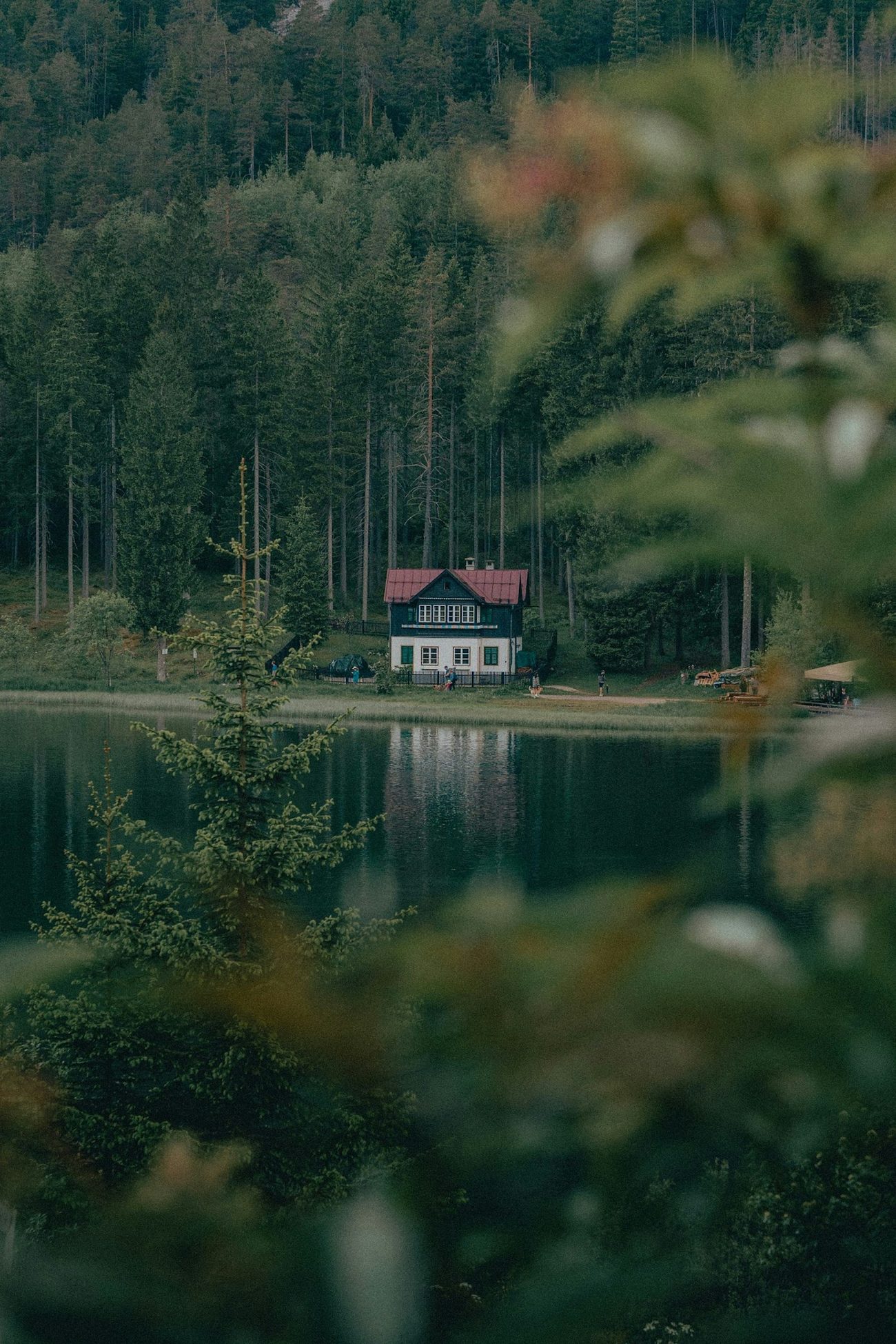
The lake was darkening as evening settled over the trees. I stood near the water and held the key for a moment.
Then I threw it into the lake.
It disappeared beneath the surface without making much of a sound.
The water closed over it, and the ripples slowly faded.
I watched until the surface became still again.
I knew that throwing away one key would not erase everything that had happened. It would not undo the break-in, repair the damage to my relationship with my parents, or guarantee that nobody would ever test my boundaries again.
But it marked something important.
I was finished keeping doors open simply because the people outside them shared my last name.
The lake house had been purchased as a place of peace. I had wanted somewhere I could breathe, think, and live without constantly responding to somebody else’s expectations.
For a while, my family had turned it into the opposite.
Now, standing beside the water, I finally felt the quiet I had been looking for.
The house was still there.
The lake was still there.
And my life was mine again.
Quiet.
Ongoing.
And at last, completely my own.
The End
