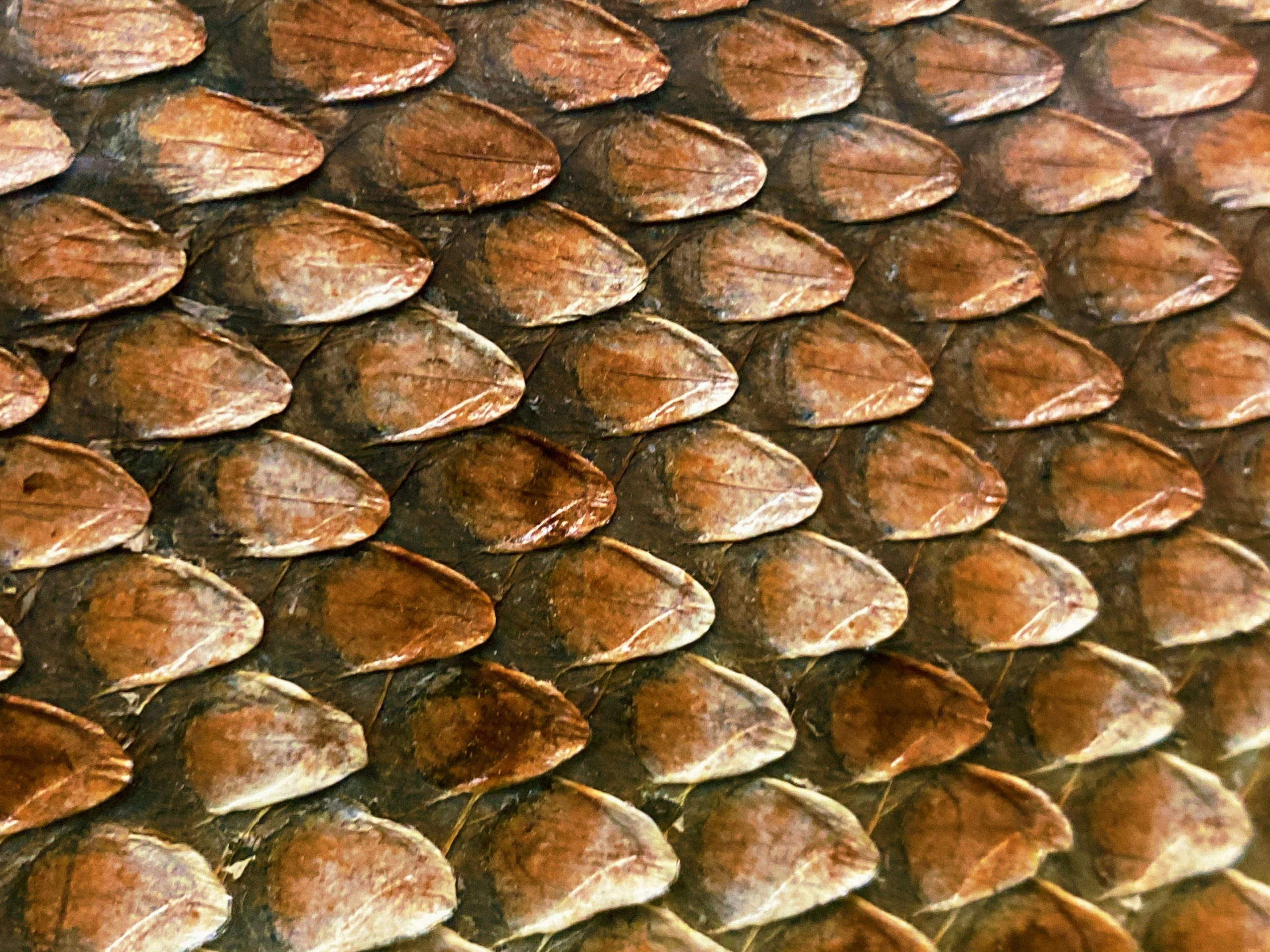
They inhabit environments that provide plenty of cover, including tropical forests, woodland areas, and suitable forest-edge habitats.
Their natural range includes countries in the region such as Gabon, Cameroon, and parts of the Democratic Republic of the Congo, although the precise distribution depends on the species and population.
The name can also create some confusion because the West African Gaboon viper is now commonly classified separately as Bitis rhinoceros. It is closely related to Bitis gabonica, but the two should not automatically be treated as the same species.
These snakes are generally associated with environments where fallen leaves, vegetation, and natural hiding places are abundant.
Although they are not animals that typically seek out people, they may sometimes occur in areas affected by human activity, including agricultural land and locations near suitable forest habitat.
One important point should be emphasized: a claimed Gaboon viper sighting outside its natural African range would require additional explanation. The species is not naturally distributed around the world, so an unusual sighting elsewhere should not be accepted without confirming the animal’s identity and circumstances.
A Powerful Snake With Exceptionally Long Fangs
The Gaboon viper’s appearance becomes even more impressive when its physical characteristics are examined.
It is one of the largest and heaviest members of the viper family. Large individuals can approach or exceed six feet in length, with exceptional specimens growing longer.
Its thick body and broad head give it a very different appearance from the slender snakes many people imagine.
However, its most remarkable feature may be its fangs.
Gaboon vipers have the longest fangs of any venomous snake. They can measure approximately two inches, or five centimeters, in length.
These fangs are hinged, allowing them to fold against the roof of the mouth when they are not being used. When the snake opens its mouth to strike, the fangs swing forward.
Their extraordinary length allows the animal to deliver venom deeply into prey.
This is one reason the Gaboon viper should never be approached or handled. Even a single defensive bite can cause severe injury.
Understanding the Gaboon Viper’s Venom
The venom of a Gaboon viper is medically dangerous.
Like other viper venoms, it contains a complex mixture of substances that can affect blood clotting, blood vessels, and body tissues.
A bite can cause intense pain, swelling, bruising, bleeding abnormalities, and significant tissue damage. Severe envenomation can lead to life-threatening complications.
The seriousness of a bite depends on several factors, including how much venom is injected, the location of the bite, and how quickly appropriate medical treatment is received.
It is important not to assume that a snake bite is harmless simply because the animal appears calm or the initial symptoms seem limited.
A suspected Gaboon viper bite is a medical emergency requiring immediate professional attention and access to appropriate antivenom where indicated.
People should never attempt to treat such a bite using home remedies, cutting the wound, sucking out venom, or applying a tight tourniquet. These approaches can cause additional harm or delay effective treatment.
A Patient Hunter That Relies on Ambush
Despite its intimidating appearance, the Gaboon viper is not a snake that spends its life chasing animals.
Its hunting strategy depends largely on patience.
It can remain motionless for extended periods, waiting for an appropriate animal to move within striking distance.
Its diet includes small and medium-sized mammals and birds. Depending on the opportunity, it may also consume other suitable prey.
When an animal comes close enough, the viper strikes rapidly.
Unlike many snakes that bite and immediately release their prey, the Gaboon viper commonly holds onto the animal until it has been subdued.
