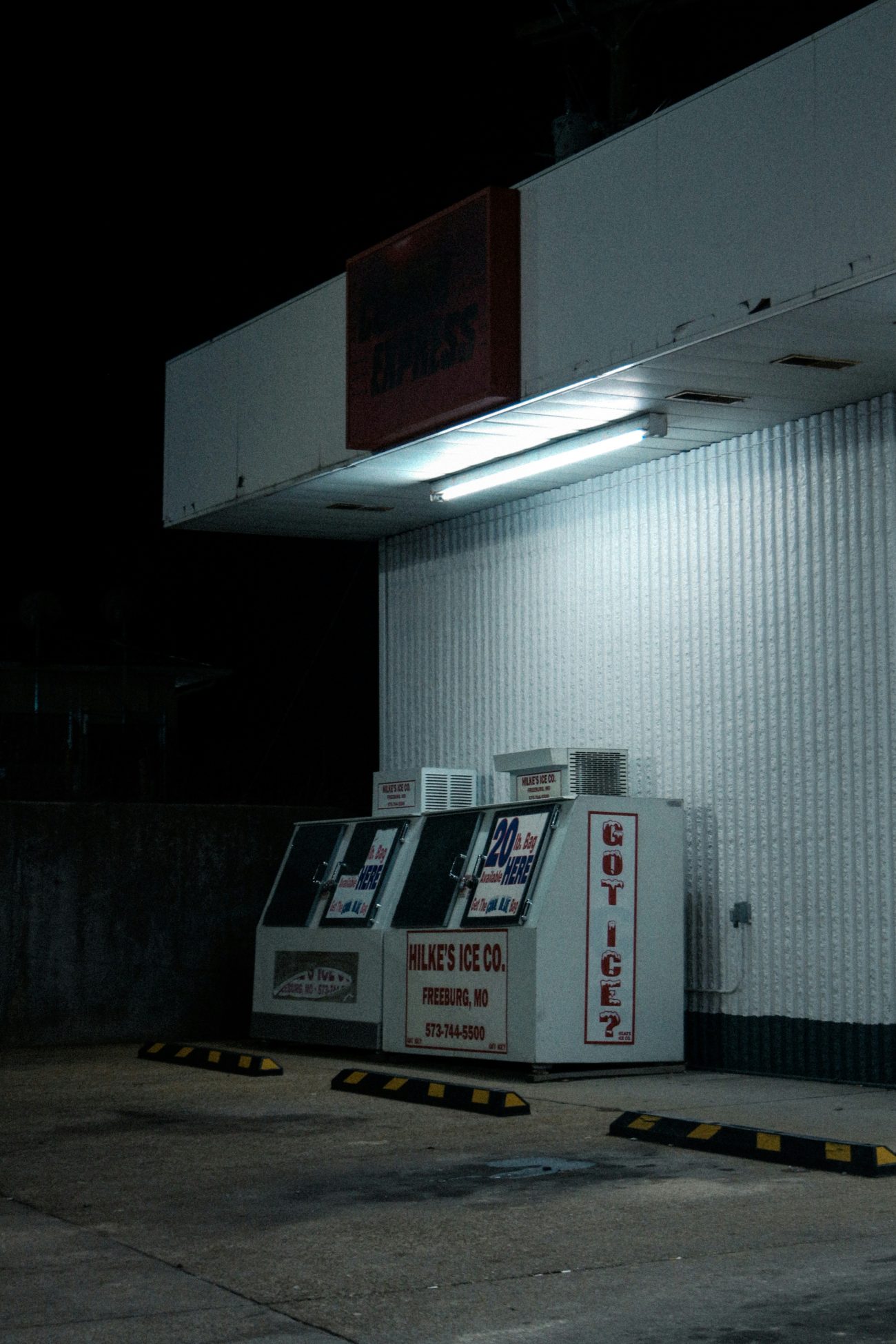
I Spent Five Dollars to Help a Struggling Mother at the Gas Station — A Week Later, My Boss Called Me Into His Office
The envelope was sitting on Mr. Jenkins’s desk when I walked into his office. It was plain white, with my first name written across the front in neat blue ink.
Ross.
No last name. No return address. No explanation.
“Sit down, Ross,” Mr. Jenkins said.
I stayed standing.
When your boss calls you into his office and tells you to sit down, especially when you are already struggling to keep your job, your mind doesn’t exactly go to pleasant places.
“Did you cover somebody’s groceries last Friday night?” he asked. “Around eleven-thirty?”
My stomach tightened.
I immediately thought about the woman with the sleeping little boy, the milk, the bread, and the diapers. I remembered the five dollars I had taken from my own wallet to help her pay.
“Yeah,” I said cautiously. “I did.”
And suddenly, I was afraid that a small act of kindness might cost me the one thing my family couldn’t afford to lose.
But before I explain what happened next, you need to understand where I was in life that night.
Losing the Job I Had Spent 23 Years Building
My name is Ross Kowalski. I’m forty-nine years old, married to my wife, Lydia, and the father of two children, Caleb and Maddie.
We live in a modest three-bedroom house in Winston-Salem, North Carolina. The roof leaks over the back bedroom during heavy rain. The water heater makes a terrible noise, and a crack in the driveway seems to grow a little longer every year.
It’s not much, but it’s ours.
At least, that’s what I always told myself.
For most of my adult life, I had a steady job at a factory called Carolina Fiber and Thread. We manufactured industrial yarn for carpet companies and upholstery businesses. I started there at twenty-six, operating a spinning machine on the second shift.
Over time, I worked my way up. Eventually, I became a line supervisor responsible for eleven employees.
I gave that company twenty-three years.
I knew the machines, the production schedules, the safety procedures, and nearly everyone who worked on the floor. I could recognize when something was wrong just by listening to a machine run.
I thought I’d stay there until retirement.
Then, one ordinary Tuesday in February, everything disappeared.
I clocked in at 6:50 that morning, just as I had done thousands of times before. I drank my usual coffee in the break room, walked the production floor, checked the equipment, and reminded a young employee named Tommy that headphones weren’t allowed near the machinery.
Nothing seemed unusual.
At around two that afternoon, a man wearing a suit came out of the front office. I had never seen him before.
He told everyone to shut down their machines and gather outside.
About two hundred employees ended up standing in the freezing parking lot. The man climbed onto the back of a pickup truck and read from a piece of paper.
The company was filing for bankruptcy.
All operations were stopping immediately.
Final paychecks would be mailed. Health insurance would end at the end of the month.
He said he was sorry, then climbed down and drove away.
By 3:30, the gates were chained and locked.
A printed notice was taped to the fence.
I read it four times, hoping that somehow I had misunderstood what had happened.
Beside me stood Hector Ruiz, a longtime employee who had worked there for twenty-nine years. He was sixty-one and had been counting on retiring in about two years.
