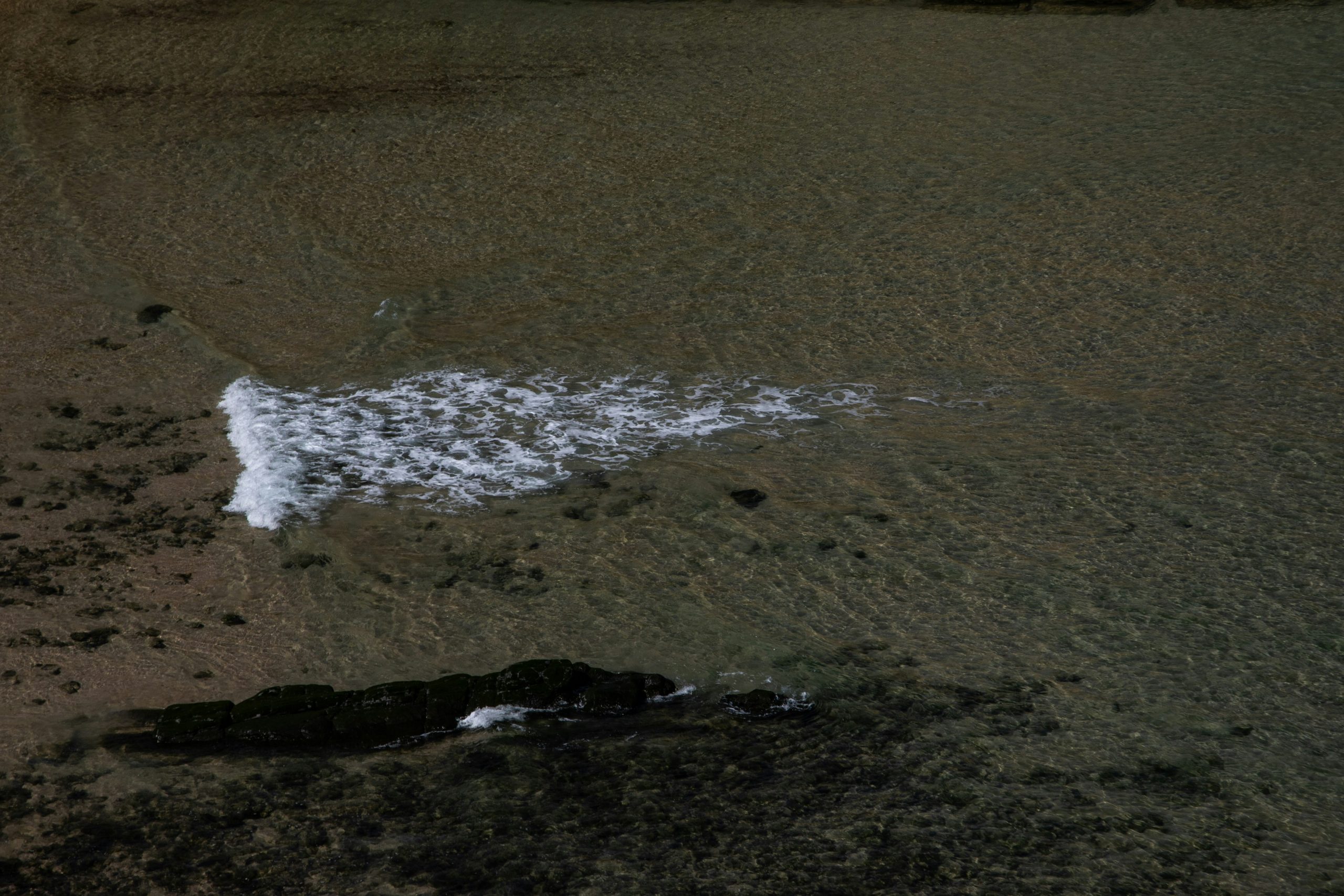
A single photograph can be useful, but it does not always provide enough evidence for a confident identification.
In my case, I had no expert examination, no confirmed measurements, and no verified identification. I couldn’t establish whether the object was an animal, which species it might belong to, or what had brought it ashore.
All I knew was that I had encountered something I didn’t recognize.
And that distinction mattered.
There is nothing wrong with being curious about an unusual discovery. The problem comes when curiosity turns into certainty before the evidence supports it.
I didn’t want to claim that I had found a rare creature when I couldn’t even establish what the object was.
Sometimes, the most accurate description is also the simplest: an unidentified object found on a beach.
What I Would Do Differently If I Found It Again
Looking back, I realized that a few additional details could have made the discovery easier to investigate.
First, I would record the exact location and date. Different marine species inhabit different regions, and geographical information can help narrow down the possibilities.
Second, I would take photographs from several angles without touching or moving the object. A clear view of the body, tail, and any distinctive markings could be useful.
If it were safe to do so, I would also include a familiar object in a photograph for scale, keeping an appropriate distance from the unidentified material.
Finally, I would contact local wildlife professionals or coastal authorities if the object appeared to be a stranded marine animal.
Experts may be able to determine whether it is a known species, whether it needs assistance, or whether the discovery should be reported for scientific monitoring.
Stranded marine animals can sometimes provide valuable information about local wildlife, environmental conditions, and changes in marine populations. But collecting that information safely requires care and, in some cases, specialized equipment.
The important thing is not to turn an unusual encounter into a risky experiment.
Observing, documenting, and reporting can be far more useful than attempting to investigate an unfamiliar organism by hand.
A Quiet Morning Became a Reminder of How Much We Don’t Know
Eventually, I decided to continue my walk.
Part of me wanted to stay until someone arrived who might recognize the object. Another part of me understood that I had reached the limits of what I could determine on my own.
The mystery remained unresolved.
Surprisingly, I found that I was comfortable with that.
As I walked farther along the shoreline, I kept thinking about how little we see of the ocean’s daily life. We may spend hours swimming, fishing, or watching waves roll onto the sand, yet the underwater world remains largely hidden from ordinary view.
Even familiar beaches can reveal unexpected things.
Currents shift. Weather changes. Marine animals move through different habitats. Natural material that was invisible beneath the water can suddenly appear along the shoreline.
The ocean doesn’t need to produce something never seen before to surprise us. Sometimes, it only needs to show us something familiar in a way we have never encountered.
By the time I reached the other end of the beach, the sun had climbed higher. The shoreline was becoming brighter, and more people were beginning to arrive.
The object I had discovered was still behind me, its identity unknown.
Perhaps it was an unusual marine animal. Perhaps it was a species I simply didn’t recognize. Or perhaps it was a natural object whose shape and texture had fooled me in the early morning light.
Without reliable identification, I couldn’t say.
And I didn’t need to pretend otherwise.
The experience had reminded me that uncertainty is not the same as evidence of something extraordinary. It had also reminded me that there is value in looking carefully, asking questions, and accepting when we don’t yet have an answer.
I had gone to the beach expecting an ordinary morning.
Instead, I left with a story I couldn’t fully explain—and a renewed appreciation for the natural world.
Sometimes, a walk gives us exactly what we expect.
Other times, it leaves us wondering.
That morning, the beach gave me a question, and I was content to let it remain unanswered until someone could provide the evidence needed to solve it.
Have you ever found something washed ashore that you couldn’t identify? What did it look like, and did you ever discover what it was?
