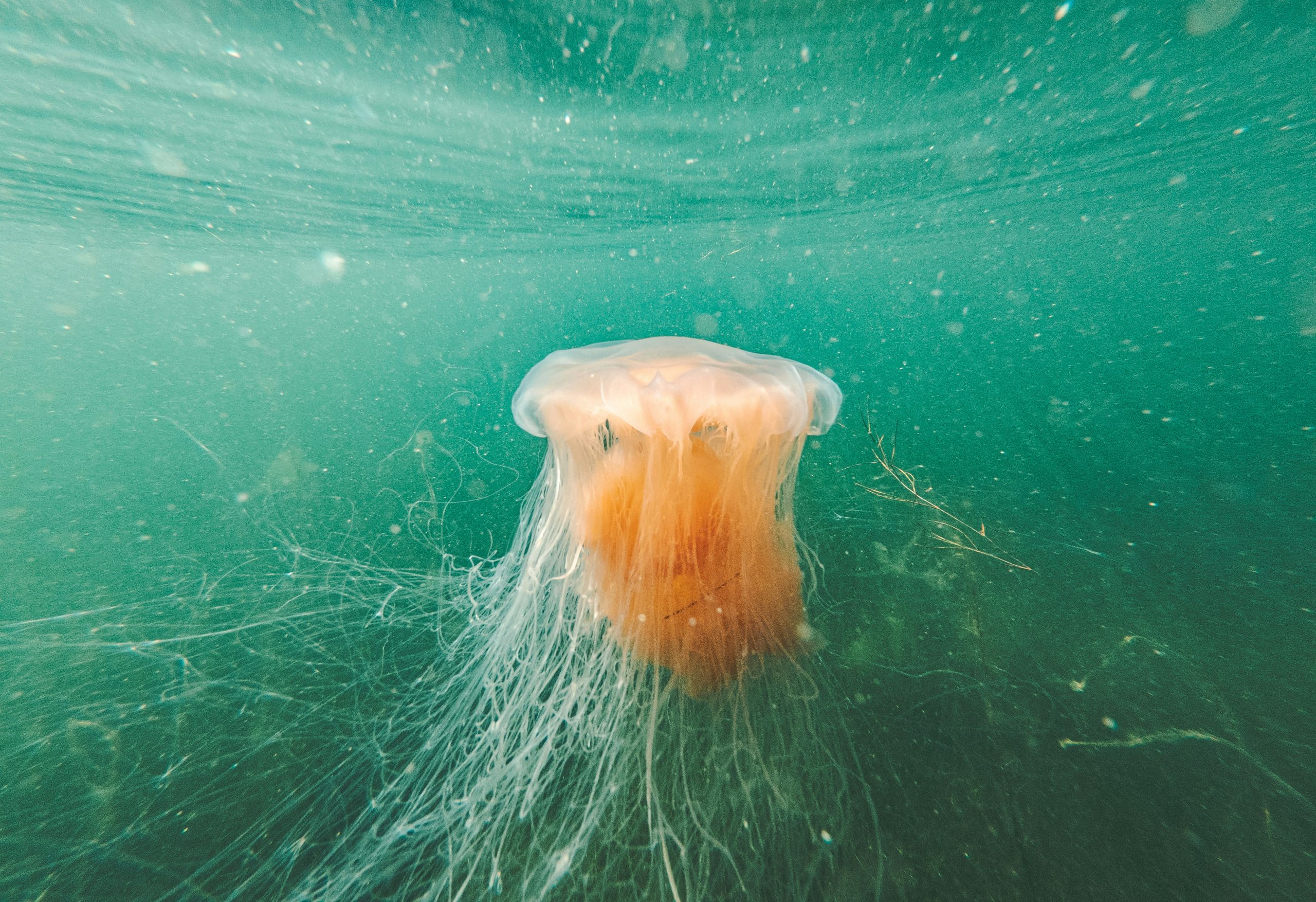
Be careful around detached tentacles. Pieces that have separated from the main body may still cause stings.
Follow local warnings. If a beach authority has issued an alert about jellyfish, pay attention to signs and instructions.
If someone is stung, they should avoid rubbing the affected area or handling any remaining tentacles with bare hands. First-aid recommendations can vary by species and location, so following local medical or lifeguard guidance is important. Severe pain, breathing difficulties, faintness, or a serious allergic reaction require urgent medical attention.
The same caution applies to pets. If a dog comes into contact with a suspected jellyfish, particularly around the mouth or face, a veterinarian should be contacted promptly.
The Ocean Can Be Beautiful Without Being Harmless
After learning about the Lion’s Mane Jellyfish, I felt a mixture of relief and admiration.
The relief came from knowing that I hadn’t allowed curiosity to put either myself or my dog in danger.
But there was also a sense of awe.
The creature I had encountered was not simply something to fear. It was a reminder of how much life exists in the ocean, including species that most people rarely see up close.
The Lion’s Mane Jellyfish is especially remarkable because of its size and appearance. Its long tentacles can trail through the water, while its bell moves with the rhythm of the surrounding currents.
It belongs to a world that operates largely beyond our everyday awareness.
We often think of the beach as a peaceful place where we can walk, relax, take photographs, and enjoy the scenery. Yet the shoreline is also a constantly changing environment where marine life is carried in and out by tides, currents, and weather.
A quiet morning doesn’t mean the ocean has stopped being wild.
Sometimes, the most important thing we can do when encountering unfamiliar wildlife is simply observe it without interfering.
When I Returned, the Creature Was Gone
Later that day, I found myself thinking about the strange discovery again.
I wondered whether the jellyfish was still lying on the sand or whether the changing tide had carried it back into the water.
When I returned to the beach, the spot was empty.
The shoreline looked just as peaceful as it had that morning. The waves continued rolling toward the sand, leaving behind a thin layer of water before retreating again.
There was no obvious sign that anything unusual had been there.
The tide had shifted, and the beach had returned to its familiar appearance.
But I found myself looking at the water differently.
The waves seemed no less beautiful. If anything, they appeared more alive than before.
I had always appreciated the ocean for its scenery, its calming sounds, and the sense of freedom that comes from walking along the shore. That morning reminded me that there is much more happening beneath the surface.
There are creatures whose appearance can surprise us, whose behavior we may not understand, and whose presence deserves respect.
The experience also reminded me how quickly an ordinary moment can become a lesson in caution.
I had gone out expecting a peaceful walk with my dog. Instead, I encountered something unfamiliar, learned about one of the ocean’s most remarkable jellyfish, and came away with a better understanding of why wild animals should be observed from a safe distance.
The ocean doesn’t stop being wild simply because it reaches the shore.
And sometimes, the most memorable discoveries are the ones we admire without ever getting close enough to touch.
