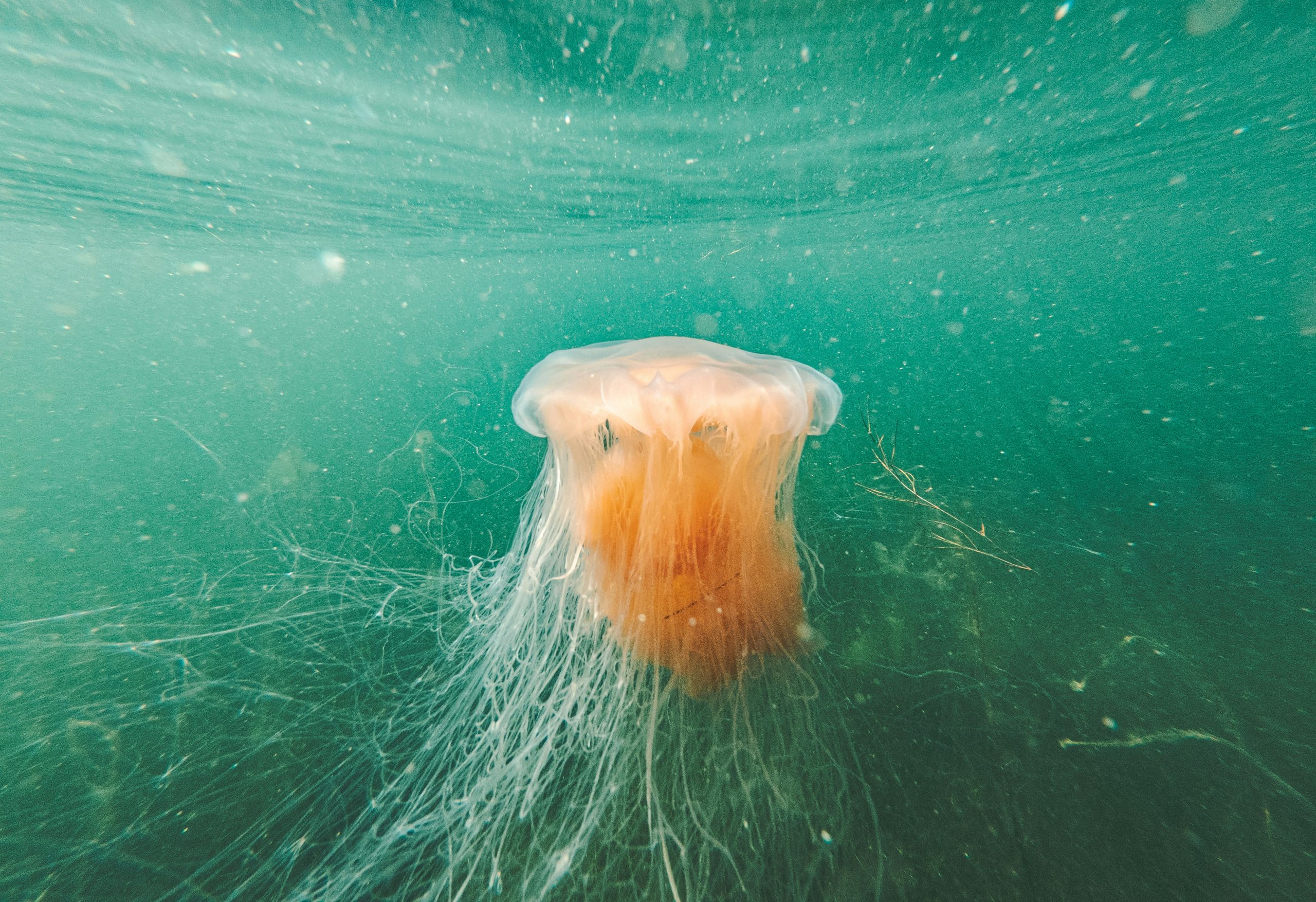
It is also one of the largest jellyfish species in the world.
Suddenly, the strange shape I had encountered on the beach made much more sense.
What I had initially mistaken for discarded material could have been a large jellyfish washed ashore by the tide.
The discovery changed how I remembered the encounter. Something that had looked like an unusual, almost mysterious piece of ocean life was potentially an animal equipped with stinging tentacles.
And that meant keeping my distance had been the right decision.
Why Lion’s Mane Jellyfish Can Be Dangerous
Lion’s mane jellyfish are impressive marine animals, but their appearance should not encourage anyone to approach or touch them.
Their tentacles contain specialized stinging cells called nematocysts. These structures release tiny, threadlike mechanisms that can deliver venom when they come into contact with suitable targets.
For humans, contact can cause painful skin irritation and other symptoms. The severity of a reaction can vary depending on the amount of contact and the individual’s response.
One important detail is that a jellyfish does not necessarily have to be swimming in the water to present a risk.
Tentacles separated from the main body, as well as parts of a jellyfish washed onto the beach, may still contain active stinging cells. A creature that appears lifeless or stranded should therefore never be treated as safe to handle.
This is particularly important for people walking their dogs along the coast.
Dogs naturally investigate unfamiliar objects using their noses and mouths. A jellyfish lying on wet sand can attract their attention, especially if it has an unusual texture or appearance.
A curious dog could approach before its owner recognizes what the animal is.
Keeping pets on a leash near unfamiliar marine life and preventing them from sniffing, licking, or touching washed-up creatures can help avoid an unpleasant encounter.
Why Jellyfish Sometimes Wash Up on Beaches
Finding a jellyfish on the shoreline doesn’t necessarily mean something unusual has happened.
Jellyfish are carried by ocean currents, winds, and tides. Changes in these conditions can move them closer to shore, sometimes leaving them stranded when the water retreats.
Some may wash up after strong winds or rough weather. Others may become caught in shallow water or carried toward the beach by currents.
Their bodies are largely composed of water, which helps explain why they can look so different once they are out of the ocean.
A jellyfish floating in clear water may appear almost invisible from certain angles. On wet sand, its translucent body can blend into the surroundings, making it difficult to recognize.
This can create the impression that someone has discovered an unusual piece of plastic, a strange mass of seaweed, or something that doesn’t belong on the beach.
In reality, it may simply be a marine animal that has been carried ashore by natural conditions.
What to Do If You Find a Jellyfish on the Beach
The most important rule is simple: don’t touch it.
Even if a jellyfish appears dead, damaged, or completely motionless, its tentacles may still sting. Trying to pick it up, move it, or examine it closely can expose someone to unnecessary risk.
If you encounter an unfamiliar jellyfish while walking along the beach, a few basic precautions can make a difference.
Keep your distance. Avoid approaching the animal, even if you want a closer look or a photograph.
Keep children and pets away. Young children and curious dogs may not recognize the danger. Keep dogs leashed and prevent them from investigating the creature.
Don’t attempt to move it. Unless you are following instructions from local wildlife or beach authorities, leave the animal where it is.
