But something in me had begun to worry.
One afternoon, a uniformed official came to our door.
I remember the sound of my mother’s footsteps as she went to answer it. I remember the man’s hat in his hands. I remember how carefully he spoke.
Benjamin was missing after a military operation.
His status was uncertain.
Later, another notice arrived stating that he was presumed dead.
There was no confirmed account of his final moments. There was no grave I could visit. His family received official paperwork, and the town eventually held a memorial service for those who had not returned.
I stood beside his parents, holding the little silver ring in my pocket.
I did not cry during the service.
I think I was still waiting for someone to tell me there had been a mistake.
But no one did.
Learning to Live With an Empty Place
The years that followed were difficult in ways I did not know how to explain.
People expected grief to follow a familiar pattern. They thought that after enough time, I would meet someone else, marry, and begin a new chapter.
Some were kind about it.
Others were not.
A neighbor once told me that I was too young to waste my life remembering a man who was gone.
I didn’t argue.
I understood what she meant, but I also knew that love was not a switch a person could turn off because the calendar had changed.
I never married. That was my choice, although I did not make it as some grand declaration of eternal devotion. I simply never met anyone with whom I wanted to build that kind of life.
Instead, I devoted myself to teaching.
My classroom became a place where children could feel safe, even when things at home were difficult. I learned which students needed encouragement, which needed patience, and which needed someone to notice when they had stopped smiling.
I also volunteered at a community kitchen. We served meals to people who were struggling, and I discovered that offering someone a warm plate of food could sometimes be more meaningful than giving them advice.
Later, I began visiting people who were ill or living alone.
I sat with them. I read aloud. I listened to stories they had told many times before.
Perhaps I understood something about loneliness that made me reluctant to leave others alone with theirs.
My life was not empty.
There were birthdays, friendships, school celebrations, and countless ordinary mornings. I had people who cared about me, and I cared about them.
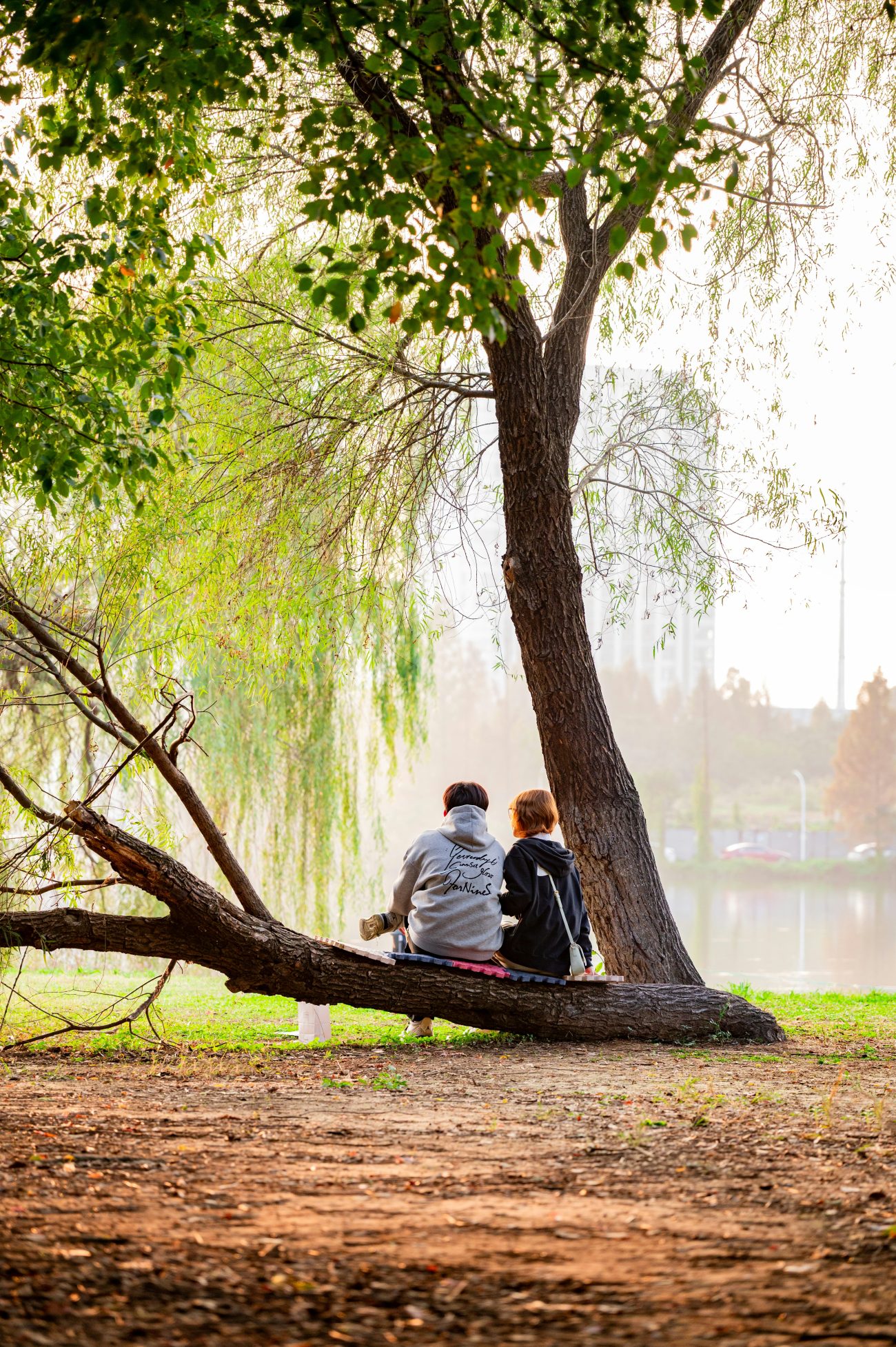
But every June, I returned to the willow tree.
I placed red carnations beneath its branches and remembered Benjamin.
Sometimes I spoke to him quietly.
I told him about the children who had learned to read, the people I had helped, and the little changes in town.
I told him I was still here.
I never imagined he could hear me.
The Stranger at My Door
I was in my late seventies when Edward first came looking for me.
It was a rainy afternoon. I had been sorting old photographs when I heard the doorbell.
A man stood outside, perhaps in his early sixties. He wore a dark coat and held a folder under one arm.
“Are you Margaret?” he asked.
“Yes.”
“My name is Edward. I’m sorry to arrive without warning, but I believe we need to talk about someone you once knew.”
I invited him inside.
He sat at my kitchen table and placed the folder between us.
“Did you know a man named Benjamin?”
My hands went still.
“Yes.”
