Benjamin wanted to build a family. He imagined a house with a garden, a kitchen large enough for Sunday dinners, and children who would grow up knowing that they were loved.
I wanted to keep teaching.
He said he would be proud to have a wife who spent her days helping children find their way in the world.
We did not have much money, but we had plans.
And at twenty-one, plans felt like promises.
The Willow Tree and the Promise
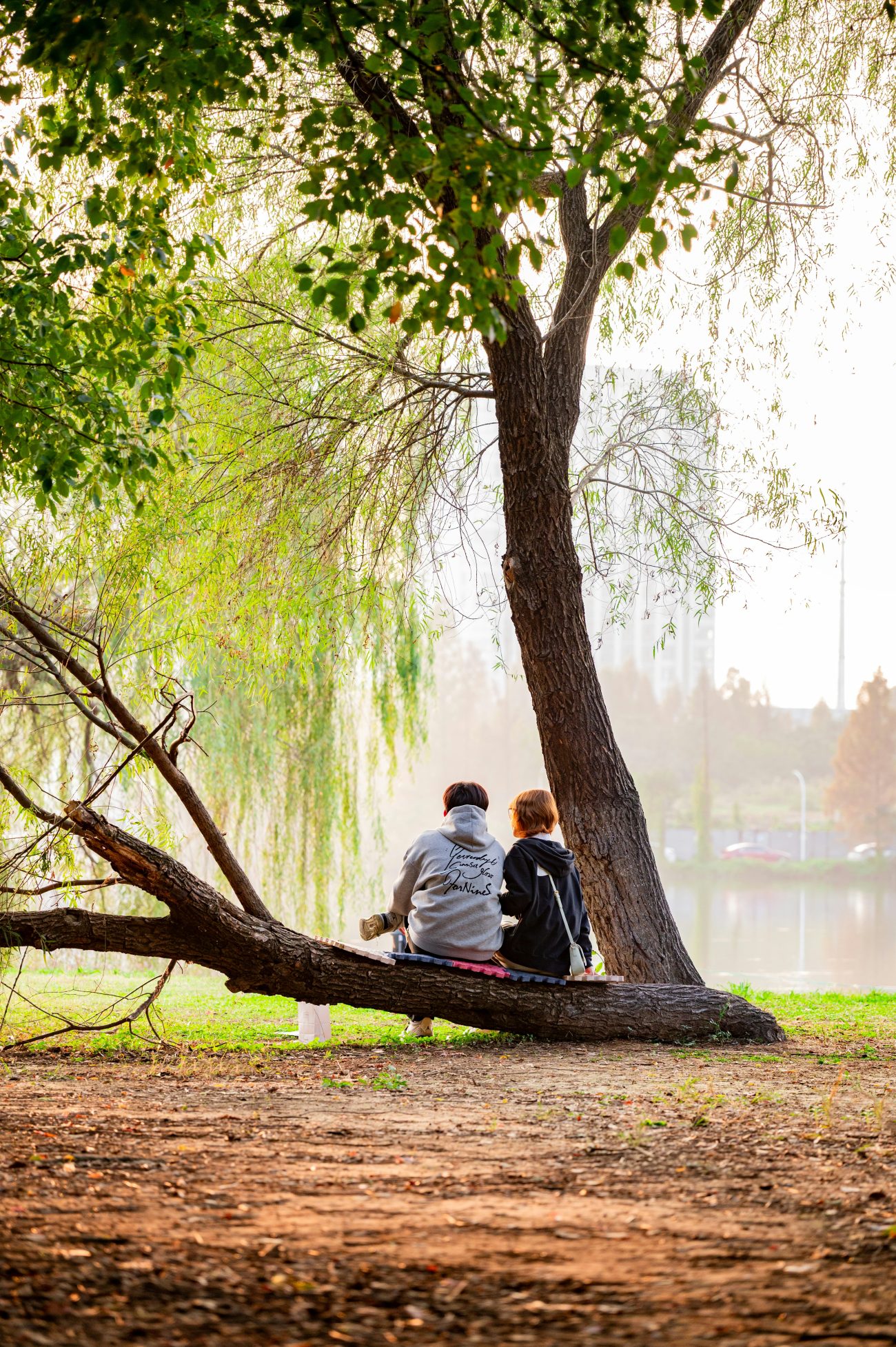
The willow tree stood at the edge of an old public garden, near a narrow path that led toward the river.
Its branches hung low enough to create a quiet shelter beneath them. In summer, the leaves moved gently in the breeze, and the shade made the place feel separate from the rest of the town.
Benjamin and I began meeting there regularly.
We talked about everything: the weather, our families, the books we wanted to read, the places we hoped to visit someday.
He once brought a small wooden box he had made at the repair shop after finishing his work.
Inside was a simple silver ring.
It wasn’t expensive. The band was thin, and the stone was small, but I thought it was the most beautiful thing I had ever seen.
“I can’t offer you a grand life yet,” he said. “But I can offer you a place in whatever life I build.”
I remember looking at him and feeling that the future had suddenly become real.
“I don’t need grand things, Benjamin.”
He slipped the ring onto my finger.
“Then promise me you’ll wait until I can come back and make everything official.”
I looked at him.
“You’re talking as though you’re going somewhere.”
He had already received notice that he would be leaving for military service. The war had reached a point where young men from our town were being called away, and Benjamin knew his time was coming.
He took my hands.
“I’ll come home.”
I wanted to believe him.
So beneath the willow tree, we made a promise. He would return, and we would build the life we had talked about.
I wore the ring until the day it became too loose for my finger. After that, I kept it in a small box beside my bed.
It remained there for decades.
The Letters That Stopped Coming
Benjamin left in early autumn.
I went to the station with his parents and several other families. There were tears, hurried embraces, and promises that letters would be written as often as possible.
He kissed my forehead before boarding.
“Don’t forget me,” he said.
“Not even for a day.”
He smiled, though his eyes were wet.
Then the train began moving.
I watched until it disappeared.
At first, the letters came regularly.
Benjamin wrote about the people he met, the cold mornings, the long stretches of waiting, and the small comforts that made difficult days bearable. He never described the worst things in detail. I suspect he wanted to protect me from what he was seeing.
He asked about the school.
He wanted to know whether the children were learning their lessons and whether the old bakery still sold the sweet rolls he liked.
I wrote back every week.
I told him about ordinary life because I thought ordinary life was what he needed to imagine when the days became difficult.
Then the letters became less frequent.
A month passed without a reply.
Then another.
I told myself that the postal service was unreliable and that military life made communication difficult. His parents tried to reassure me, too.
