Willa explained that they were not simply inaccurate details. They described events that had never happened.
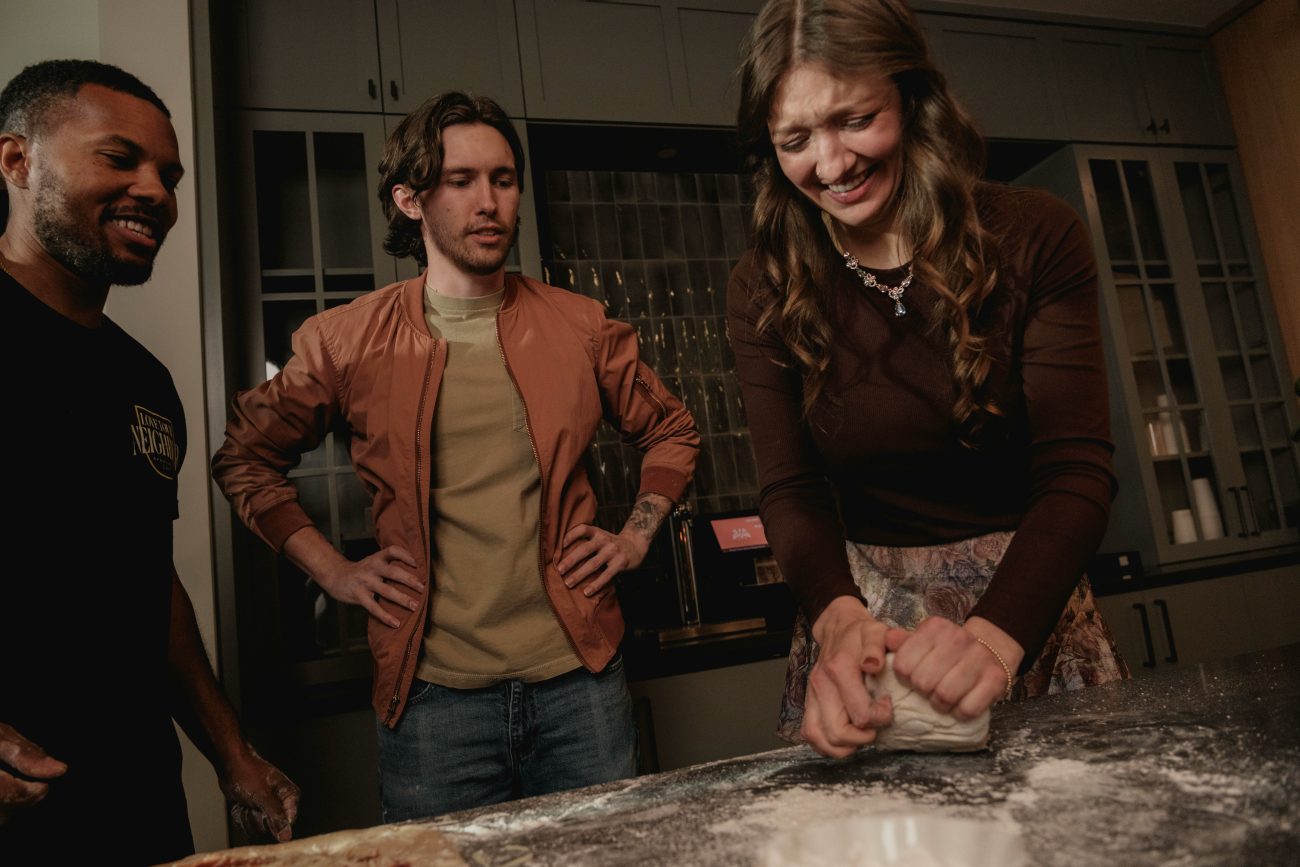
She told Claire about her early years in foster care, meeting Nathan and Reid, learning to bake, and gradually becoming comfortable in her new home.
She described how her fathers had supported her through school, helped her develop practical skills, and encouraged her independence.
They were the people who had been present for ordinary days as well as difficult ones.
They had attended to her needs, celebrated her achievements, and helped her feel secure.
Claire listened carefully.
As Willa spoke, the producer began to understand that the documentary concept presented by Grant’s representatives did not match the family’s account.
The story being proposed had placed Grant at the center of experiences he had not shared.
Then Willa asked the question she had been carrying for years.
Why Had Her Biological Father Stayed Away?
Grant admitted that he had been at the beginning of his acting career when he learned about Willa’s blindness.
He said he had felt unprepared to handle the responsibilities of raising a child with additional needs.
It was an explanation, but it did not erase the consequences of his decision.
Willa listened without interrupting.
She told him that his absence had left questions she had carried for much of her life.
She had wondered whether there was something about her that made him unwilling to become her father. She had also spent years learning to trust people after experiencing repeated changes in her early childhood.
Now he had returned when he had a documentary project and a financial proposal.
She wanted to understand whether he genuinely wanted a relationship with her or whether the opportunity to tell a compelling story had influenced his sudden interest.
Grant did not have an easy answer.
Willa made her position clear.
Perhaps they could have a conversation someday. Perhaps she might want to learn more about him as a person.
But she did not want their relationship to begin with a television project or a financial agreement.
She was not interested in pretending that he had been present throughout her childhood.
Grant asked whether he could leave his contact information.
Willa agreed that he could leave it with her fathers.
If she ever wanted to contact him, she would make that decision herself.
Then she ended the meeting.
The Production Company Reconsiders Its Plans
A few weeks later, Claire contacted the family.
The production company had decided not to proceed with the documentary in its proposed form.
The team needed to reconsider the information it had received and could not continue presenting a family history that had not been properly verified.
The decision effectively brought the original project to an end.
Grant later sent Willa a message asking whether she might be interested in having a private conversation.
She decided she was not ready.
Nathan and Reid supported her choice.
They did not pressure her to forgive him, give him another opportunity, or maintain contact simply because he was her biological father.
They understood that reconnecting with a biological parent can involve complicated emotions.
Some people want answers immediately. Others need time. Some eventually develop meaningful relationships with biological relatives, while others decide that maintaining distance is healthier for them.
There is no single correct timetable.
Willa had already made her position clear: she wanted control over her own decisions.
Her fathers respected that.
The Bakery and the Future They Chose
Meanwhile, Nathan and Reid continued working toward their bakery expansion.
The $3 million offer was gone.
They still faced the practical challenges of financing a growing business, but they were determined to continue without making their daughter part of a transaction.
