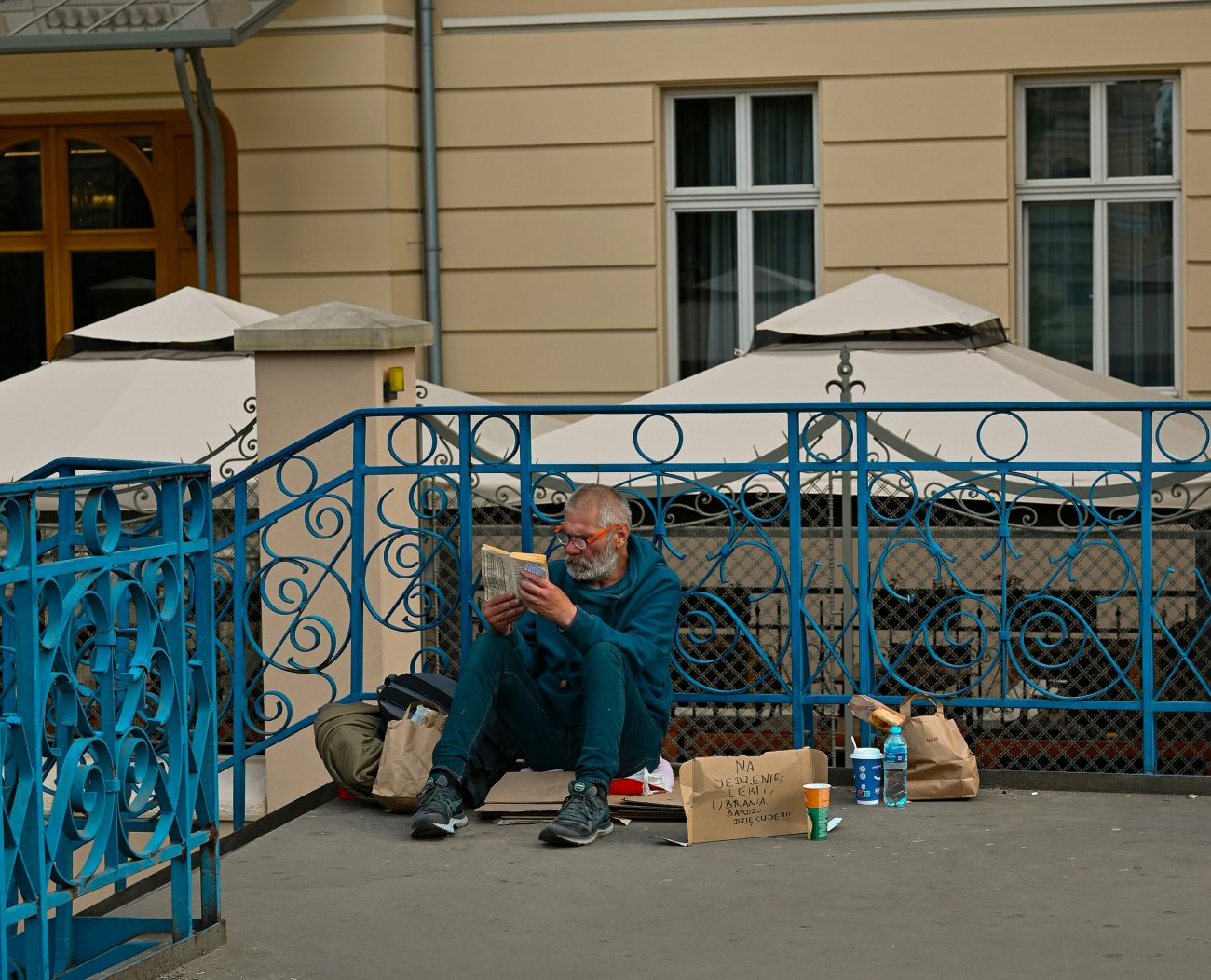
He paused.
“I just want a little dignity before my time runs out.”
I didn’t know what to say.
I had never received a request like that. I had never imagined that someone might ask me to marry him because he was afraid of dying without family.
I told him I needed time to think.
Then I went to work.
But I wasn’t really present for the rest of the day.
A Decision I Couldn’t Stop Thinking About
I spent the next two evenings thinking about Larry.
I imagined what it must feel like to know that your life might be ending while sitting outside a subway station, surrounded by thousands of people who didn’t know your name.
I thought about how easily someone could disappear from public view.
A person could pass away, and the world would continue moving. Trains would arrive. Coffee shops would open. People would complain about traffic and rush to appointments.
Yet somewhere, a human being would be gone.
I also thought carefully about the request itself.
Marriage wasn’t a small favor. It involved legal responsibilities, financial implications, and consequences that could continue long after one person died.
I didn’t want to make an emotional decision without understanding what I was agreeing to.
On Thursday morning, I returned to the station with my usual coffee.
Larry was sitting against the wall.
I approached him and handed him the cup.
“I’ve been thinking about what you asked me.”
He looked at me.
“You don’t have to do anything, Sarah.”
“I know. But I want to help you.”
For several seconds, he didn’t respond.
“Are you serious?”
“Yes. But we need to do things properly. I want to understand the legal side, and I want you to have someone from the medical team explain your options.”
Larry nodded slowly.
“I wouldn’t want you to get into trouble because of me.”
“Then let’s make sure that doesn’t happen.”
Over the following days, we discussed the practical details.
I encouraged Larry to speak with the hospice team about his condition and his end-of-life wishes. We also consulted a legal adviser about what marriage would mean, particularly regarding financial obligations, debts, property, and arrangements after death.
I made it clear that I wasn’t promising anything beyond what I could reasonably provide.
Larry agreed.
Two days later, we stood together at the city courthouse.
There were no flowers, no wedding dress, and no guests waiting outside to congratulate us.
There was only a courthouse official, a small room, a few documents, and two people making an unusual decision.
When the paperwork was completed and the marriage was legally registered, Larry held my hand.
“Thank you, Sarah,” he whispered.
“What for?”
He looked down at our hands.
“You’ve given me something I thought I would never have again.”
“What is that?”
He smiled.
“The feeling that I belong somewhere.”
I tried to smile back, but my eyes were already filling with tears.
I had no idea how much those words would mean to me later.
The Friendship That Continued After the Wedding
After we married, I continued visiting Larry whenever my schedule allowed.
At first, he remained near the subway station, but his condition deteriorated quickly. Eventually, the hospice team arranged for him to receive care in a facility where his medical needs could be properly addressed.
I visited several times each week.
Sometimes I brought coffee, although he could no longer drink much of it. Other times, I brought books or simply sat beside his bed.
Our conversations became more personal.
One afternoon, Larry asked about my childhood.
I told him about growing up with my parents, Margaret and my father, and how my mother had always encouraged me to treat people with kindness.
