I Married a Homeless Man Who Said He Had Only One Month to Live—Three Days After His Death, I Discovered the Secret He Had Hidden for Years
I thought I was helping a dying man find a little dignity before the end of his life. I never imagined that marrying him would lead me into a family mystery that had remained buried for decades.
For almost two years, I had known Larry as the quiet man who sat outside my subway station every morning. He wore an old brown coat, carried a worn backpack, and greeted people with a kindness that seemed almost out of place in a city where everyone was rushing somewhere.
I brought him coffee. We talked whenever I had a few spare minutes. Sometimes he asked about my work, and sometimes he told me stories about places he had visited when he was younger.
Then, one freezing Tuesday morning, I saw a cardboard sign in his hands.
It said:
“MARRY ME. I HAVE ONLY ONE MONTH LEFT TO LIVE.”
I thought it was some kind of terrible joke. But when I looked into Larry’s pale, exhausted face, I realized he was serious.
What happened next changed both our lives. And three days after his death, when I opened an envelope he had left behind, I discovered that the homeless man I thought I knew had once been part of a family whose history was connected to my own.
The Man I Saw Every Morning
My name is Sarah, and for nearly two years, Larry was part of my daily routine.
I worked in an office downtown, which meant taking the subway every morning. My schedule rarely changed. I left my apartment at approximately the same time, stopped at the same coffee shop, and walked past the same entrance to the station.
That was where Larry usually sat.
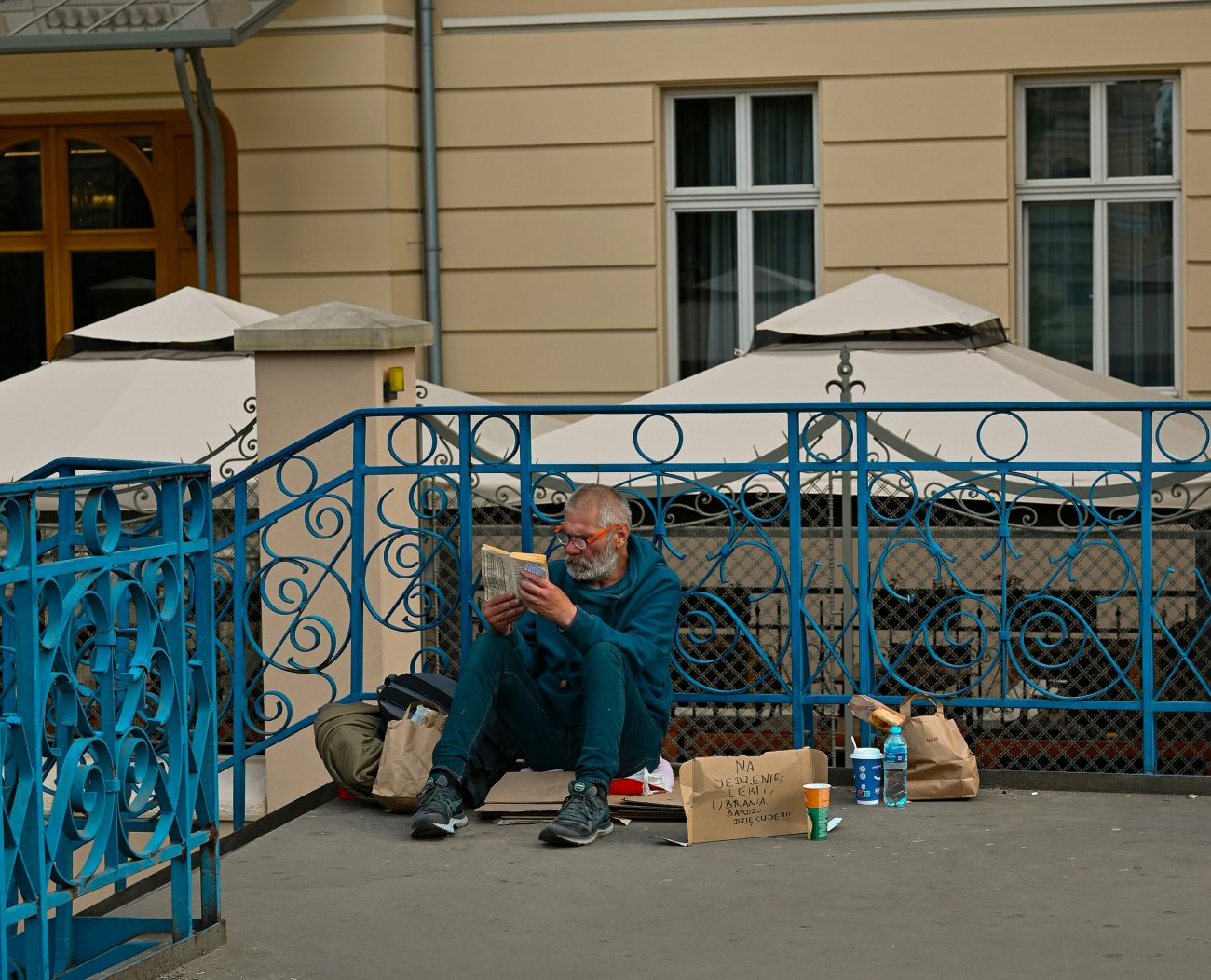
He had an old brown coat that looked several sizes too large, dark trousers, and a small backpack that seemed to contain everything he owned. His hair was mostly gray, and his face showed the kind of weariness that comes from spending too many nights outdoors.
But what I noticed most was his manner.
Larry never shouted at people. He didn’t follow anyone asking for money or make them uncomfortable. He simply sat quietly, sometimes reading an old paperback, sometimes watching the crowds pass.
Most people walked by without looking at him.
I understood that people had their own worries. Mornings were busy, trains were crowded, and nobody wanted to be late for work. Still, I couldn’t bring myself to pretend he wasn’t there.
The first time I spoke to him was during an especially cold morning.
I had purchased two coffees by mistake, and rather than carry the extra cup all the way to the office, I offered it to him.
“Would you like this?” I asked.
Larry looked up.
“For me?”
“Yes. It’s still hot.”
He accepted it with both hands.
“That’s very kind of you. Thank you.”
His smile was small but genuine.
After that, I started bringing him coffee whenever I could.
It became a habit before I even realized it.
Sometimes I bought him a breakfast sandwich, too. He never demanded anything, and he never made me feel guilty if I couldn’t stop.
Our conversations were usually brief.
“How’s work treating you, Sarah?” he would ask.
“About the same. Too many emails and not enough hours in the day.”
He would chuckle.
“That’s how they keep us employed.”
Other mornings, he would ask whether I had slept well or remind me to be careful because the sidewalks were slippery.
