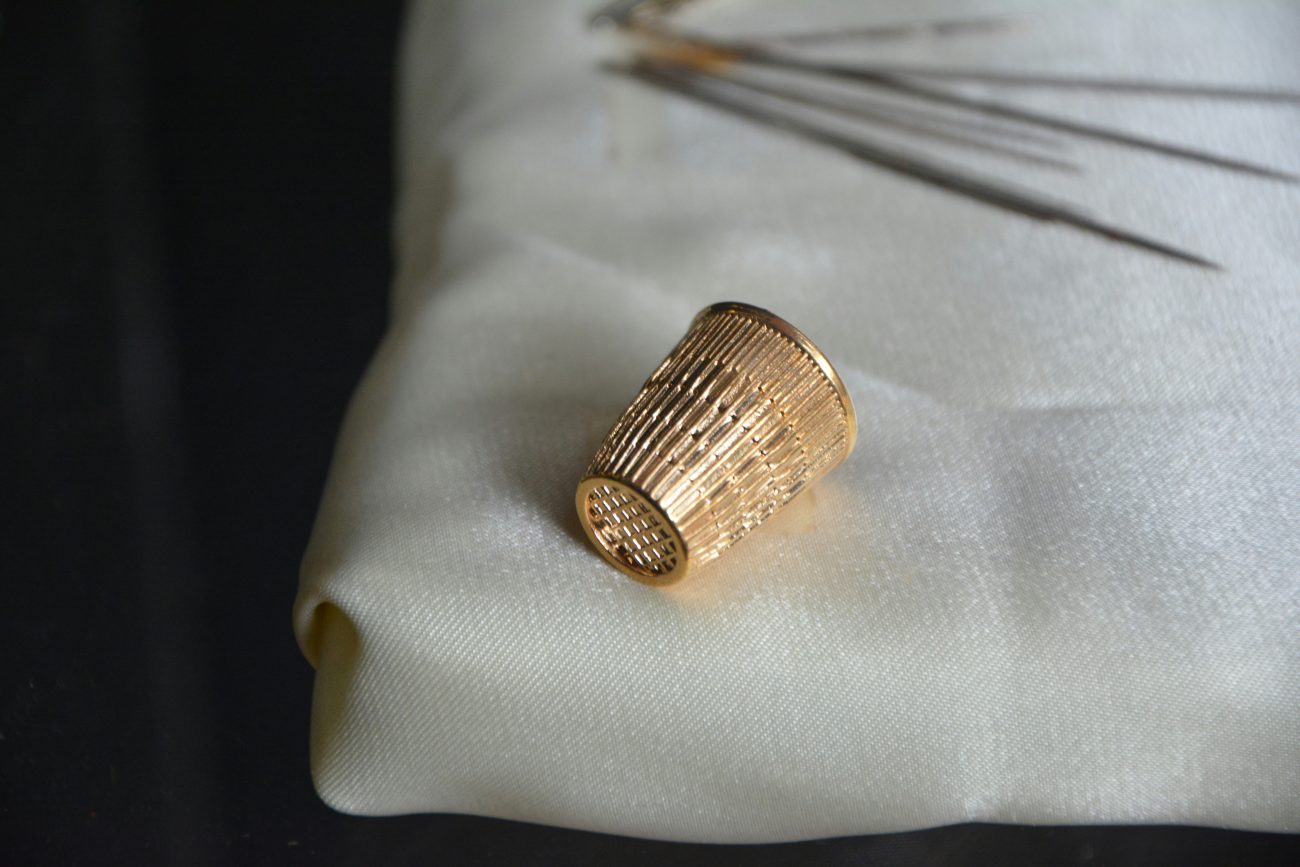
If you are new to using one, begin with a small sewing project. A little practice can help you become comfortable with the movement.
Why Is the Right Fit So Important?
A thimble can only be comfortable and useful if it fits properly.
If it is too loose, it may move around or slip off while you are sewing. If it is too tight, it can squeeze your finger and make ordinary movements uncomfortable.
When choosing one, pay attention to several details.
Comfort: It should feel natural when you bend and move your finger.
Stability: It should stay in place during normal sewing movements without constantly needing adjustment.
Size: The opening should fit your finger securely without creating uncomfortable pressure.
Material: Metal, leather, plastic, and silicone designs all feel different. The best choice depends on your preferences and the kind of sewing you do.
If you are just learning to sew, trying a few different styles can help you discover which one gives you the best combination of comfort and control.
Different Types of Sewing Thimbles
Although the traditional metal thimble is probably the design most people recognize, these accessories are available in several materials and styles.
Metal Thimbles
Metal thimbles are among the most familiar traditional designs. They are commonly made from brass, steel, or silver.
They provide a firm protective surface and are often found in older sewing kits. Some have simple, practical designs, while others feature decorative patterns or engravings.
Leather Thimbles
Leather thimbles offer a softer alternative to rigid metal versions.
Some people prefer them because they feel more flexible and comfortable. They can be useful for particular sewing techniques where a softer covering is desirable.
Plastic Thimbles
Plastic versions are generally lightweight and affordable.
They are available in different sizes and designs, making them a practical option for occasional sewing and simple clothing repairs.
Silicone Thimbles
Silicone thimbles are flexible and come in different shapes and sizes.
Their softer construction may appeal to people who find traditional metal designs uncomfortable. As with any thimble, choosing the correct size is important.
There are also specialized designs intended for activities such as quilting, embroidery, patchwork, and dressmaking.
Ultimately, the best thimble is the one that fits comfortably and provides the protection needed for the work being done.
Why Did Almost Every Household Have a Thimble?
There was a time when hand sewing was an ordinary part of daily household life.
Before affordable ready-made clothing became widely accessible, families regularly made, repaired, and adjusted their own garments. A loose button, a torn seam, or a small hole in a shirt often meant reaching for a needle and thread rather than buying something new.
Sewing was a practical skill, and many people learned it at home from parents or other family members.
Because needles were used so frequently, protecting the fingers was important. A thimble was a small but useful item that helped make repeated sewing movements safer and more comfortable.
It was commonly stored in a sewing basket alongside scissors, thread, spare buttons, measuring tape, and needles.
For many households, these items were not special equipment brought out only for a hobby. They were everyday tools used to keep clothing in good condition.
Over time, shopping habits and clothing production changed. Mass-produced garments became easier to purchase, and many families relied less on making or repairing clothes themselves.
As hand sewing became less common in everyday life, the thimble gradually became less familiar to people who did not regularly sew.
However, it never disappeared. Quilters, embroidery enthusiasts, dressmakers, and people who enjoy repairing clothing still use thimbles today.
Are Old Sewing Thimbles Collectible?
An old thimble can be more than a forgotten sewing accessory. Some examples are collected because of their age, material, craftsmanship, or decorative details.
