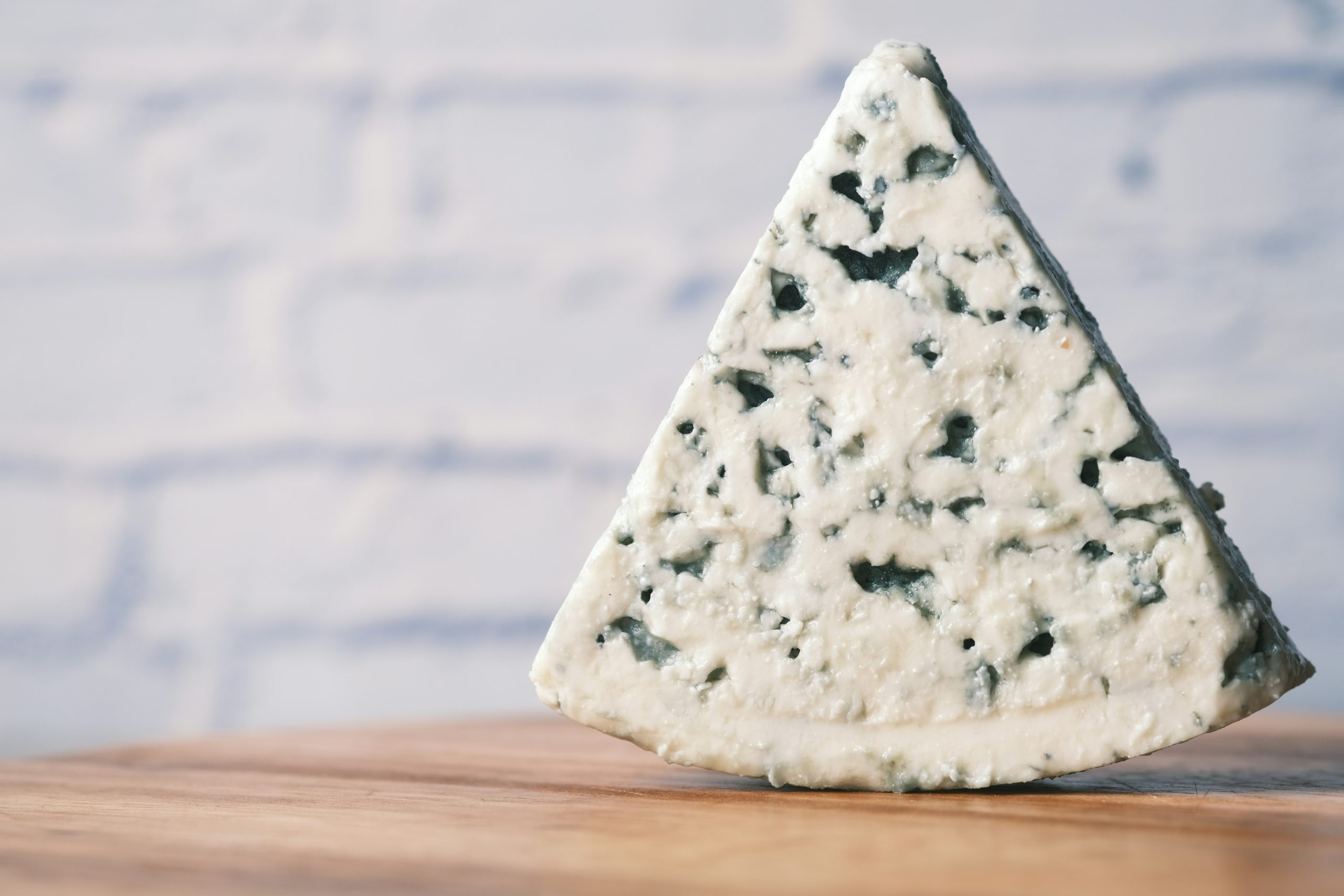
Cream cheese, ricotta, cottage cheese, and fresh mozzarella contain more moisture than cheddar. Their softer structure makes it easier for mold to spread beneath the surface, even when the visible growth looks small.
That is why removing only the affected patch is not considered a reliable way to make these products safe.
If you notice unexpected mold on soft cheese, discard the entire container or piece rather than trying to rescue the unaffected-looking portion. The same advice applies to shredded, sliced, and crumbled cheese, regardless of whether the original cheese was firm.
Mayo Clinic+1
There is one important distinction: some soft-ripened cheeses, including Brie and Camembert, are intentionally covered with a white mold rind. That normal rind is part of the product. However, unfamiliar or unexpected mold growth should not automatically be treated as harmless.
When you cannot tell whether the growth is part of the cheese’s normal production, the safer choice is to discard it.
Can Mold on Cheese Make You Sick?
Some molds are used safely in food production, but others can cause problems. Certain types can produce substances called mycotoxins, while moldy foods may also support the growth of harmful bacteria.
The difficulty is that you cannot reliably identify a mold species by looking at it.
A green patch does not automatically mean the mold is dangerous, and a white patch does not automatically mean it is safe. Color alone cannot tell you whether a particular growth is harmless or whether the cheese is suitable to eat.
There is another reason to be careful: mold is not the only possible food-safety concern. Harmful bacteria, including Listeria, can be present in some cheeses without producing obvious changes in appearance or smell.
Mayo Clinic+1
People who are pregnant, older adults, young children, and those with weakened immune systems should be particularly cautious about food-safety risks. If you are in one of these groups, it is sensible to avoid questionable cheese rather than relying on trimming to make it acceptable.
Why Smell and Appearance Cannot Guarantee Safety
A strange smell, unusual texture, or visible discoloration can be a warning that cheese has deteriorated. But the absence of these signs does not prove that it is safe.
For example, some harmful microorganisms do not noticeably change the smell, taste, or appearance of food. That is why tasting a small piece to see whether it seems normal is not a safe test.
Instead, consider the type of cheese, whether the mold is expected, how extensively it has spread, and whether the product has been stored properly.
If the package is damaged, the cheese has been left out too long, or you are unsure what the growth is, discarding it is the more cautious decision.
How to Store Cheese to Help Prevent Mold
Good storage habits can help keep cheese fresh and reduce the chances of unwanted mold developing.
A few simple practices make a difference:
-
Keep your refrigerator cold. Store cheese at 40°F (4°C) or below.
-
Wrap cheese properly. Once opened, protect the remaining block with fresh food-safe wrapping or a suitable airtight container.
-
Use clean utensils. Avoid cutting cheese with a knife that has touched other foods or dirty surfaces.
-
Limit the time it stays out. Return cheese to the refrigerator after serving instead of leaving it on the counter for extended periods.
-
Keep an eye on the packaging. Follow the manufacturer’s storage instructions and pay attention to the use-by date.
-
Check before serving. Inspect cheese when opening it, particularly if it has been stored for a while.
Different varieties have different storage needs. A firm block of cheddar does not behave exactly like fresh mozzarella or cream cheese, so it is worth following the instructions on the original packaging.
What If You Already Ate a Little Moldy Cheese?
Discovering mold after taking a bite can be unsettling, but it does not automatically mean you will become ill.
