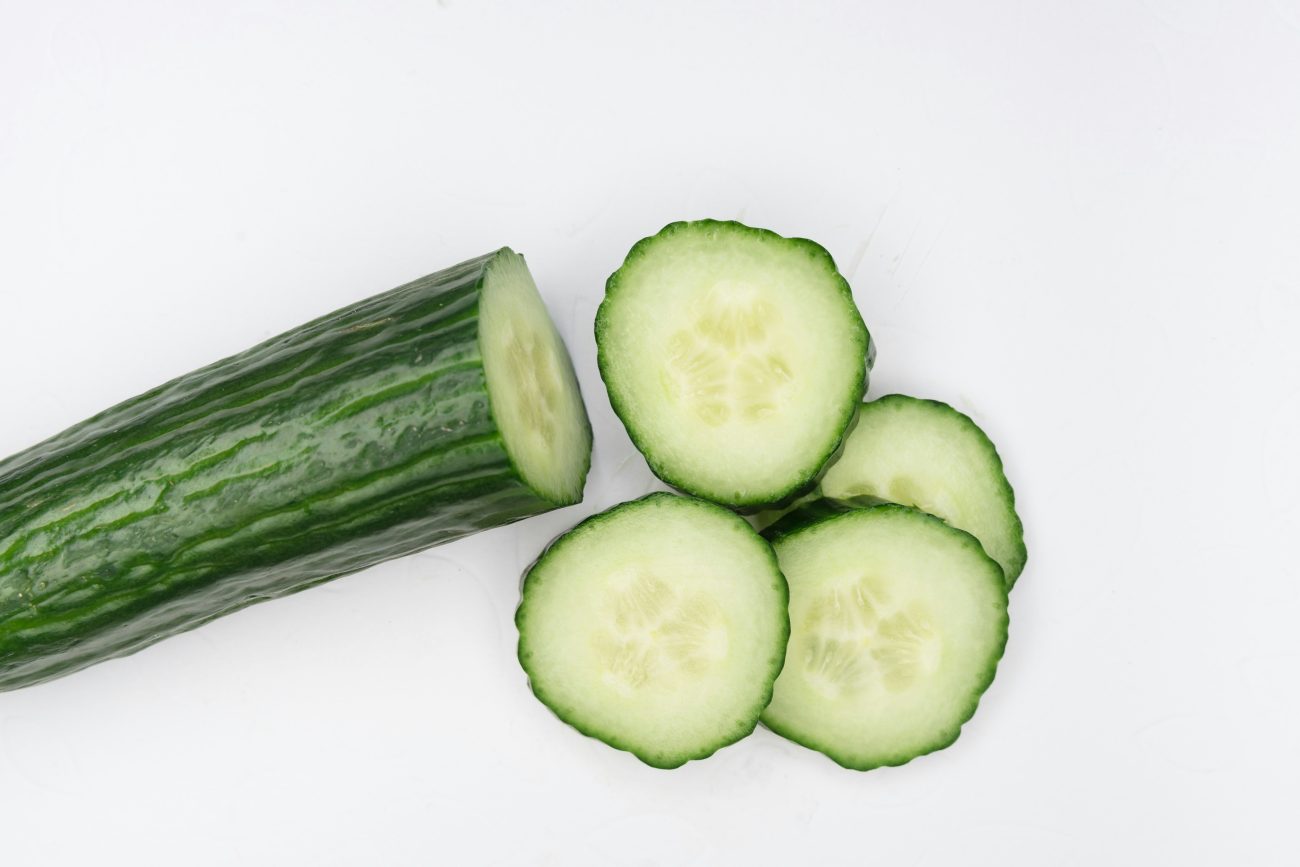
The answer has a lot to do with differences in varieties and their outer surfaces.
Traditional slicing cucumbers often have thicker skin than English cucumbers. Some commercially sold varieties are also treated with approved edible waxes or oils.
These coatings can help reduce moisture loss and protect the surface.
The University of California, Davis Postharvest Research and Extension Center explains that cucumbers are often treated with approved waxes or oils to reduce water loss and abrasion damage. It also identifies shrink-wrapping as a common method for reducing moisture loss in greenhouse cucumbers.
So producers can use different approaches to address a similar problem.
Some cucumbers are sold with a protective coating. Others, particularly delicate greenhouse varieties, are individually wrapped.
The difference in packaging is not necessarily a sign that one cucumber is cleaner, safer, or healthier than another. It reflects the way different varieties are handled and protected after harvest.
The Wrapper Offers Some Physical Protection, Too
Moisture retention is the main reason for the packaging, but it is not the only practical benefit.
Consider everything a cucumber goes through before it reaches your kitchen.
It is harvested, sorted, packed, transported, unloaded, displayed, and handled by employees and customers. It may be picked up several times before someone finally places it in a shopping cart.
During that journey, produce can be scratched, rubbed, or bumped.
English cucumbers have relatively tender skin, so an additional layer of packaging can help protect their surface from some minor physical damage.
The film does not prevent every bruise or handling problem. A cucumber can still be damaged if it is squeezed, dropped, or packed carelessly.
But the extra barrier can help it arrive at the store looking closer to the way it looked when it was packed.
That matters to both retailers and shoppers.
Can Plastic Packaging Actually Reduce Food Waste?
This is where the discussion becomes more complicated.
On one hand, individually wrapping vegetables creates packaging waste. For people trying to reduce their use of single-use plastic, seeing a cucumber sealed in its own wrapper can understandably feel excessive.
On the other hand, food waste also has an environmental cost.
Growing produce requires land, water, labor, and energy. Harvesting, refrigeration, packaging, and transportation all use additional resources.
If a cucumber loses quality quickly and is thrown away before anyone eats it, those resources have been spent without delivering the intended benefit.
Packaging that helps preserve produce may therefore prevent some food from being discarded.
But that does not automatically mean every plastic wrapper is environmentally justified.
The real question is whether the packaging prevents enough food loss to outweigh its own environmental impact. The answer can depend on the type of produce, the supply chain, the amount of packaging used, and the availability of better alternatives.
Researchers and food producers have explored edible coatings and biodegradable films that may help reduce moisture loss without relying on conventional plastic. Some produce already uses edible wax coatings for similar reasons.
The challenge is finding alternatives that work reliably, remain affordable, protect the food, and provide a genuinely better environmental outcome.
For now, the plastic-wrapped English cucumber represents a trade-off between preserving fresh food and reducing packaging waste.
Should You Remove the Plastic When You Get Home?
There is no need to unwrap an English cucumber immediately just because you have brought it home.
The film is there to help limit moisture loss, so keeping it intact until you are ready to use the cucumber can help maintain its quality.
When you are ready to prepare it, remove the packaging and wash the cucumber under clean running water. You generally do not need to peel an English cucumber unless you prefer it that way.
