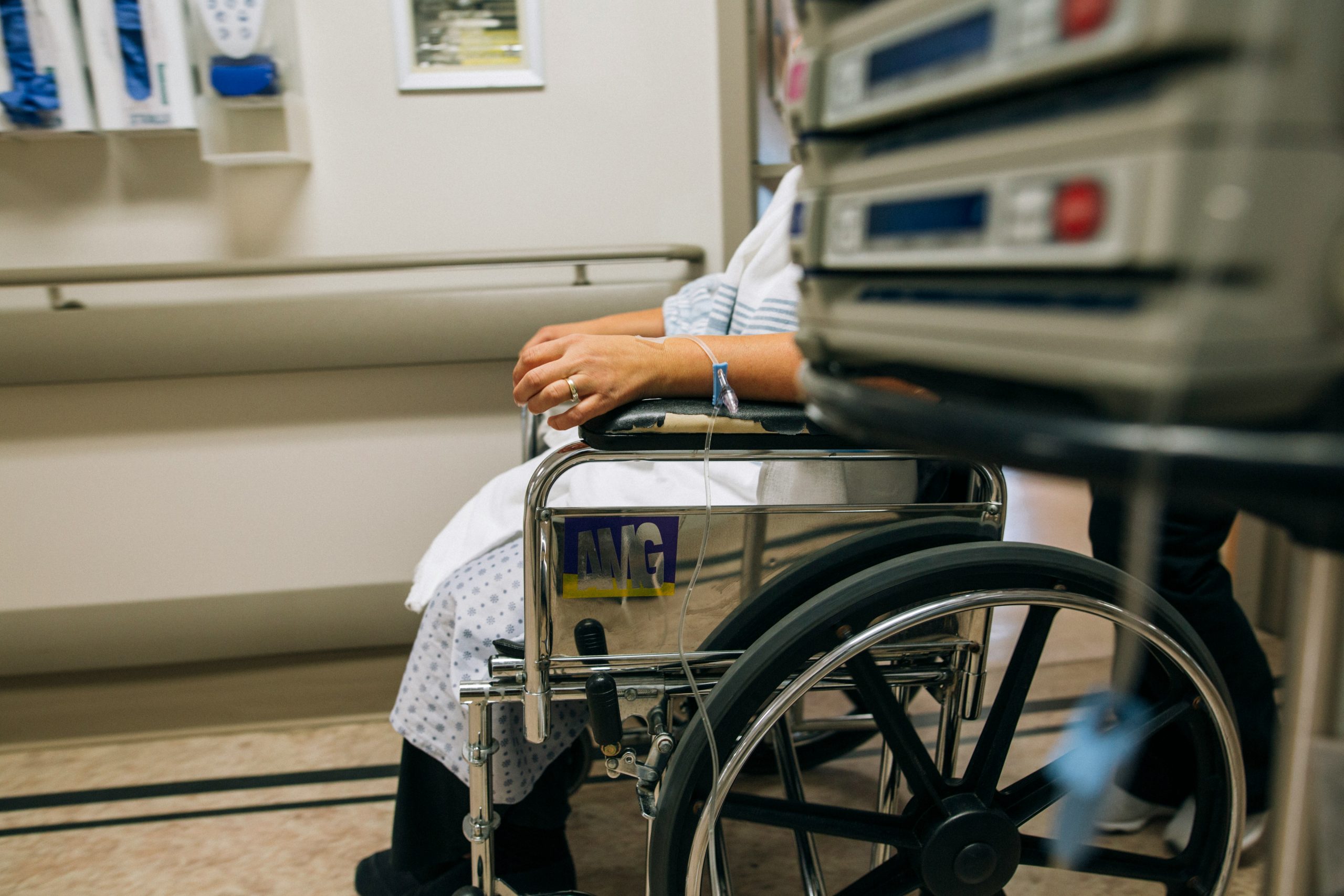
I read the letter twice.
Then I lowered it into my lap.
“Why would he do this?” I whispered.
Daniel sat quietly beside me.
“Maybe he thought he was helping.”
“Helping isn’t the same as asking,” I replied.
Sarah moved closer and rested a hand on my shoulder.
I knew they were trying to understand, too. Neither of them had all the answers.
The documents suggested that the research had involved medical observations and family information, but they did not establish precisely what had happened, what permissions had been obtained, or how my information had been used.
Those questions remained unanswered.
I looked again at the name Evelyn Carter.
If she had worked with Robert on the project, she might be able to explain what the records meant.
“Can we find her?” I asked.
Daniel agreed to investigate.
For the first time since entering the hospital, I felt that I was doing something more than waiting for doctors to tell me what would happen next.
I was asking questions about my own life.
And I intended to keep asking until I understood as much as I could.
A Doctor’s Explanation and a Difficult Decision
Over the following days, my medical team continued investigating the mass in my abdomen.
The uncertainty was exhausting.
I wanted reassurance, but I also wanted the truth. I had learned what could happen when someone decided that withholding information was easier than having a difficult conversation.
When Dr. Parker met with me again, she explained that the mass required treatment and that surgery was the recommended next step based on the findings available to the team.
I asked questions about the procedure, the possible risks, the expected recovery, and what additional information the laboratory might provide after the mass was removed.
This time, I refused to leave the room until I understood the answers as clearly as possible.
I was eighty years old, but I was still entitled to understand my own medical care.
The archived documents were a separate matter. They needed to be reviewed by people qualified to determine what the records meant and whether the research had followed the appropriate procedures.
I did not want speculation to become a substitute for evidence.
Most importantly, I did not want anyone to assume that the discovery of the old project explained my current condition. No such connection had been established.
I had spent days wondering whether my husband’s secret was somehow responsible for what was happening inside my body.
But wondering was not the same as knowing.
And I had learned enough to recognize the difference.
The surgery was scheduled.
Before the procedure, Daniel sat beside me and took my hand.
“Mom, is there anything you need?”
I thought for a moment.
“Yes. I need us to promise something.”
He looked at me.
“What is it?”
“Whatever happens in this family from now on, we tell one another the truth. Even when it’s uncomfortable. Especially when it’s uncomfortable.”
His eyes filled with tears.
“I promise.”
I squeezed his hand.
It was a small promise, but it felt more important than anything else we had discussed that week.
The following morning, I was taken to surgery.
For the first time in months, I allowed myself to focus on the problem directly in front of me rather than every unanswered question waiting beyond it.
The Operation That Changed My Perspective
When I opened my eyes after surgery, Daniel was sitting beside my bed.
“Mom?”
I turned toward him.
“How did it go?”
His face broke into a relieved smile.
“The surgeons said it went well.”
I let out a long breath.
