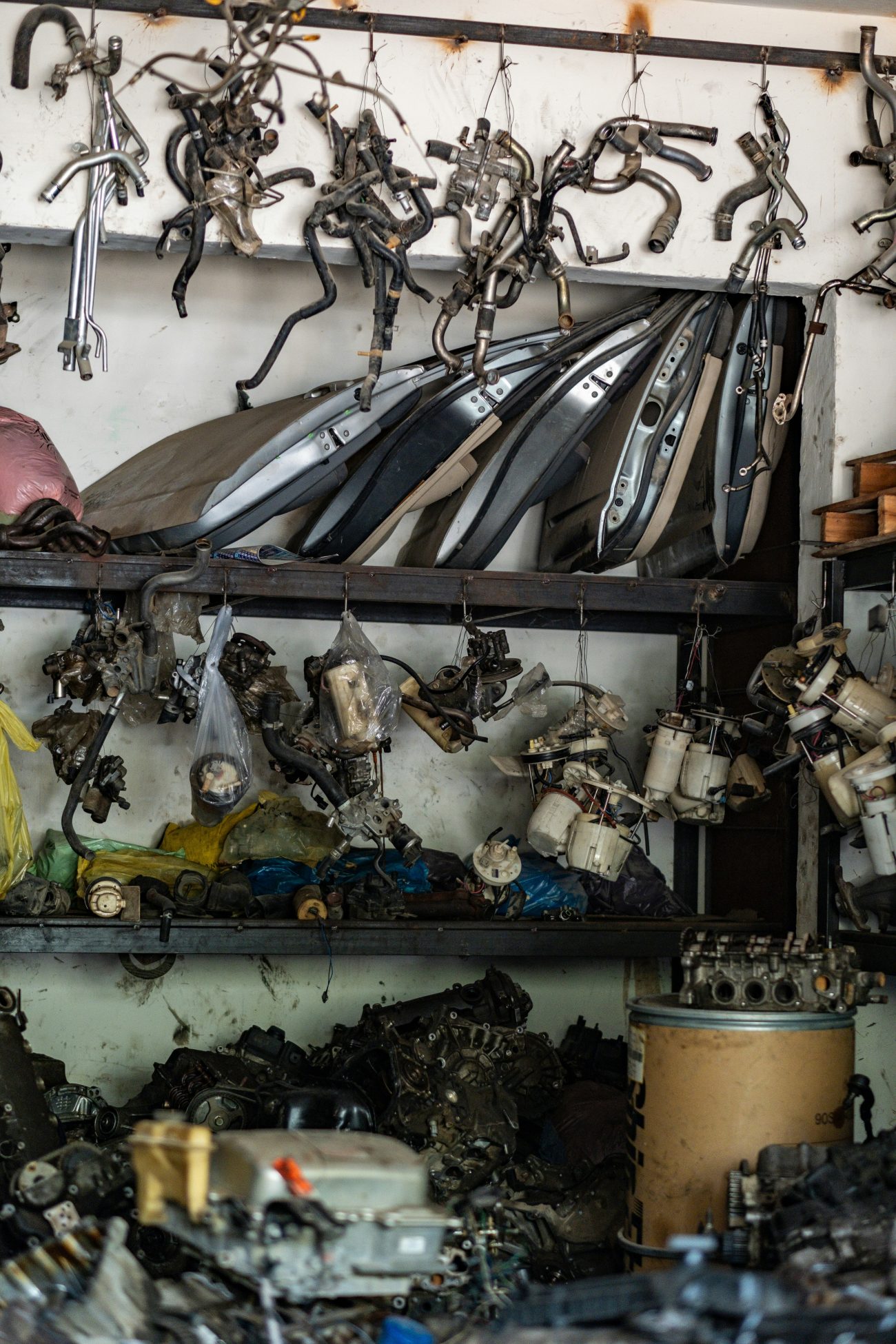
The woman had spent several minutes asking for a seven-ten cap when what she actually needed was an oil cap for her Buick.
The employee finally had a name for the part.
“An oil cap,” he said, trying to keep a straight face.
“Yes!” the woman replied, relieved that someone had finally understood her.
The situation was too funny for the employees to ignore. What had sounded like an obscure mechanical component turned out to be one of the most ordinary items under the hood.
And all it took to solve the problem was turning a piece of paper upside down.
Why the Simplest Misunderstandings Make the Best Jokes
The seven-ten cap story works because the woman isn’t trying to be funny. She is completely serious, and the employees are genuinely trying to help her.
That contrast is what makes the punchline so effective.
The employees approach the request as a technical problem. They search their knowledge, consider different components, and even ask the customer to draw a picture. Meanwhile, the answer is hiding in plain sight.
It is also the kind of misunderstanding that can happen in everyday life. A label is viewed from an unusual angle, a word is misread, or someone hears a familiar expression in an entirely different way.
The result can turn an ordinary shopping trip into a story people remember for years.
And automotive shops are especially good settings for this kind of humor. Cars have thousands of parts, many with unfamiliar names. Even experienced drivers sometimes struggle to explain exactly what is making a noise or which component needs replacing.
Sometimes, the customer knows what they want but doesn’t know the name. Other times, they know the name but have misunderstood what they’re looking at.
Either way, the person behind the counter has to figure it out.
When Your Body Starts Sounding Like an Old Car
Cars aren’t the only things that inspire jokes about maintenance and unexpected problems.
Consider an older driver who visits a mechanic and begins describing his health as though he were talking about a vehicle.
“My body is starting to sound like an old car,” he complains. “I’ve got leaks where there shouldn’t be leaks, strange noises when I get up in the morning, and sometimes I backfire after dinner.”
The mechanic might be expecting a conversation about radiators, exhaust systems, and worn-out gaskets. Instead, the customer has turned the appointment into a comparison between an aging automobile and an aging human body.
The joke is easy to understand because many people recognize the feeling.
As the years pass, both cars and people seem to require more attention. Something starts making an unfamiliar noise. A small problem becomes a regular annoyance. And just when everything seems to be working properly, another issue appears.
The difference, of course, is that a mechanic can replace a worn-out belt or gasket. People have to find their own ways of dealing with the occasional creak, ache, and unexpected malfunction.
A Snail With a Need for Speed
Another classic joke takes a completely different approach.
A snail owns a Datsun 240Z, a car known for its sporty appearance. Wanting to make the vehicle stand out, the snail has a large letter S painted on both sides.
Whenever he drives through town, people stop to stare.
One afternoon, another animal sees the snail speeding down the road and shouts:
“Look at that S-car go!”
The punchline combines the letter painted on the vehicle with the familiar expression, “Look at that car go!”
It is a simple play on words, but the mental picture makes it even better. Snails are famous for moving slowly, yet this one is driving a sports car as though he’s late for an important appointment.
