I Believed My First Love Had Died in the War for Decades—Then I Found Him in a Nursing Home
For most of my life, I believed Benjamin had died in the war.
I had been young when he left, young enough to believe that promises made beneath an old willow tree could survive anything. He had held my hands that afternoon and told me he would come home. I had promised to wait.
Then the letters stopped.
Eventually, a military notice arrived confirming that Benjamin was presumed dead. There was no body to bury, no final goodbye, and no certainty about what had happened during those terrible months. There was only an official document, a few photographs, and the memory of a young man who had once made me believe that the future would be ours.
I never married.
People sometimes assumed that I had spent my life waiting for someone who wasn’t coming back. They were partly right, but that wasn’t the whole truth. I did not spend my years sitting beside a window, refusing to live.
I became a teacher. I helped children learn to read, served meals to people who had nowhere else to turn, and visited the sick when their families could not always be there. I made friends, laughed, worked, and found purpose in ordinary days.
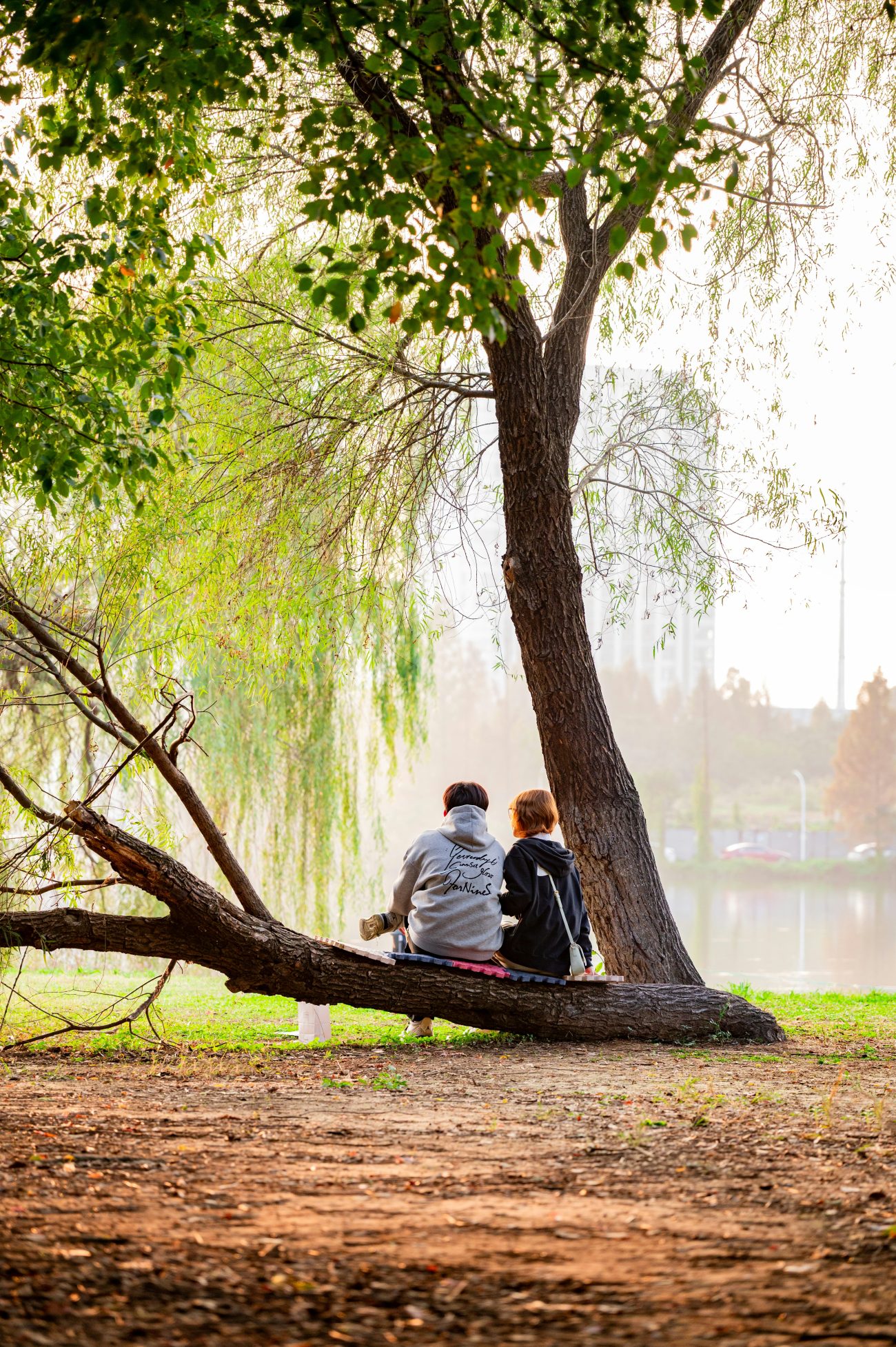
Still, every June, I returned to the willow tree.
I brought red carnations because Benjamin had once told me they reminded him of the color of my favorite dress. I placed them near the roots, sat beneath the branches, and remembered the promise we had made.
I thought that was how my story would end: with a woman growing old, carrying a love that had never found its way home.
Then, decades after the war, a man named Edward came looking for me.
And he told me that Benjamin was alive.
The Summer Before Everything Changed
I was twenty-one when I met Benjamin.
Our town was small enough that most people knew one another, but large enough that a person could still disappear into the crowd on a Saturday afternoon. There was a bakery near the train station, a church with a clock that ran several minutes slow, and a public garden where young couples went when they wanted to talk without their parents listening.
Benjamin worked at his father’s repair shop.
He was not the loudest young man in town, and he never tried to impress people with stories about himself. He had a quiet sense of humor and a habit of listening carefully before answering.
I was working as an assistant at the local school when we first spoke.
I had gone to the repair shop because the chain on my bicycle had come loose. Benjamin was finishing another job when I walked in, carrying the bicycle by its handlebars.
“Do you think you can fix it?” I asked.
He looked at the chain, then at me.
“I can try. But I should warn you, bicycles have a way of breaking again when people ride them too fast.”
“I don’t ride too fast.”
He smiled.
“Then I suppose the bicycle is simply unlucky.”
I laughed, and he looked pleased with himself.
He repaired the chain in less than ten minutes. When I reached for my purse, he shook his head.
“Consider it a favor.”
“I don’t accept favors from strangers.”
“Then perhaps we should stop being strangers.”
It was a small beginning, but I remembered it for the rest of my life.
Over the following months, we met often. Sometimes he walked me home after work. Sometimes we sat near the river and talked about what we wanted from life.
