This Vintage Photograph Looks Ordinary at First, but Its Unusual Details Make People Look Twice
Some photographs become unforgettable because they capture major historical events. Others attract attention for a much simpler reason: something about the image makes people stop, look again, and notice details they missed the first time.
A formal photograph of two elegantly dressed people can seem unremarkable at first glance. Yet the arrangement of their clothing, the objects surrounding them, and the angle from which the picture was taken can create an unexpectedly complicated composition.
That is what makes certain vintage photographs so fascinating. A viewer may initially focus on the people in the foreground, only to become distracted by a background object, an unusual shadow, or the way two shapes overlap. What appears obvious at first can become less clear when examined closely.
The photograph described here offers exactly that kind of visual experience. It features two individuals standing together in formal clothing, a rich red curtain behind them, and a large metallic decoration nearby. Their positioning and the different textures in the scene create a composition that rewards a closer look.
There is no need to assume that the photograph contains a hidden message or has been altered to appreciate what makes it interesting. Sometimes, the way an ordinary moment is captured is enough to make an image memorable.
The First Impression: An Elegant Moment From Another Era
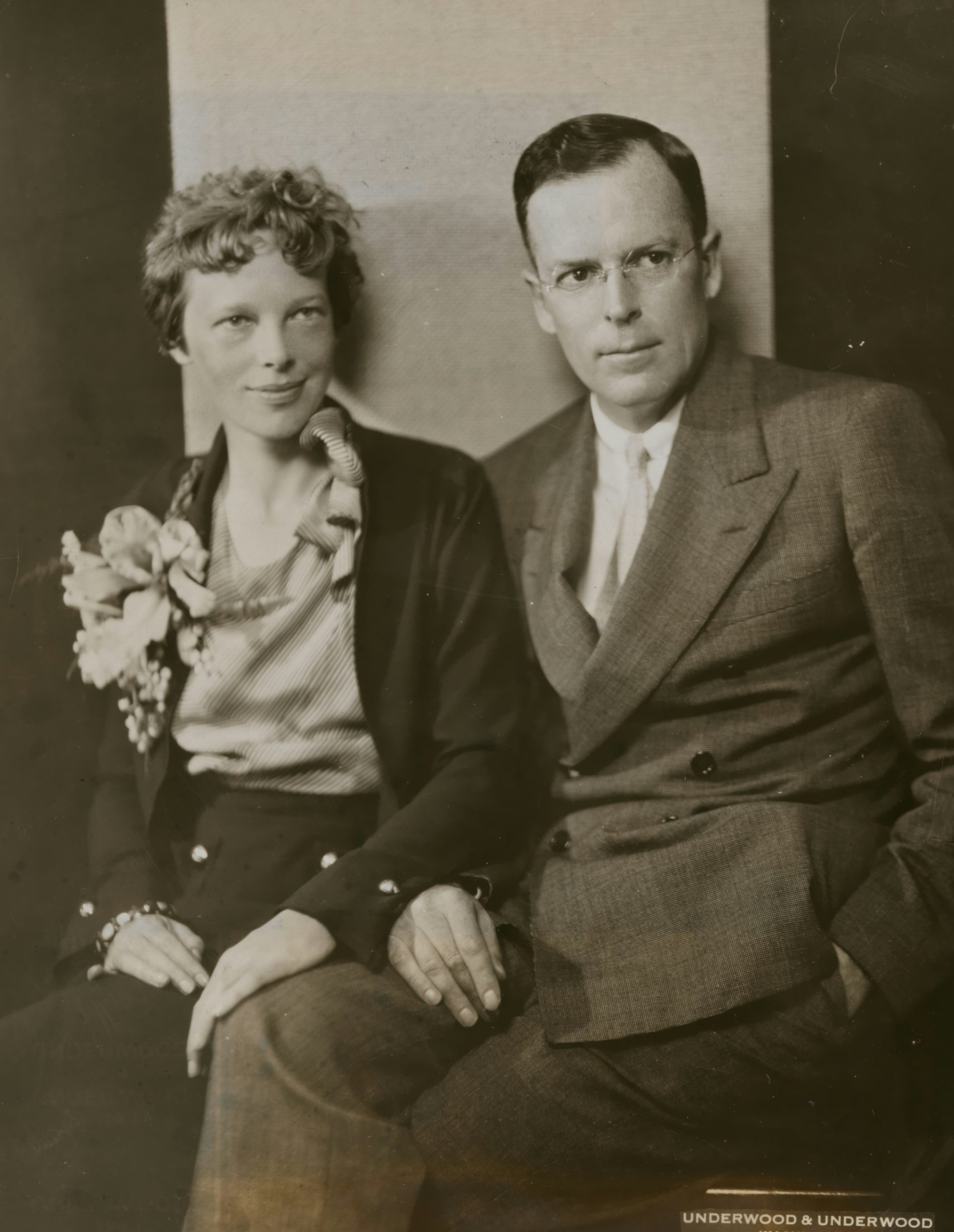
The photograph presents a formal-looking scene. A man wearing a dark jacket and white shirt stands beside a woman dressed in a pale purple gown. Behind them, a deep red curtain provides a dramatic background, while a large metallic figure occupies part of the surrounding space.
The combination suggests a carefully arranged setting, perhaps a celebration, public appearance, or formal gathering. However, without information about the photograph’s date, location, or subjects, it would be impossible to identify the occasion with confidence.
What can be appreciated is the visual contrast.
The man’s dark clothing creates a defined shape against the background. The woman’s lighter gown introduces a softer tone, drawing the eye toward the center of the composition. The red curtain adds another strong color, making the people and their clothing stand out.
The metallic decoration introduces a different texture. Its reflective surface catches light and creates highlights that contrast with the softer materials around it.
Together, these details give the photograph a distinctive appearance.
Why the Clothing Draws So Much Attention
Clothing is often one of the first things people notice in historical photographs.
Fashion provides useful clues about the period in which an image may have been taken, although it rarely establishes an exact date on its own. The cut of a jacket, the shape of a dress, the fabric, and the accessories can all reflect the styles and social expectations of a particular era.
In this photograph, the man’s dark jacket and white shirt create a traditional formal appearance. The woman’s pale purple gown offers a contrasting look, with fabric gathered across the front and folds that give the dress additional texture.
Those folds are especially interesting from a photographic perspective.
Fabric does not appear as a perfectly smooth surface in a photograph. It creates highlights, shadows, and overlapping shapes depending on how it hangs and how the person is standing. When someone is positioned close to another person, those shapes can become difficult to separate visually.
A sleeve, a hand, or a fold of fabric may partially cover another element. From the camera’s fixed viewpoint, several separate objects can appear to merge into one complicated arrangement.
That is one reason a photograph can look different when examined carefully than it does during a quick glance.
How Camera Position Can Change What We See
A camera records a three-dimensional scene on a flat surface. That simple fact can produce some surprisingly confusing results.
