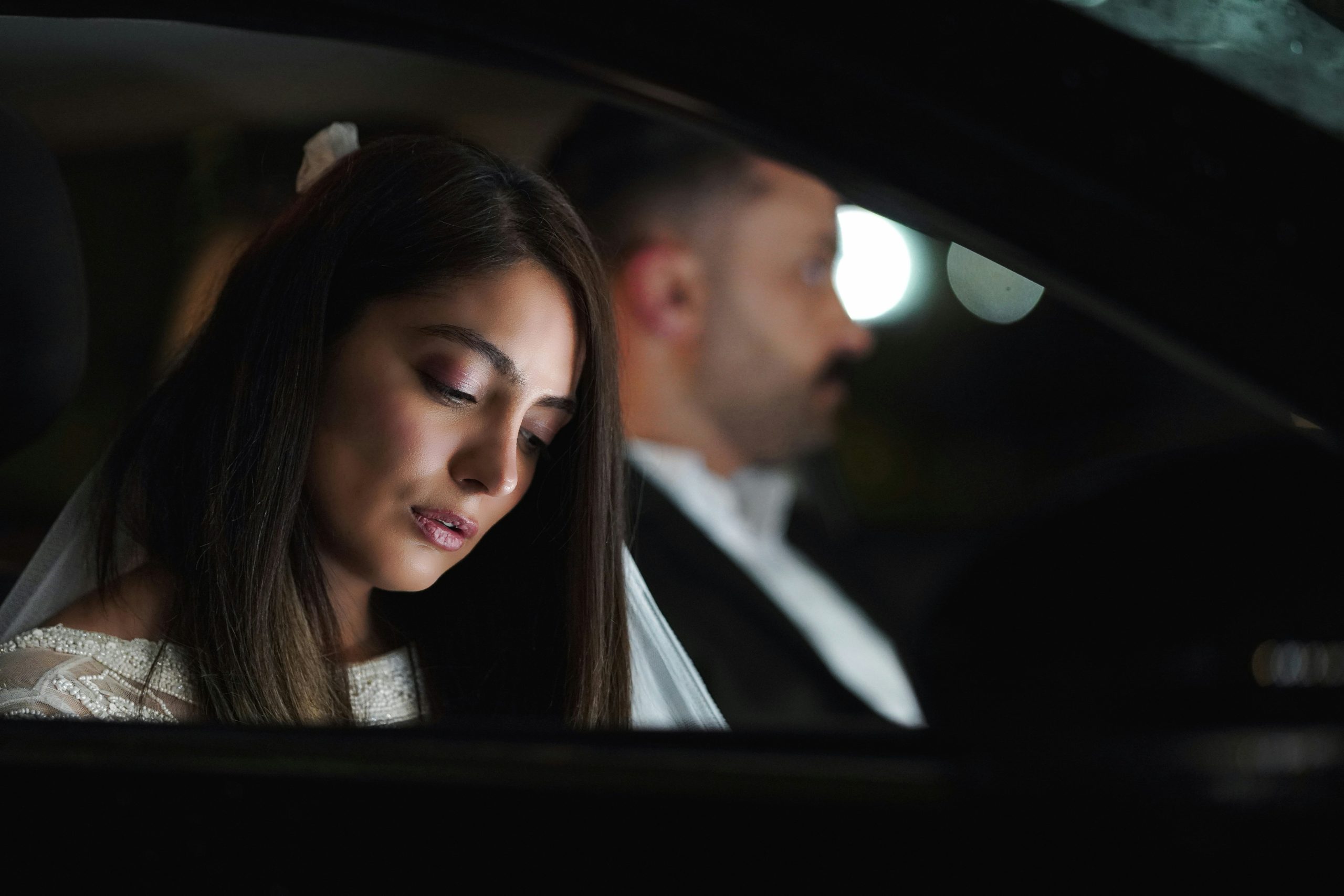
A State Trooper Pulled Us Over on the Highway. Then He Quietly Told Me Not to Go Home With My Wife
The flashing red and blue lights filled the inside of our Honda as we pulled onto the shoulder of Route 35.
My wife, Sarah, had been driving 78 mph in a 65-mph zone. It was an ordinary traffic stop, the kind that usually ends with a ticket, a warning, and a few minutes of frustration before everyone gets back on the road.
We were heading to Millbrook to visit her mother on a gray Saturday afternoon. Sarah handed the trooper her license and registration without hesitation. She had been pulled over before, and nothing about her behavior suggested she was worried.
The officer introduced himself through his name tag: Martinez.
He returned to his patrol car with our documents. I expected him to spend a minute checking the information before coming back with a warning or citation.
But something changed.
He leaned toward his computer screen and stayed there longer than I expected. Traffic continued rushing past us while Sarah adjusted the rearview mirror and glanced at the clock.
When Martinez finally stepped out, he didn’t approach Sarah’s window.
He came to my side of the car and tapped on the glass.
“Sir, could I speak with you for a moment? Just step out here with me.”
I looked at Sarah. She seemed confused but calm.
I opened the door and followed him a few steps away from the vehicle.
The trooper turned toward me. His expression was serious, but his voice remained controlled.
“Sir, I need you to listen carefully. Don’t go home tonight. Get somewhere safe. A hotel, a friend’s place, somewhere she doesn’t know about.”
For a moment, I thought I had misunderstood him.
“What are you talking about? Is Sarah in trouble?”
He didn’t answer directly. Instead, he took a small folded piece of paper from his pocket and pressed it into my hand.
“Read this later, when you’re alone. And be careful who you trust right now.”
Then he explained that my wife’s name had triggered something serious in the police system.
He couldn’t discuss the details there, he said, but he wanted me to take his warning seriously.
I looked back at our car. Sarah was sitting behind the steering wheel, waiting.
We had been married for ten years.
I thought I knew exactly who she was.
By the time we pulled back onto the highway, I had begun to wonder whether I knew my wife at all.
The Seven Words on the Piece of Paper
The rest of the drive felt different.
Sarah was quieter than usual. She kept checking the mirrors, and her hands seemed tighter on the steering wheel.
I asked whether she was upset about being stopped.
She smiled and said she was fine.
But I could no longer concentrate on the conversation.
The folded paper in my pocket seemed impossible to ignore. I wanted to open it immediately, but Martinez had specifically told me to wait until I was alone.
We eventually arrived at her mother’s house.
Dinner was strangely ordinary. Sarah laughed at family stories, helped clear the table, and behaved just as she always had around her relatives.
Nothing about her suggested that a police officer had just warned me to stay away from our own home.
Yet suspicion has a way of changing familiar things.
Her laughter sounded rehearsed. Her friendliness seemed carefully measured. Even the ordinary gestures I had once found comforting began to feel unfamiliar.
That night, we slept in the guest room upstairs.
