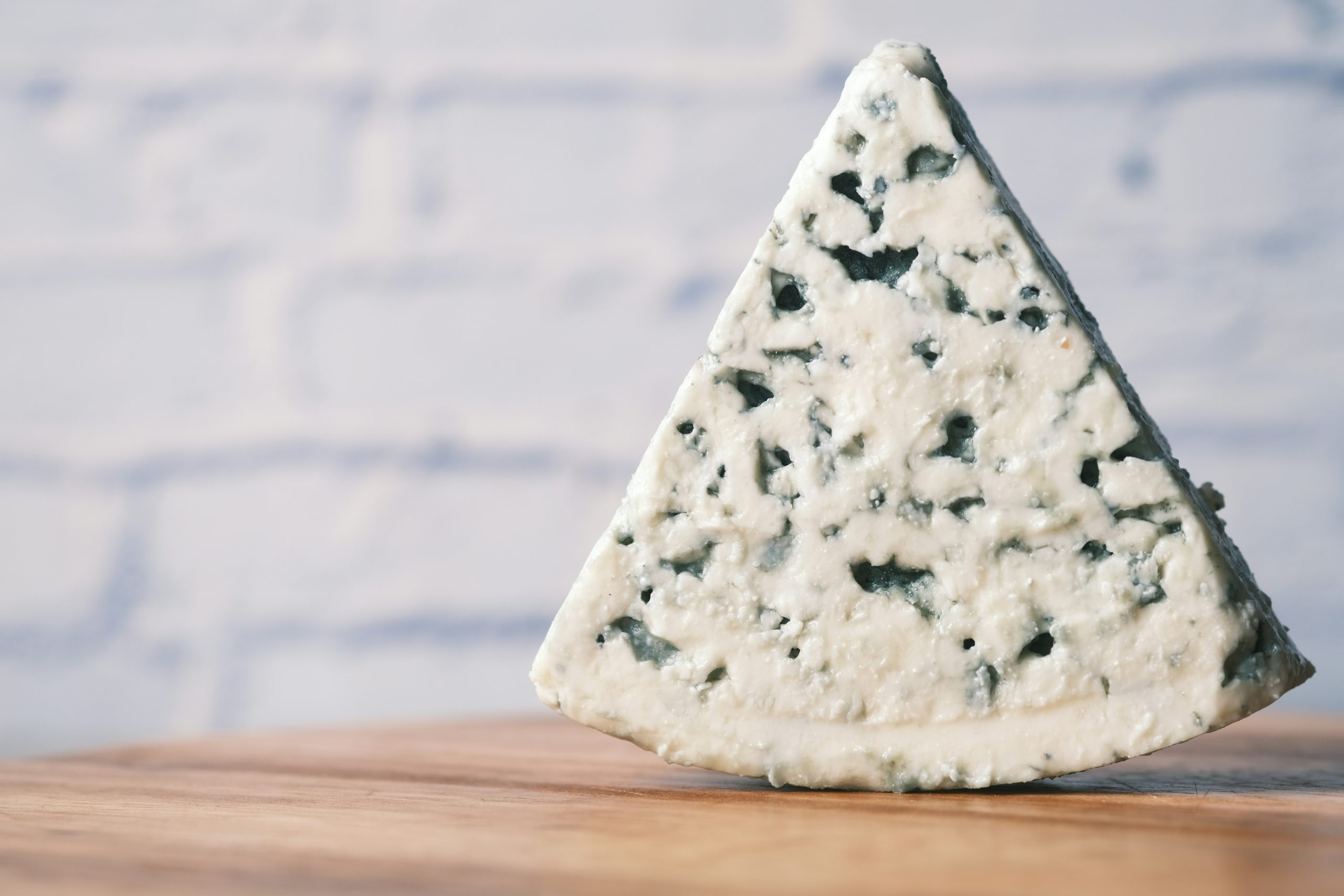
Finding a small green or blue patch on a block of cheddar can make you stop and wonder whether the entire thing belongs in the trash. Perhaps you have only used a few slices, and the rest of the cheese looks perfectly normal. Is it safe to cut away the discolored area and keep the remaining block?
The answer depends on the kind of cheese.
Some cheeses are deliberately made with mold cultures that give them their familiar flavor and appearance. Others should never develop unexpected mold during storage. Hard cheeses such as cheddar are treated differently from soft cheeses because their dense structure and lower moisture content make it less likely that mold will spread deeply through the product.
However, there are important precautions to follow. Cutting off a visible patch is not the same as proving that every remaining part is safe, and the color of the mold cannot tell you whether it is harmless.
Understanding the difference can help you make a safer decision the next time you open the refrigerator and discover an unexpected spot on your cheese.
Why Mold Appears on Cheese
Mold is a type of fungus that can grow when spores land on food and find conditions that allow them to develop. Cheese can become exposed to mold during production, handling, storage, or after its packaging has been opened.
Moisture, air exposure, and storage conditions all influence how quickly unwanted mold can appear. A block that has been handled with an unclean knife, left uncovered, or stored in unsuitable conditions may be more likely to develop surface growth.
But not all mold on cheese is a sign of spoilage.
Some varieties are intentionally made with selected mold cultures. Blue cheese, Roquefort, Gorgonzola, and Stilton are familiar examples. Brie and Camembert also develop their characteristic white outer rinds through the use of specific molds.
These are part of the cheese-making process. An unexpected green, blue, or fuzzy patch on ordinary cheddar is different. It should be treated as unwanted mold rather than assumed to be a harmless part of the product.
The important distinction is whether the mold is expected for that particular cheese or has appeared during storage.
Can You Cut Mold Off Cheddar?
In many cases, yes.
Cheddar is a firm cheese with relatively low moisture compared with soft varieties. Its dense texture makes it harder for mold to spread deeply into the interior.
Food-safety guidance from Mayo Clinic, based on U.S. Department of Agriculture recommendations, says that a small moldy area on hard or semihard cheese can generally be removed while keeping the rest. The recommended approach is to cut away at least one inch (2.5 centimeters) around and beneath the visible mold.
Mayo Clinic+1
That means simply shaving off the colored surface is not enough.
If you decide to keep a firm block of cheddar with a small patch of unexpected mold, follow these precautions:
-
Use a clean knife. Start with a clean utensil to avoid introducing additional contamination.
-
Keep the blade away from the mold. Do not let the knife touch the affected area and then pass through the portion you intend to keep.
-
Remove a generous section. Cut at least one inch around and below the visible spot.
-
Inspect the remaining block. If mold is extensive or the cheese has other signs of deterioration, discard it.
-
Rewrap the remaining cheese. Use fresh wrapping rather than returning it to packaging that may have been contaminated.
This guidance applies to firm blocks of cheese, not every product made from cheddar. Sliced, shredded, and crumbled cheese should be discarded if mold appears because contamination can spread among the smaller pieces and through areas that are difficult to inspect.
Mayo Clinic+1
Why Soft Cheese Should Be Thrown Away
Soft cheeses need a more cautious approach.
